

A fair question, and one that deserves a straight answer rather than a vague “give it a while”. You want to know when you can move the furniture back, let the kids in, and get on with your day.
Usually around four hours. The realistic range is one to twelve.
The biggest factor is how much water went in and how much came back out. Proper extraction leaves the carpet damp, not soaked, and that difference is set before you touch a window.

Jump to a section
The short answer
What actually makes it dry
What speeds it up, what slows it down
Walking on it safely
Over-wetting vs our standard
How we get you dry sooner
The Golden Guarantee
The Short Answer
You’ve just had the carpets done, they look lovely, and now you’re stood in the doorway wondering when you can actually use the room again. It’s the question everyone asks, and you deserve a clear answer.
So here it is. Most carpets are dry and safe to walk on in around four hours. The realistic range is one to twelve, because a thin synthetic carpet in a warm, airy room dries far quicker than a thick wool pile in a cold, still one.
Upholstery, rugs and mattresses sit in much the same window. The rest of this page explains what moves that number, and how to get to the lower end of it.
Red Flags: Signs A Carpet Was Over-Wetted
A properly extracted carpet is damp when the cleaner leaves, not wet, and it should smell clean while it dries. None of these are normal.
- Still soaking wet the next morning
- Squelches underfoot hours after the clean
- A damp, musty smell that builds instead of fading
- Tide marks or browning appearing as it dries
- No drying time given, just “give it a while”
- The room feels cold and clammy long after they leave
So what decides whether your carpet is dry by lunchtime or still damp at bedtime? Mostly, it’s decided before you touch a window.
What Actually Makes It Dry
Drying isn’t really about time. It’s about how much water is left in the fibre when the clean finishes, and how easily it can leave.
A professional clean is mostly hot water and powerful extraction. The water loosens and lifts the soil from deep in the pile, then the extraction draws it straight back out again, taking the vast majority of the moisture with it.
The better that extraction, the less water is left behind, and the faster the carpet dries. This is the part most people never see, and it matters more than anything else.
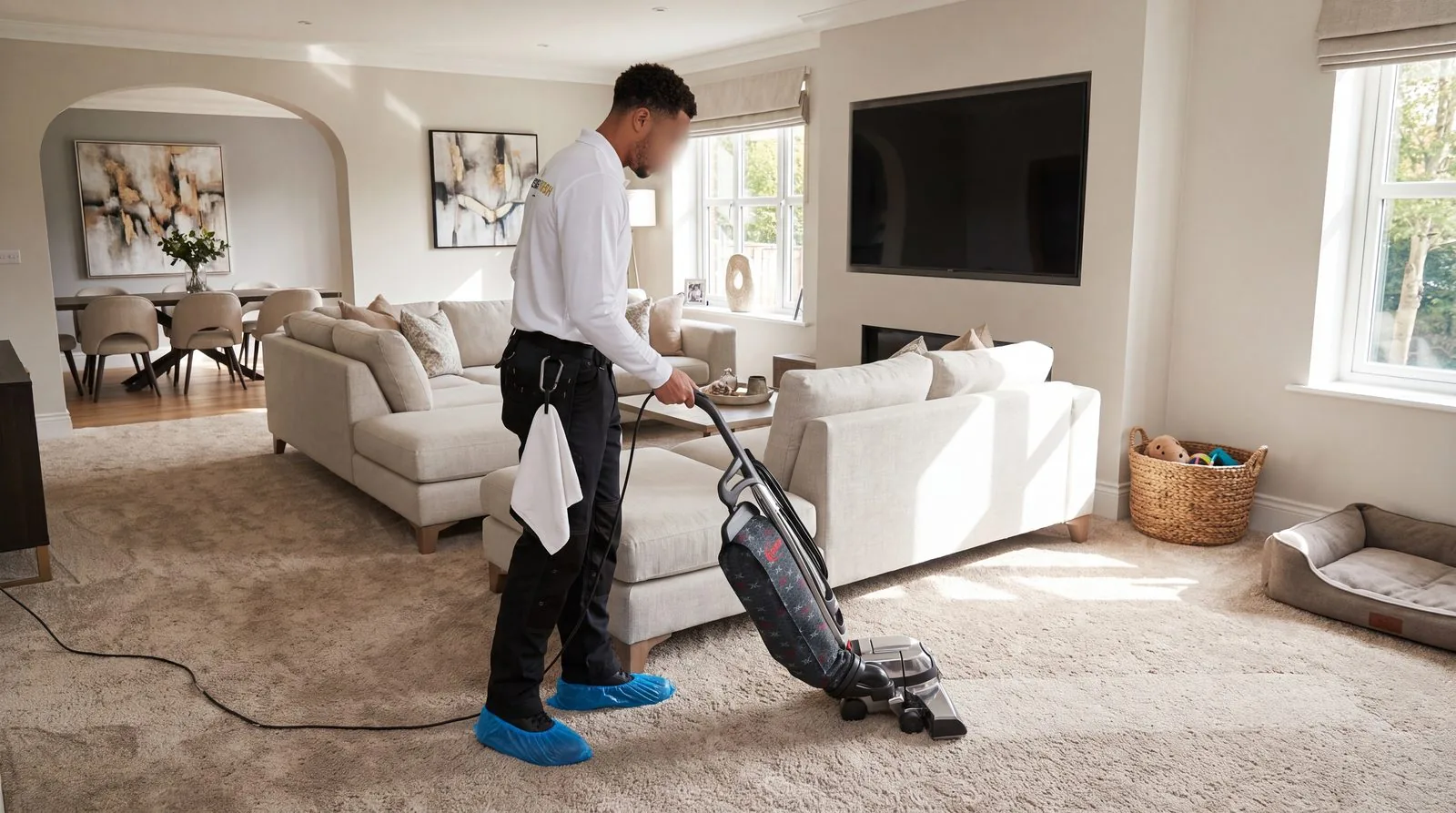
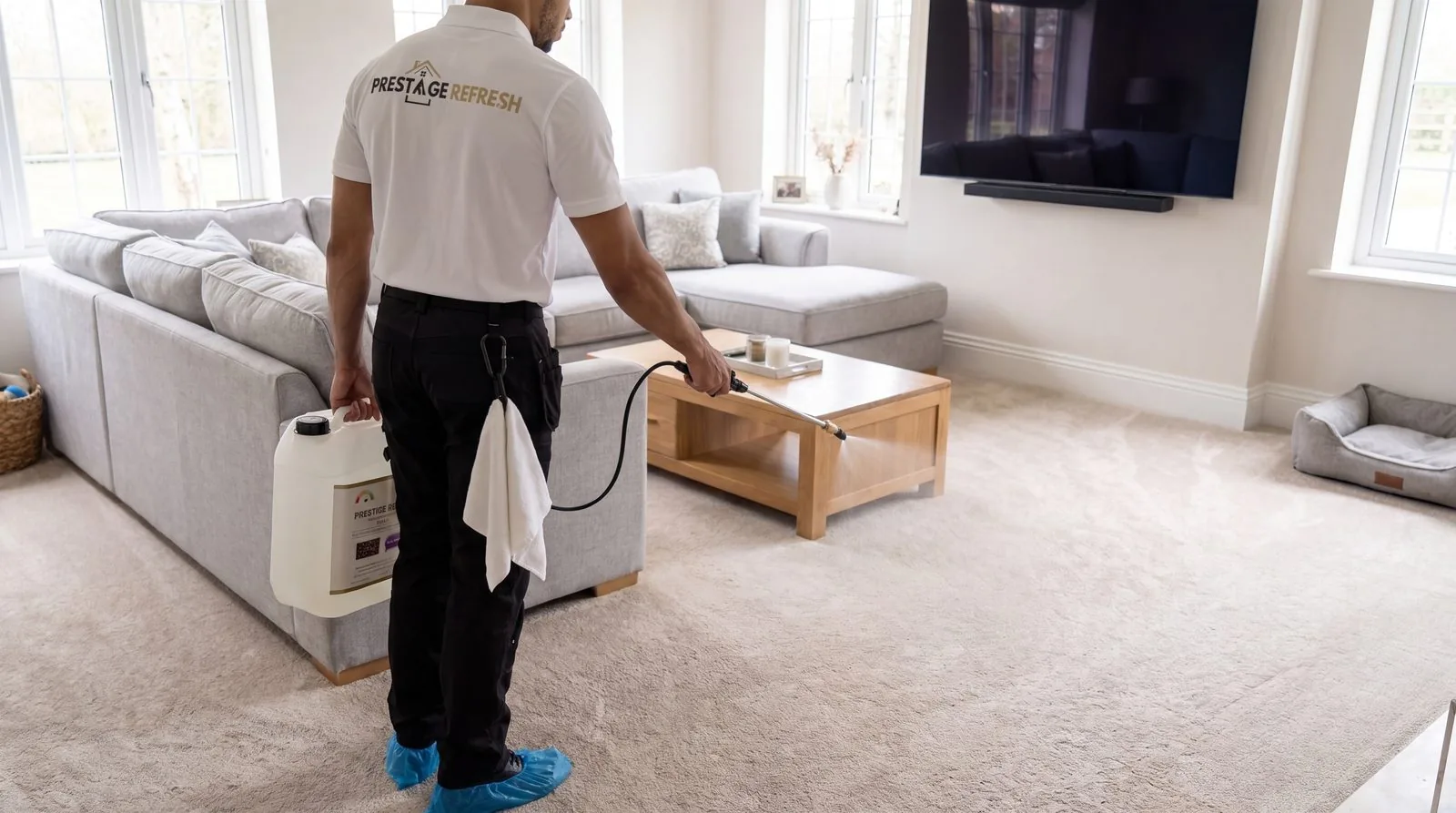
Our process is built to leave as little moisture as possible. We inspect and spot test first, then a Kirby dry vacuum lifts out the loose grit so the wet stage has less to do. We pre-spray, agitate so the solution reaches the base of the fibre, then hot water extraction with the Enforcer 400 does the deep clean and pulls the moisture back out with it.
Dry pods then work the room while we finish, moving air through the pile to carry the last of the damp off. By the time we pack up, the carpet is damp to the touch, not wet, which is exactly why it dries in hours rather than days.
I expected it to be sopping for the rest of the day. It was touch-dry by the time I’d made a cup of tea and walked back through.
What Speeds It Up, What Slows It Down
Two carpets cleaned to the same standard can dry at different rates, and it usually comes down to a handful of things. A few you can influence on the day, and a couple are simply down to the carpet itself.
Speeds Drying Up
- Strong extraction leaving little water behind
- Open windows and good airflow
- A little gentle warmth in cooler months
- A thinner, synthetic, low pile
Slows Drying Down
- Over-wetting from weak, cheap machines
- A cold, closed-up, still room
- A thick wool or deep, dense pile
- Damp weather and high humidity
The one that surprises people is the machine. A cheap domestic or hire machine simply doesn’t have the suction to pull the water back out, so it pushes water in and leaves most of it there.
That’s the real reason a DIY carpet can stay wet for a day, and it has nothing to do with how long you ran it for.
Open a couple of windows and any internal doors so the air can move through, and in cooler months turn the heating up a touch. If you’ve a fan, point it across the floor.
Moving air carries the last of the moisture off far quicker than a sealed, still room ever will, and it’s the one thing that makes the biggest difference once we’ve left.
Need It Dry By A Certain Time?
Tell us when you need the room back, a school run, a viewing, an evening visitor, and we’ll plan the clean around it. Same-day dry is available as a priority where it matters.
Walking On It Safely
A freshly cleaned carpet is damp, not fragile. A few simple steps keep it looking its best while it dries.
If you genuinely need to cross the room, you can, gently, in clean socks or fresh indoor shoes within the first hour or two.
The thing to avoid is heavy traffic, outdoor shoes, and putting the weight of furniture back before it’s properly dry, because a damp pile picks up marks and dirt more easily than a dry one. Treat it the same way you’d treat a freshly mopped floor.
Opening the windows does more than speed the drying, too. Asthma and Lung UK advises keeping your home well-aired to lower humidity, which helps keep dust mites down, so the habit is worth keeping even once the carpet is dry.
- Walk on it gently in clean socks only if you have to, otherwise stay off
- Keep pets and children off the area until it’s fully dry, usually about four hours
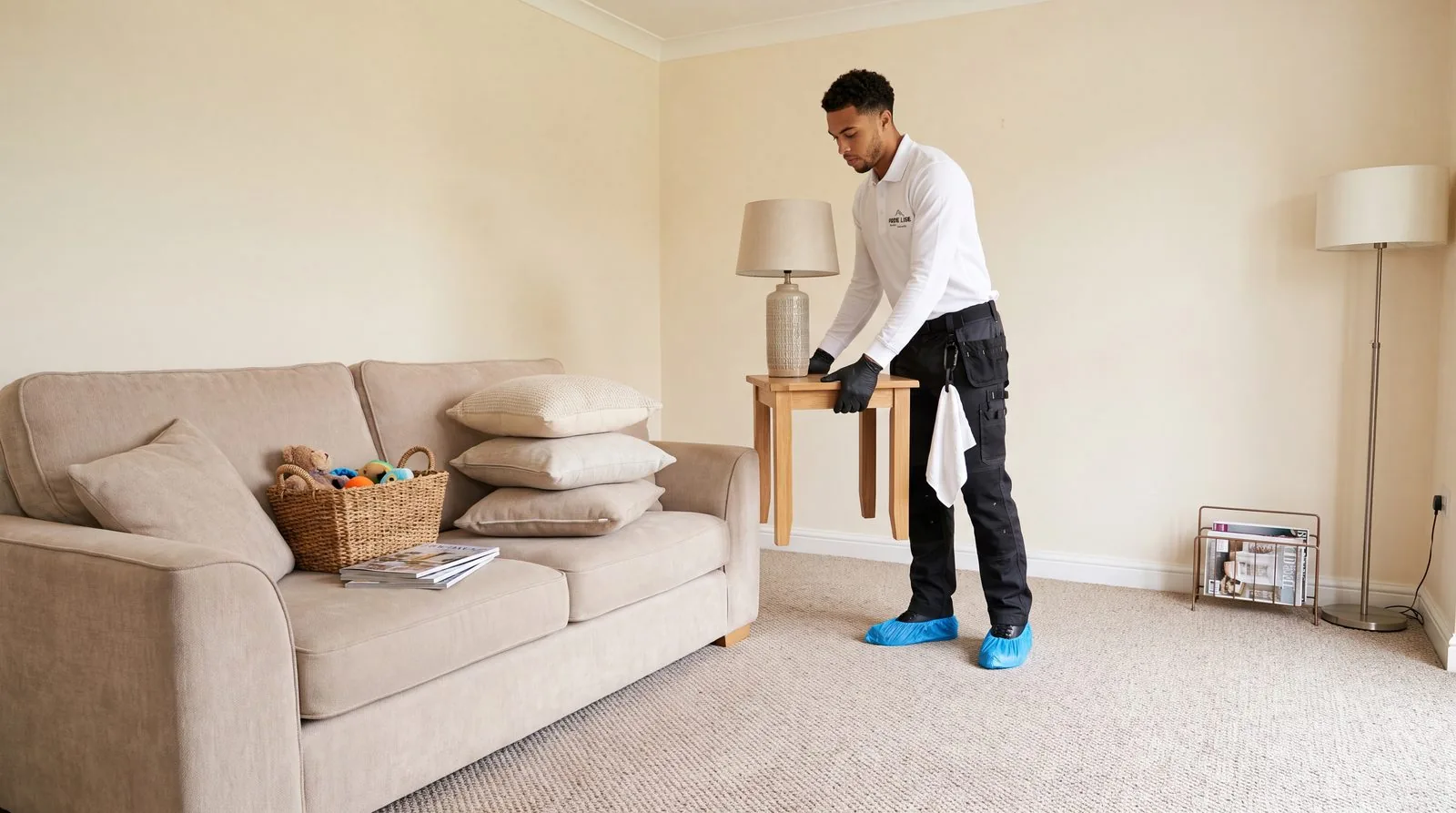
- Leave furniture off until dry, and use protectors under the legs when it goes back
- Open the windows and keep the air moving to speed things along
The Over-Wetting Shortcut vs Our Standard
Long drying times usually aren’t bad luck. More often they’re the result of the wrong equipment, or a rushed approach that puts too much water in and doesn’t take enough back out. It’s the clearest difference between a quick job and a proper one.
Cheap domestic and hire machines are built to spray water in, but they lack the extraction power needed to pull it back out, so the carpet is left saturated and takes an age to dry.
Worse, that trapped moisture can sit against the backing and underlay, which is where a musty smell comes from days later. A proper clean does the opposite: powerful hot water extraction lifts the soil and the water together, so the carpet is left damp, not soaked, and dries in hours.
The Over-Wetting Shortcut
- Weak suction leaves the carpet saturated
- Stays wet for a day, sometimes longer
- Damp backing can turn musty later
The Prestige Refresh Standard
- Powerful extraction pulls the water back out
- Left damp, not soaked, dry in hours
- Dries clean and fresh, no lingering smell
Our Approach: Extract, Don’t Saturate
Our whole method is built around drying quickly. We control how much water goes in, use hot water extraction with the Enforcer 400 to pull the bulk of it straight back out, and set dry pods working so the room is drying before we’ve packed the van.
Then we tell you straight how long it should take and how to help it along, so there are no surprises and no waiting around longer than you need to.
Most carpets are dry and safe to walk on in around four hours, sometimes sooner, occasionally longer. The clean itself sets the time: proper extraction means damp, not soaked. Ventilate, add a little warmth, stay off until dry, and you’re quickly back to a fresher room.
How We Get You Dry Sooner
It isn’t one trick. It’s a simple sequence built to leave as little moisture behind as possible, from the first pass to the last.
Inspect & Dry VacuumWe inspect and spot test first, then a Kirby dry vacuum lifts out the loose soil so the wet stage has less to do.
Pre-Spray & AgitatePre-spray and agitation work the solution into the pile, so less water is needed to clean deep.
Hot Water ExtractionThe Enforcer 400 deep-cleans and pulls the soil and the moisture straight back out together.
Dry Pods & FinishDry pods speed the drying while we deodorise with Gold Musk and groom the pile, then we tell you the time to expect.
Why Prestige Refresh
When customers tell us why they chose us, the same four reasons come up. They’re the standard we hold every job to.
What Customers Say
We could tell you our carpets dry quickly. It means more coming from the people we’ve actually cleaned for. We’re rated 5.0 from 338 Google reviews, and these come straight from them, unedited.
Our Golden Guarantee
The Golden Guarantee
We clean thoroughly, extract properly, and explain clearly. Controlled moisture, realistic drying times, and a result that holds, backed in writing.
Quick Answers
How long does carpet take to dry after professional cleaning?
Usually around four hours, with a typical range of one to twelve. The main factors are the carpet material, how thick the pile is, the airflow and warmth in the room, and how much water went in and was extracted back out. A properly extracted carpet dries far faster than an over-wetted one.
When is it safe to walk on a freshly cleaned carpet?
You can usually walk on it gently in clean socks within an hour or two if you need to, but it’s best to stay off until it’s fully dry, normally about four hours. Wait until it’s properly dry before putting furniture back or letting pets and children play on it.
Why is my carpet still wet hours after cleaning?
The most common reason is over-wetting: too much water went in and not enough was extracted back out, which often happens with cheap domestic or hire machines that lack the suction to pull the moisture out. A thick or wool pile, a cold or unventilated room, and poor airflow all slow drying further.
How can I help my carpet dry faster?
Open windows and keep the air moving, turn the heating up gently in cooler months, run a fan across the floor, and keep furniture and pets off until it’s dry. Most importantly, choose a cleaner who extracts properly rather than soaking the carpet, because that’s what sets the drying time before you do anything.