

A professional deep clean gives you that new-carpet feeling back. This guide is about keeping it. We would rather teach you the free habits that work than sell you anything, because the longer your carpets look good, the happier you are when we return.
Little and often beats a big scrub.
A slow vacuum twice a week on the busy lanes, mats at the doors, and fast blotting with water when something spills. Those three habits do more than anything on the supermarket shelf.

Jump to a section
The vacuum rhythm that matters
Doormats, shoes and what walks in
Keeping it fresh with pets
Spills: the first minute
Furniture rotation and pile refresh
What not to use
When it’s time for the next clean
The Vacuum Rhythm That Actually Matters
Most people vacuum quickly and often feel it isn’t doing much. The fix isn’t a better machine, it’s a slower hand. Slow, overlapping passes give the vacuum time to lift dry grit from the base of the pile, and that grit is the thing that wears fibres down and turns walkways grey. A fast once-over only skims the surface.
In our experience, the rhythm that keeps a deep clean looking new is simple: the busy lanes twice a week, everywhere else once a week. The busy lanes are the hallway, the stairs, and the strip in front of the sofa. They take almost all the traffic, so they get almost all the grit.
- Busy lanes (hallway, stairs, in front of the sofa): twice a week
- The rest of the carpet: once a week
- Slow, overlapping passes, in two directions where you can
- Empty the machine before it’s full, so the suction stays strong
There is a health angle too. According to Allergy UK, house dust mite allergy is very common and is one of the main indoor triggers for asthma and allergy symptoms, and a steady vacuum rhythm is the single best way to keep that build-up down between deep cleans.

Doormats, Shoes and What Walks In
Most of what dulls a carpet never started in the room. It walked in.
On jobs, most of what we extract from hallway carpets is dry soil that came in on shoes. So the cheapest upgrade you can make isn’t a product, it’s a pair of mats: one outside each external door for the coarse stuff, one inside for the fine stuff.
Choose an inside mat you can put through the washing machine, and actually wash it every few weeks, because a saturated mat stops working and starts donating.
Shoes off helps enormously, and it doesn’t need to become a house rule anyone resents. Make it easy rather than making it a speech: a bench or basket by the door, somewhere to sit, slippers for the people who feel the cold.
Guests tend to follow whatever the house is already doing. Even a halfway version, shoes off upstairs and in the lounge, cuts the grit noticeably.
Keeping It Fresh With Pets
Dogs and clean carpets can absolutely coexist. Ours do, in hundreds of the homes we look after. Three habits carry most of the weight.
- Brush the dog outside, so loose hair and dander never reach the pile in the first place
- Put a washable throw on their favourite spot, the sofa corner or the patch where they always lie, and wash it weekly
- Blot accidents fast with a dry cloth, then cold water. Speed matters far more than the product
The throw trick is the one people thank us for. Pets are creatures of habit, they wear one patch, and a £15 washable throw takes that wear instead of the carpet.
If an accident does soak in and you can still smell it later, mention it when you next speak to us: we can check the area under UV and treat what’s actually there rather than guessing.
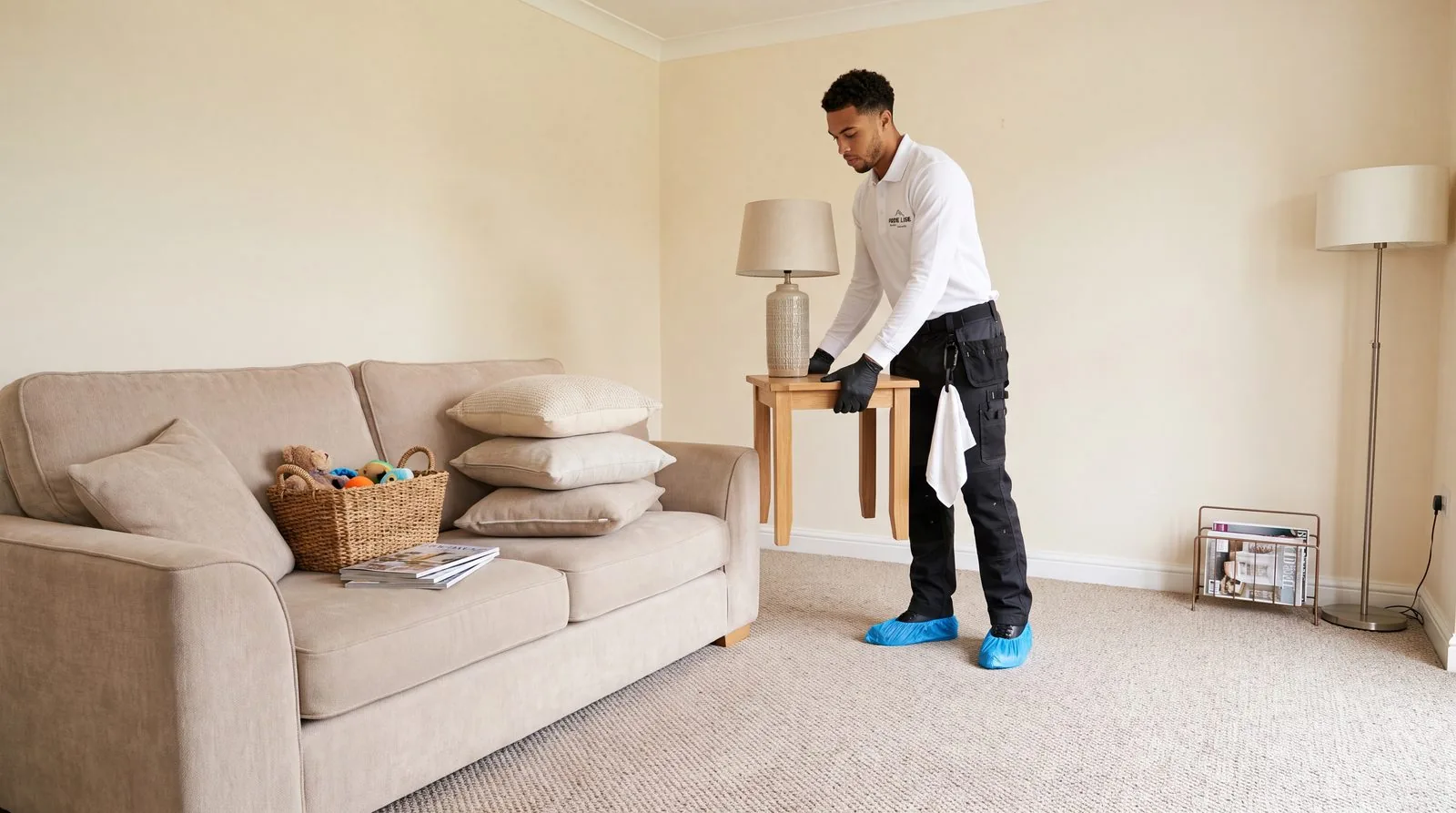
Spills: The First Minute Matters Most
Whether a spill becomes a stain is usually decided in the first 60 seconds, not by whatever bottle you reach for afterwards.
The instinct is to scrub. Please don’t. Rubbing pushes the spill deeper into the pile and frays the fibre tips, so even if the colour comes out, the texture tells the story forever. Blot instead: press a clean, dry white cloth into the spill and let it drink. Work from the outside of the spill inwards so you don’t spread it.
Then water, before anything else. Most fresh spills, tea, juice, milk, muddy water, lift with plain cold water and patient blotting. Keep swapping to a dry section of cloth until nothing more transfers.
Only then think about products, and frankly, if water hasn’t shifted it, the safest next step is to ask us rather than gamble: the wrong chemical can set a stain that we could otherwise have removed.
Dry cloth first, pressed not dragged, outside in. Then a little plain cold water and more blotting. Most everyday spills never become stains when they get that treatment in the first minute. If it won’t shift, stop while the carpet is still safe and send us a photo.
The Instinct
- Scrub hard at it straight away
- Hot water on everything
- Reach for the strongest spray under the sink
What Actually Works
- Blot with a clean, dry white cloth first
- A little plain cold water, outside in
- Patience, then a photo to us if it won’t shift
Caught A Spill You Can’t Shift?
Send us a photo on WhatsApp and we’ll tell you straight whether it needs us or just a little more blotting. Free advice either way.
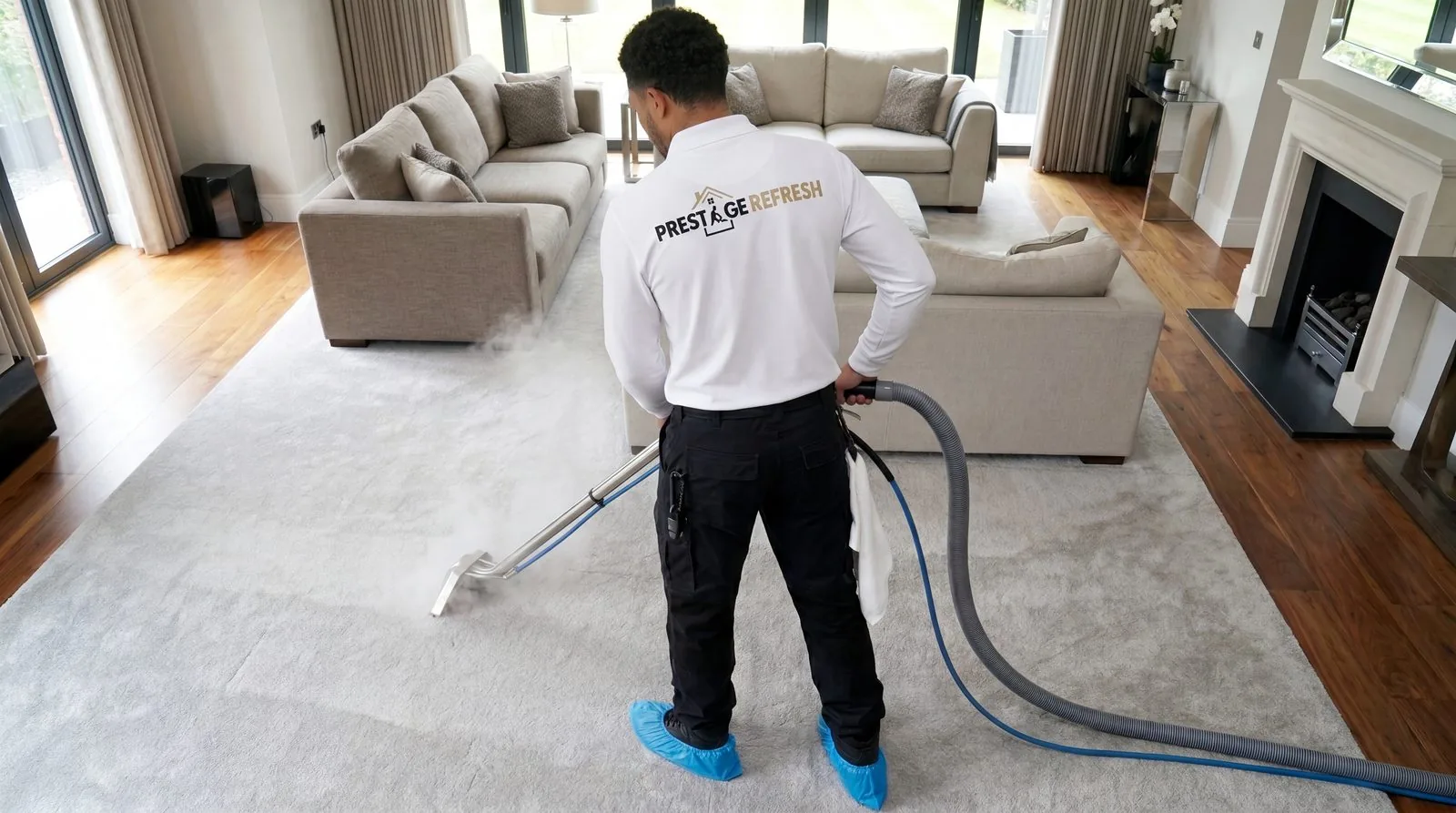
Furniture Rotation and Pile Refresh
Carpets don’t wear evenly, they wear in lines: the same walkways, the same pivot points, the same legs pressing on the same tufts. Spreading that load is free. Every few months, shift the heavier pieces a few inches so the legs land on fresh pile, and turn rugs 180 degrees so the walk-on edge swaps ends.
Flattened pile responds well to gentle grooming. A soft brush worked against the pile direction after vacuuming stands the tufts back up and makes a room look freshly done in about two minutes.
Furniture dents usually recover on their own once the weight moves, helped along with the same gentle brushing. It’s the same principle behind why we groom the pile at the end of every clean: a carpet that stands up straight looks cleaner and wears slower.
What Not To Do
A straight word about the supermarket aisle. The foams and powders promise a quick refresh, and none of them are dangerous. The problem is what they leave behind.
Most are designed to be applied and left, not rinsed out, so a residue stays in the fibre. That residue is slightly sticky, it attracts dirt, and the carpet ends up looking grubby again faster than if you’d done nothing.
Powders are the ones we meet most on jobs. They sift down to the base of the pile where a household vacuum can’t fully retrieve them, and we’re still extracting them out of carpets years after they were sprinkled on.
If you want the room fresher between cleans, the vacuum rhythm above plus ten minutes with the windows open does more than any powder, and costs nothing.
Habits That Backfire
None of these are dangerous. They’re just money and effort spent making the carpet dirtier, faster.
- Scented carpet powders that settle at the base of the pile
- Foam aerosols left to dry into the fibre
- Scrubbing a spill with the strongest spray in the cupboard
- Soaking a stain until the backing underneath gets wet
- Fast, once-over vacuuming that skims the surface grit
When It’s Time For a Professional Clean Again
Good habits stretch a clean beautifully. They don’t replace one, and here’s how to tell the difference.
Everything above deals with what sits in the top of the pile. Over months, fine soil and oils bond deeper than any household vacuum reaches, and that’s the layer only hot water extraction lifts.
The signs are easy to read: traffic lanes going grey even straight after a vacuum, pile that stays flat however much you groom it, and a freshness that stops coming back.
In our experience, a busy family home with kids and pets sits comfortably on a roughly annual rhythm, with quieter rooms stretching well past that. Golden Club members have this handled without thinking about dates: light maintenance visits through the year are the way members keep the standard year-round.

Slow vacuum passes twice a week on the busy lanes, mats at the doors, blot spills fast with water, and leave the foams and powders on the shelf. Do that, and a professional clean keeps looking new for months, and the next one has far less to fight.
Why Prestige Refresh
When customers tell us why they chose us, the same four reasons come up. They’re the standard we hold every job to.
What Customers Say
We could tell you the aftercare advice works. It means more coming from the people living on the carpets. We’re rated 5.0 from 338 Google reviews, and these come straight from them, unedited.
Our Golden Guarantee
The Golden Guarantee
We do the deep clean properly, then we want it to last. Straight advice, straight products, and a result we stand behind in writing.
Quick Answers
How often should I vacuum my carpets?
Slow, overlapping passes matter more than sheer frequency. As a rhythm, vacuum high-traffic lanes such as hallways, stairs and the strip in front of the sofa twice a week, and the rest of the carpet once a week. Slow passes give the machine time to lift grit from the base of the pile, which is what dulls carpets fastest.
The clean lasted so much longer this time. That two-minute routine you left us with actually works.
What should I do when something spills on the carpet?
Blot straight away with a clean, dry white cloth, working from the outside of the spill inwards. Never rub. Follow with a little plain cold water and keep blotting until nothing more transfers. Most fresh spills lift with water alone. If it won’t shift, stop and ask a professional before reaching for a strong product.
Are supermarket carpet foams and powders worth using?
Usually not. Most are designed to be applied and left, so they leave a residue in the fibre that attracts dirt faster, and powders settle at the base of the pile where a household vacuum can’t fully remove them. A steady vacuum rhythm and fast blotting with water do more, and cost nothing.
How often should carpets be professionally cleaned?
In our experience, a busy family home suits a roughly annual rhythm, with quieter rooms stretching longer. The clearest signs it’s time: traffic lanes going grey even after a vacuum, a pile that stays flat, and a freshness that no longer comes back.