
When the pollen count climbs, home is meant to be the one place you can breathe easy. The trouble is that pollen and dust do not stay outside. They get walked in, settle into the soft furnishings, and get stirred back up as you move about. Here is how to keep the indoor load down, frankly.
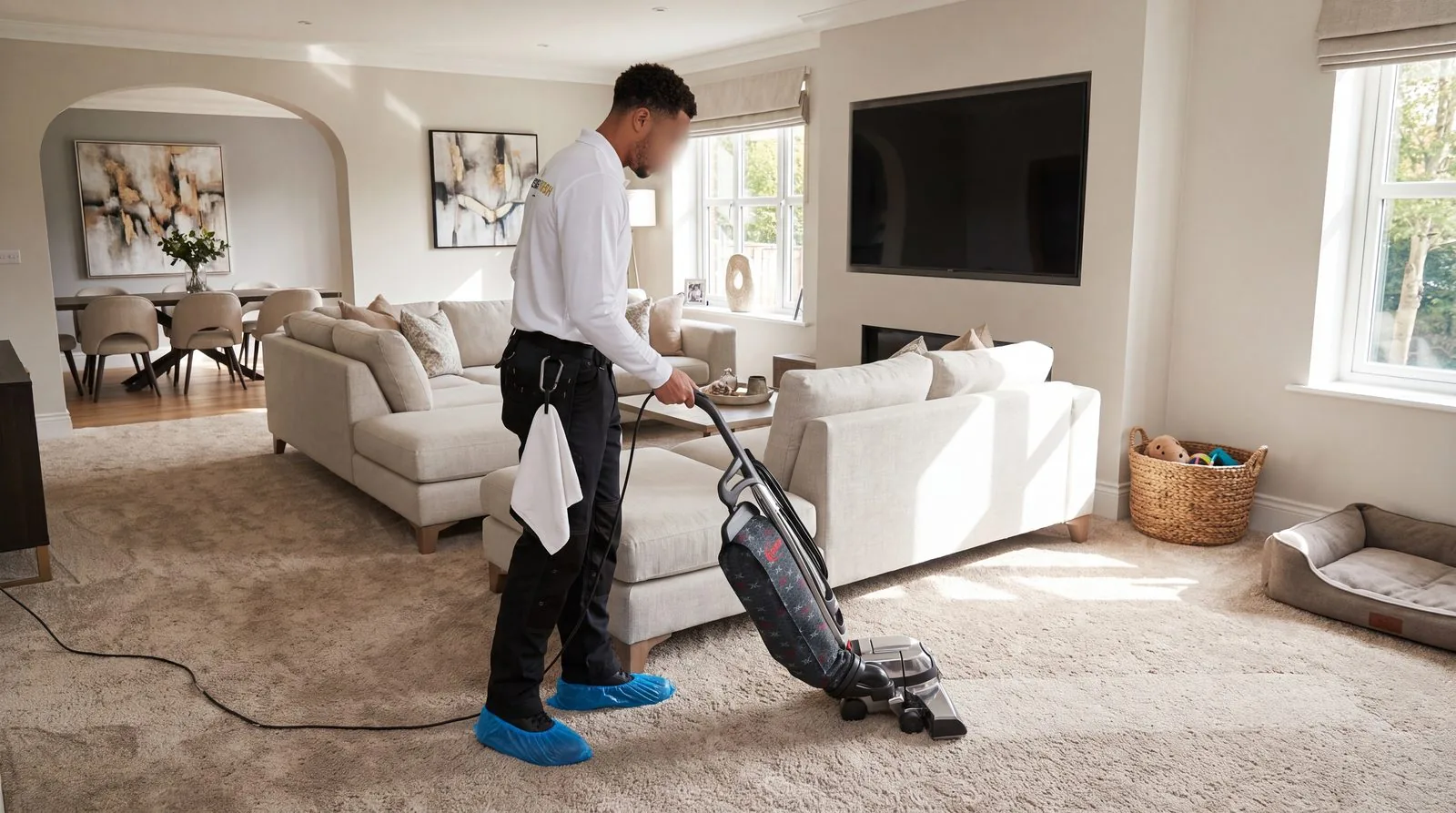
Cleaning does not cure hay fever. It lowers the load in your home.
Pollen and dust settle into carpets, sofas and mattresses. Clearing them out leaves fewer allergens to be stirred back into the air.

Jump to a section
Why the home fills up with pollen
Stop it at the door
The ventilation trade-off
Bedding, dusting & vacuuming
Where a deep clean fits
Our cleaning process
The Golden Guarantee
Why the Home Fills Up with Pollen
Early summer is the hardest stretch for a lot of people. Grass pollen peaks, the days are warm, windows are open, and you are in and out of the garden. All of that carries pollen indoors, on shoes, on clothes, on hair, and on the dog.
Once it is inside, it does not simply vanish. Pollen and household dust drift down and settle into the places with the most surface area to catch them: carpets, sofas, rugs and mattresses. Day to day it sits deep in the fibres, and walking across the room, sitting down, or plumping a cushion stirs it back into the air you breathe.
That matters because the same soft furnishings also hold dust mites, which thrive alongside the settled dust. According to Asthma and Lung UK, 1 in 2 people with a lung condition say that dust makes their condition worse. Lowering what settles indoors is the practical lever you actually control through the season.
The Season’s Quiet Culprits
None of these are dramatic. They are just the everyday ways pollen and dust build up indoors while the count is high. Worth a quick check at home.
- Shoes and outer layers worn right through the house
- Windows thrown open through the middle of the day
- Bedding left too long between hot washes
- Dry dusting that scatters rather than lifts
- Sofas and mattresses never getting a deeper clean
The good news is that most of the fix is simple, and it starts at your own front door.
Stop It at the Door
The single easiest habit through the season. Keep the pollen where it lands rather than carrying it inside.
Most of the pollen that ends up in your carpets arrives on shoes and outer layers. Taking them off at the door keeps the bulk of it in one spot, on the mat, rather than trodden through the lounge and up the stairs.
If anyone in the house is sensitive, it helps to change out of the clothes you have worn outside and to keep them off the bed and the sofa.
Pollen clings to fabric, so the jacket slung over the armchair quietly seeds the whole room. None of this is a cure. It simply means less lands indoors in the first place, which is the load everything else has to deal with.

The Ventilation Trade-Off
Airing the house is good for it, but the timing matters more than most people realise in hay fever season.
There is a genuine tension here, so we will be straight about it. A well-aired home is a healthier one. Asthma and Lung UK advises keeping your home well-aired to lower humidity, which helps keep dust mites down. The catch is that open windows also invite pollen straight in.
The straight middle ground is timing. Pollen counts tend to be highest through the middle of the day, so throwing the windows wide at lunchtime lets in the most.
Airing the house early in the morning or later in the evening, when counts tend to be lower, gives you the benefit of fresh air with less of the pollen. It is a small change that works with the season rather than against it.
Open the windows first thing or in the evening, when pollen counts tend to be at their lowest, to lower humidity and keep the air fresh. Through the middle of the day, when counts are usually highest, keeping them mostly closed lets in far less pollen.
Bedding, Dusting & Vacuuming
The everyday cleaning that clears what has already settled, done in the way that actually lifts it out.
Once pollen and dust are inside, the aim is to remove them rather than move them around. Three habits do most of the work through the season.
- Wash bedding hot and often. Sheets and pillowcases collect the pollen carried on hair and skin, so frequent hot washes clear it away where you sleep
- Damp-dust surfaces rather than dry-dusting, so you lift the dust onto the cloth instead of scattering it back into the air
- Vacuum soft furnishings and carpets, not just the floor. Pollen and dust settle into sofas and rugs as much as the pile underfoot
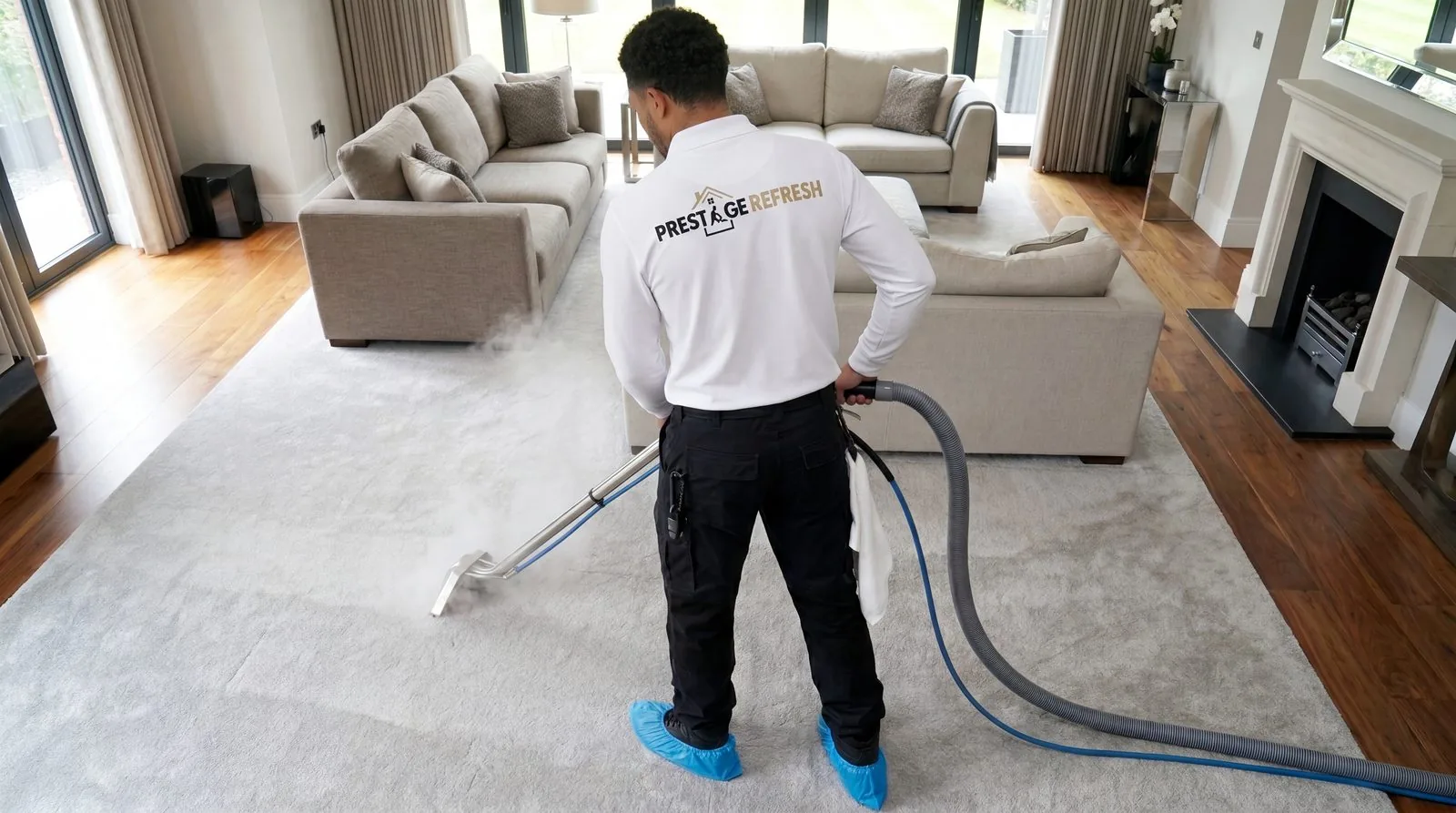
Vacuuming does a lot, and it should be your regular routine. What it cannot do is reach everything. A vacuum lifts what sits near the surface, but a good deal of the settled load works deeper into the pile and the padding, below where suction reaches. That is the gap a deeper clean is for.
Cleaning For A Sensitive Household?
Tell us if anyone at home struggles through hay fever season, and we’ll talk through where a deep clean would help most, and where it frankly would not. Take your time deciding.
Where a Deep Clean Fits
Not a cure, and we would never dress it up as one. Just an straightforward way to clear the load that vacuuming leaves behind.
Carpets, upholstery and mattresses are where the settled load gathers, because they hold what floats down. This is why dust mites concentrate there too.
According to Allergy UK, house dust mite allergy is very common and is one of the main indoor triggers for asthma and allergy symptoms, and those mites gather exactly where pollen and dust do, deep in the soft furnishings you use every day.
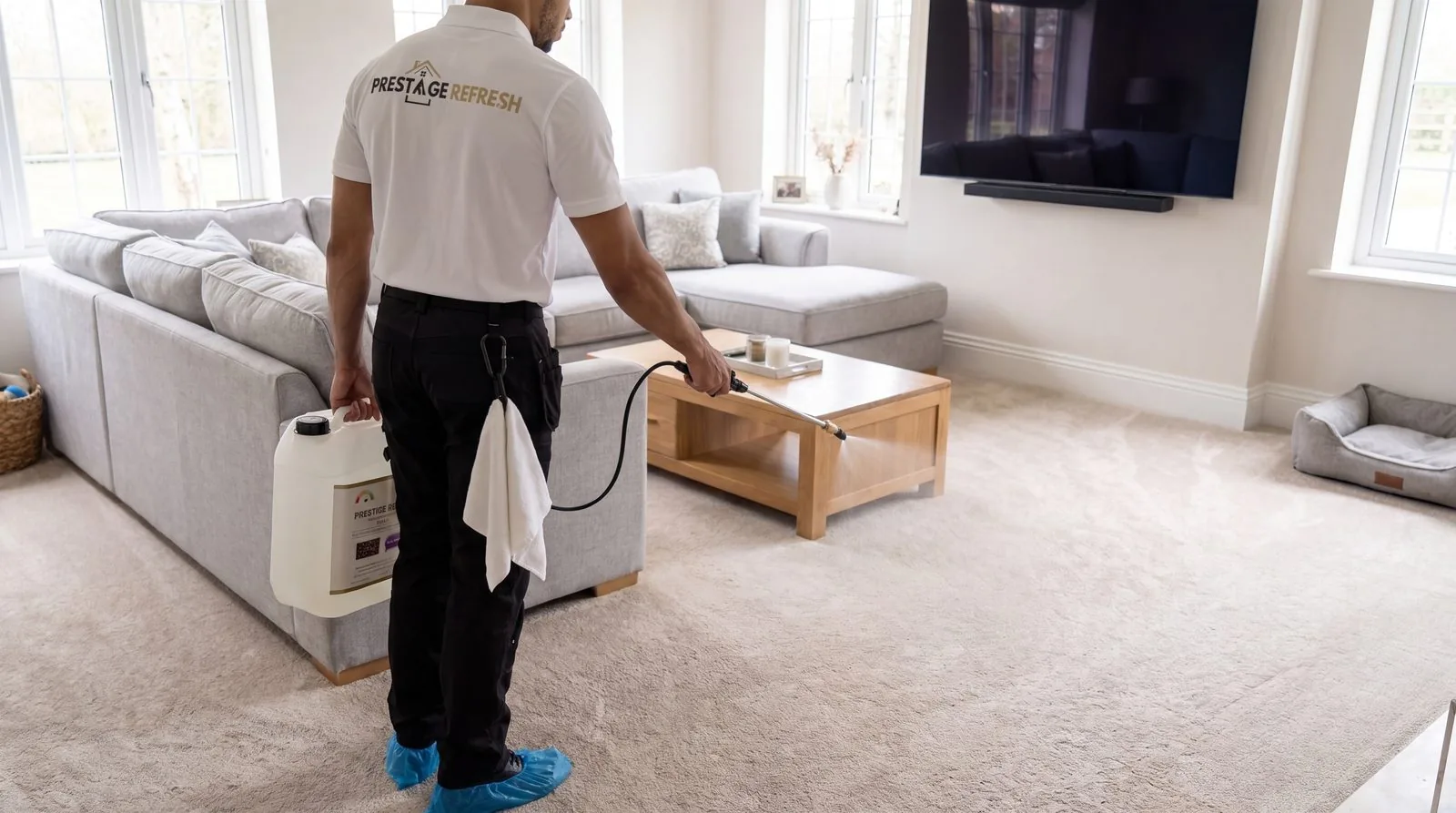
A deep hot water extraction lifts that settled load out of the pile and the padding, in our experience, reaching well below where a vacuum stops. Mattresses matter as much as carpets here, since that is where you spend the night, and many hay-fever-sensitive households find a deep clean leaves the home noticeably easier to be in through the season.
What Vacuuming Leaves
- Lifts the surface, not the deeper settled load
- Struggles to reach into upholstery and mattresses
- Dust settles back over the days that follow
A Deep Extraction Clean
- Reaches deep into the pile and the padding
- Covers carpets, sofas, rugs and mattresses alike
- Lowers the allergen load, in our experience
There is a wider point worth making about carpet itself. According to a study by the German Allergy and Asthma Association, fine dust in a room with hard flooring is around twice as high as in a room with carpet, because carpet holds the dust in the pile until it is cleaned out rather than letting it circulate.
A clean carpet works with you through the season, holding what would otherwise be airborne, provided it is cleared out properly from time to time.
To be completely clear, cleaning reduces the allergen load in your home. It does not cure hay fever, and it is not a medical treatment for anyone. What it offers is a cleaner home, and for a sensitive household through the season, that is worth having.
Cleaning will not cure hay fever, and we would never say it does. What it does is lower the pollen and dust that settle into your home. Stop it at the door, air early or late, wash bedding hot, and clear the settled load from carpets, sofas and mattresses. The result is a cleaner home to get through the season in.
Our Cleaning Process
It isn’t one step. It’s a simple sequence built to lift the settled load out of your soft furnishings and leave the home fresh.
Inspect & Spot TestWe check the fibres and spot-test a hidden area first, so everything we use suits the material.
Vacuum & AgitateA thorough dry vacuum lifts loose dust, then we agitate to loosen what has worked deeper in.
Hot Water ExtractionHot water and strong extraction draw the settled load out of the pile and padding, then extract the moisture back out.
Deodorise & DryA Gold Musk deodorise finish, then we keep the air moving so it dries, usually about four hours.
By July the house always felt heavy. Getting the carpets and the mattress done made it far easier to be in.
Why Prestige Refresh
When customers tell us why they chose us, the same four reasons come up. They’re the standard we hold every job to.
What Customers Say
We could tell you we’re careful with sensitive homes. It means more coming from the people we’ve actually cleaned for. We’re rated 5.0 from 338 Google reviews, and these come straight from them, unedited.
Our Golden Guarantee
The Golden Guarantee
We work cleanly, frankly, and openly. Controlled processes, the settled load lifted out, and clear communication about what a clean can and cannot do, backed in writing.
Quick Answers
Can cleaning the house reduce hay fever symptoms?
Cleaning does not cure hay fever, and nothing at home is a medical treatment. What it can do is reduce the allergen load in the house. Pollen and dust get walked in and settle into carpets, upholstery and mattresses, then get stirred back up.
Taking shoes off at the door, washing bedding hot and often, damp-dusting, and vacuuming soft furnishings all cut how much is left indoors, which many hay-fever-sensitive households find helps.

Should I open the windows during hay fever season?
It’s a trade-off. A well-aired home lowers humidity, which helps keep dust mites down, but open windows also let pollen in. The straight middle ground is to air the house early in the morning or later in the evening, when pollen counts tend to be lower, rather than through the middle of the day when they are usually at their highest.
Does professional carpet cleaning help with hay fever?
Carpets, upholstery and mattresses hold what floats down, including pollen and dust carried in from outside. A deep hot water extraction lifts the settled load that vacuuming leaves behind, in our experience, which many hay-fever-sensitive households find helps. It reduces the allergen load in the home, it does not cure hay fever or treat anyone medically.
How often should I wash bedding during hay fever season?
Wash bedding hot and often through the season. Pillowcases and sheets collect the pollen carried on hair and skin, and the mattress underneath holds dust and settled allergens. Frequent hot washing clears what has gathered, and a professional mattress clean lifts the deeper, settled load that a wash cannot reach.