
If your carpet looks fine, deciding it can wait is a perfectly reasonable call. This page is not here to argue with your eyes. It is here to explain what your eyes cannot see, so the decision is a fully informed one.
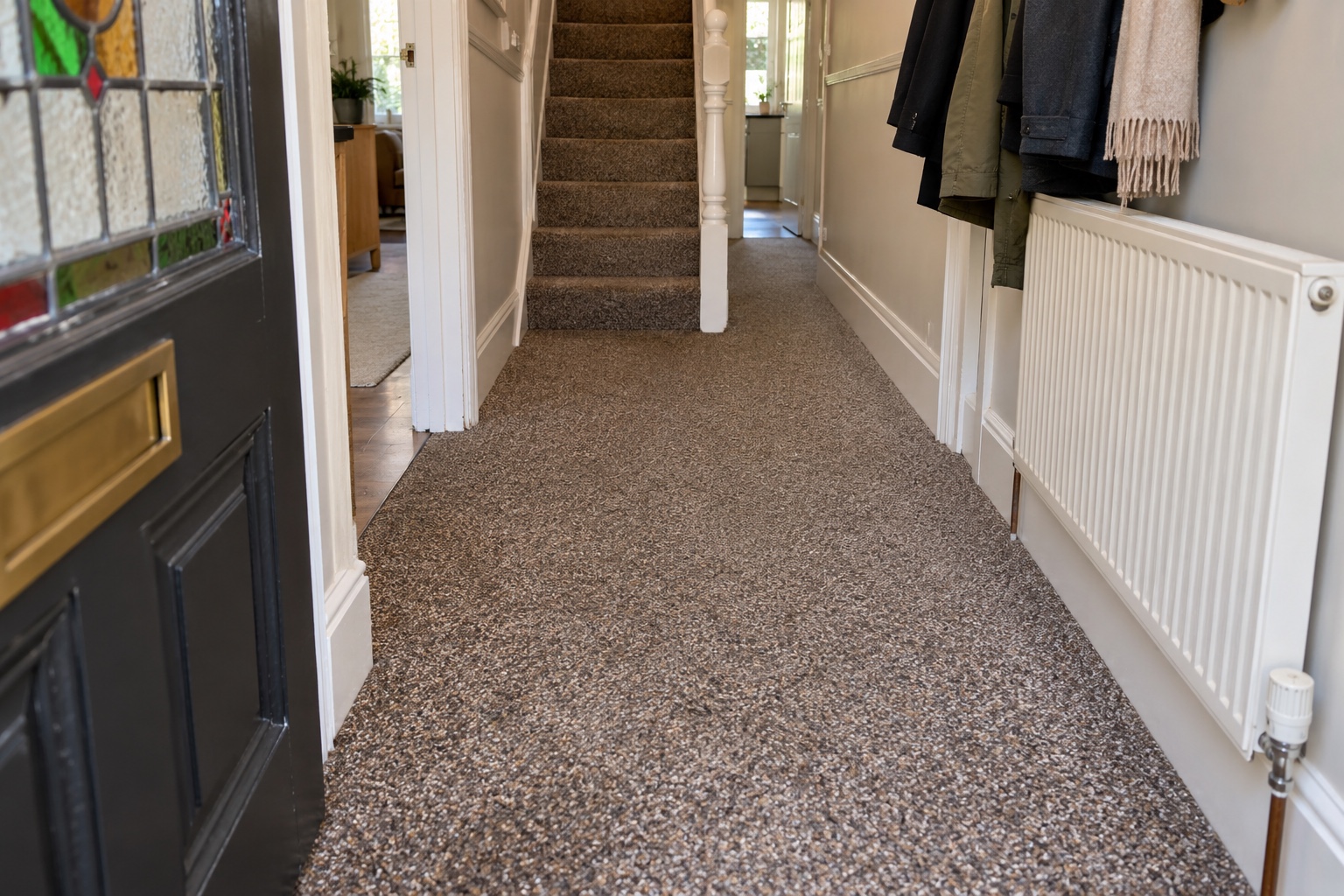
Looks clean and is clean are different things.
Carpet is designed to disguise soil, and the grit that builds at the base of the pile wears the fibre permanently. Cleaning before it looks dirty is what keeps a carpet looking new.

Jump to a section
Looks clean vs is clean
What builds unseen in the pile
The greying you only see in reverse
What it means for the air
Cheaper before than after
What a deep clean involves
The Golden Guarantee
Looks Clean and Is Clean Are Different Things
Here is something the carpet industry does not shout about: carpet is designed to hide soil. That is not a flaw, it is the brief. Patterned carpets break up marks so the eye slides past them. Twist piles and heathered yarns mix tones so everyday soiling disappears into the texture. Darker shades are sold on exactly this promise. A well-chosen carpet is, quite literally, engineered to look fine long after it has stopped being clean.
So when you look at your carpet and think it does not really need cleaning any more, your eyes are giving you a straight report of the surface. The surface is rarely where the problem is. In our experience, the carpets that surprise people most on a clean are the ones that looked perfectly presentable an hour before.
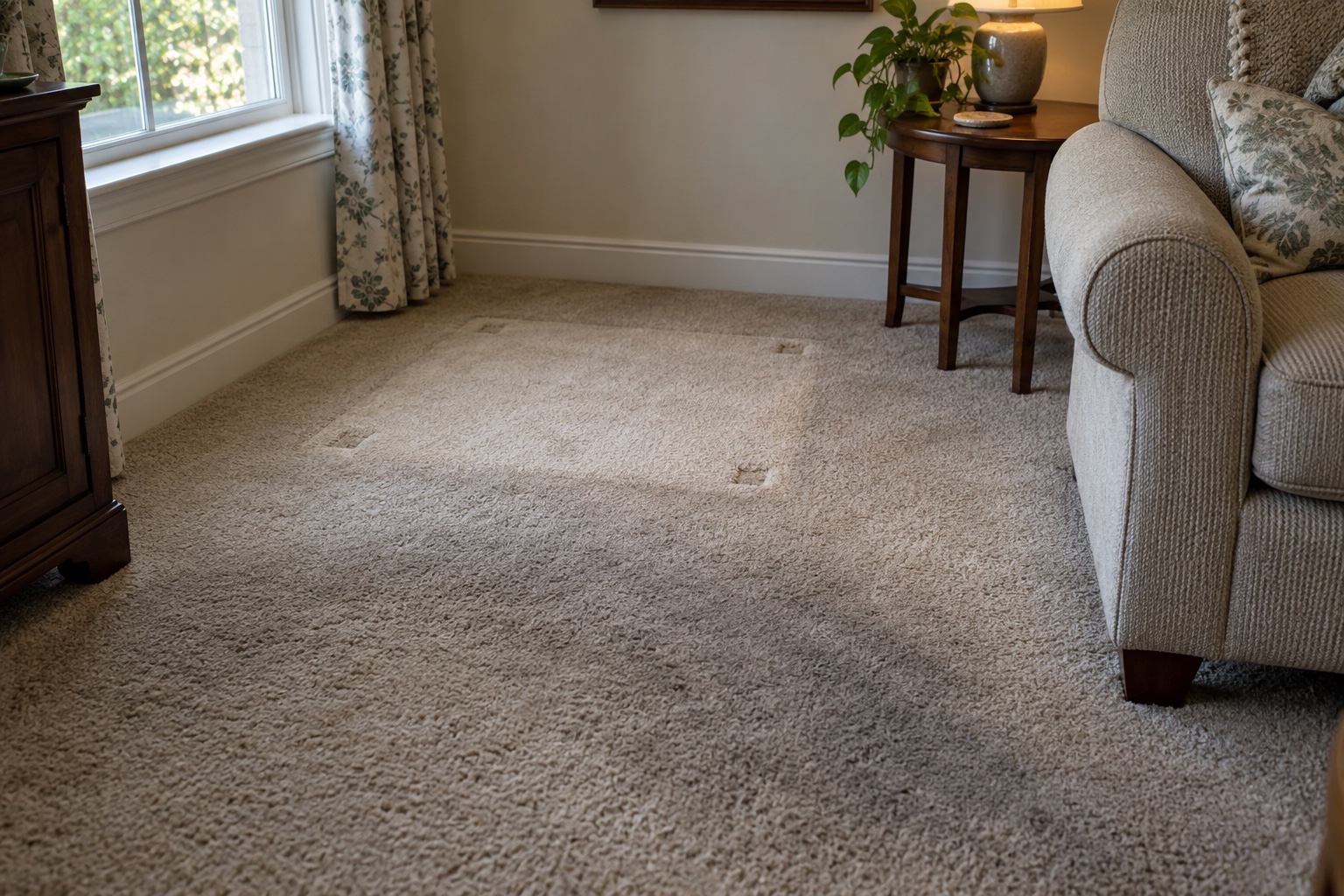
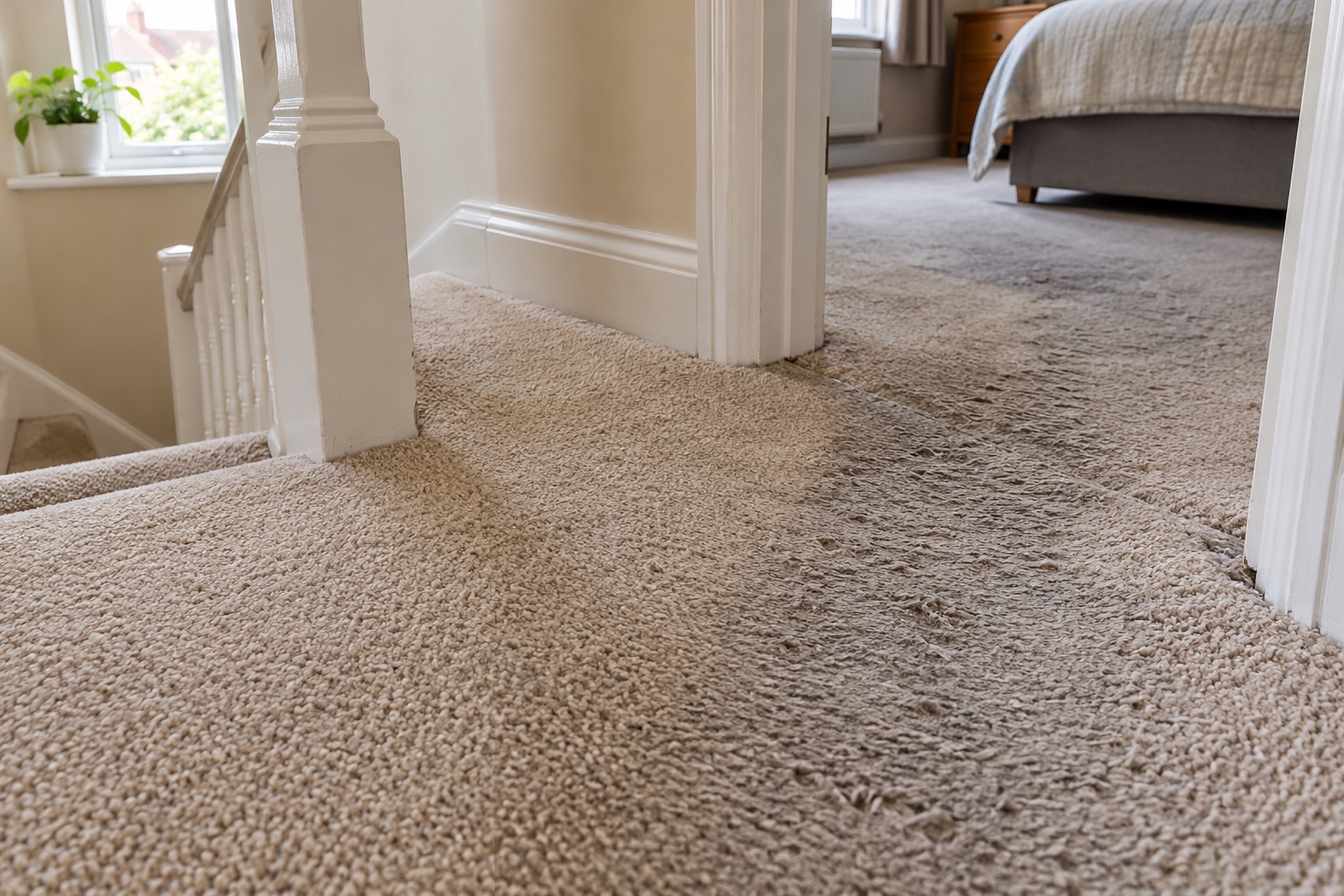
Move a piece of furniture that has not moved in a year and compare the carpet underneath with the carpet in front of it. If there is a visible difference in colour or brightness, that difference is what has built up everywhere else. It takes sixty seconds and it is the most straight test there is.
What Builds Unseen at the Base of the Pile
Three things collect down there, and none of them shows on the surface until the damage is done.
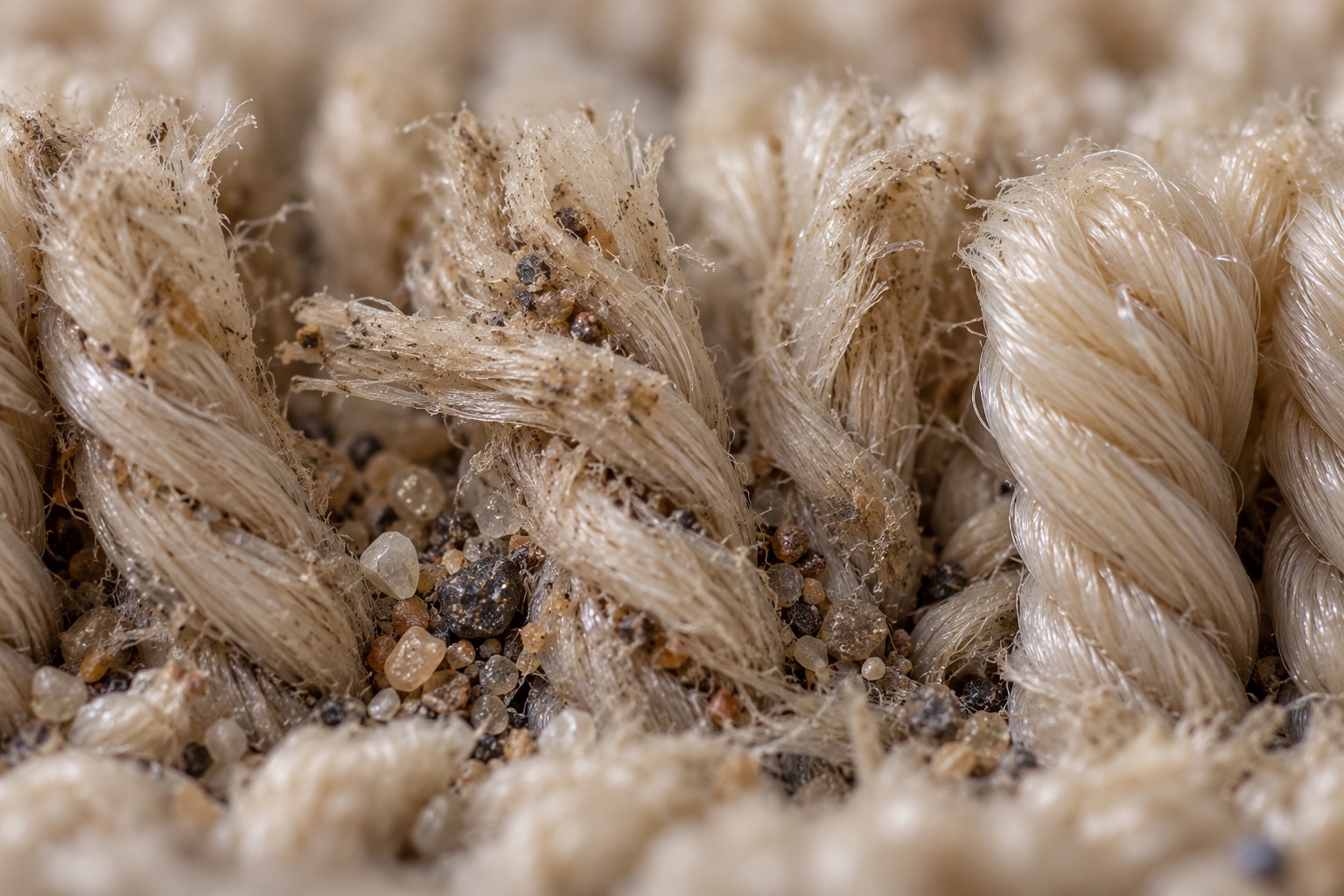
The first is grit. Fine, sharp particles of sand and soil walk in on shoes and paws, work down through the pile and settle at the base, below the reach of most vacuums. Every footstep after that grinds the fibres against those particles. It works like sandpaper underfoot, and it is why traffic lanes go flat and dull years before the rest of the room. That wear is permanent. No clean, ours included, can put back fibre that has been ground away.
The second is oil. Cooking vapour, skin oils, pet oils and airborne grime settle on the fibre as a thin film. The film itself is invisible, but it holds fine dust to the fibre, and together they dull the colour so gradually that you never see it happen. You simply get used to a slightly greyer room, month by month.
The third is the biological load: household dust, dander, pollen carried in from outside and dust mites, all settling into the same fibres, exactly where the family sits and plays.
What The Eye Sees
- A surface that looks perfectly presentable
- A colour you’ve slowly got used to
- No obvious stains, so no obvious problem
What The Pile Is Holding
- Sharp grit at the base, abrading fibre with every step
- An oily film bonding dust to the fibre and greying the colour
- Dust, dander, pollen and dust mites deep in the pile
Quiet Signs The Pile Is Loaded, Even When It Looks Fine
None of these is a stain. All of them are what hidden soil looks like from above.
- Walkways look flatter and duller than the carpet by the skirting
- The colour under furniture is brighter than the open floor
- A grey cast in doorways and at the bottom of the stairs
- Socks pick up a faint grubbiness on a “clean” carpet
- A background smell that airing the room never quite shifts
- More dust settling on surfaces than the housework explains
The Greying You Only See in Reverse
The dulling of a carpet is too slow to watch. It happens over hundreds of days, in a room you see every one of those days, so your eyes recalibrate as it goes. Nobody notices their carpet getting five percent greyer. They just slowly stop noticing the carpet at all.
Which is why the moment people actually see it is nearly always in reverse. One room gets cleaned, or one sofa, or one flight of stairs, and suddenly the rest of the house looks tired by comparison. Nothing about the other rooms changed that day. The clean simply gave your eyes their reference point back.
The same thing shows up in the machine. The recovery tank on the Enforcer 400 collects the water we extract back out of the carpet, and on carpets that “looked fine” it routinely comes out grey-brown. That water is the most straight before-and-after there is, because it is the soil the surface was hiding.
Not Sure Yours Needs It?
Send us a photo on WhatsApp and we’ll give you a realistic read on the condition. If it can genuinely wait, we’ll tell you so.
What It Means for the Air
The hidden load is not only a cosmetic question. Carpets, upholstery and mattresses hold household dust and dust mites in quantity, and they do it silently in rooms that look spotless. According to Allergy UK, house dust mite allergy is very common and is one of the main indoor triggers for asthma and allergy symptoms.
That matters to more households than most people think. According to Asthma and Lung UK, 1 in 2 people with a lung condition say that dust makes their condition worse. A deep clean lifts a large amount of that trapped load out of the home, whether or not the carpet ever looked dirty. It is not a medical treatment, and we would never claim otherwise, but a cleaner pile generally means cleaner air to live in.
Cheaper Before Than After
The economics of carpet care come down to one line: soil removal is reversible, fibre wear is not.
Clean a carpet while the grit load is modest and everything that is wrong with it comes out. The soil lifts, the colour returns, the pile grooms back up, and the carpet carries on as if the build-up never happened. That is a maintenance clean, and it is the cheapest work we ever do per year of carpet life.
Leave the same carpet until it visibly needs rescuing and the picture changes. We can still remove the soil, and the difference will still be dramatic. What we cannot do is restore the fibre the grit has already ground down. The flattened traffic lanes, the lost texture, the permanent shading in the walkways stay, because that is wear, not dirt. A rescued carpet is clean but tired, and tired carpets get replaced years earlier than maintained ones. Against the cost of re-carpeting a lounge or a full flight of stairs, cleaning before it looks dirty is not an indulgence. It is the cheap option.
- Cleaned early: soil out, colour back, fibre intact, full life ahead of it
- Rescued late: soil out, but the wear stays and the pile never fully recovers
- Replaced: the most expensive outcome of all, and the one early cleaning postpones longest
Our Approach: Straight About Timing
We would rather keep a carpet at its best than be called in to rescue it, but we will never talk you into a clean you do not need. If you send us a photo or book a walk-through and the straight answer is that yours can wait six months, that is the answer you will get. The price quoted is the price paid, the advice given is the advice we would give our own homes, and the work is backed in writing either way.
A carpet that looks fine can still be carrying years of grit, oil and dust at the base of the pile. The grit wears fibre permanently, the greying is too slow to see, and cleaning before it looks dirty is what keeps the carpet, and the cost of owning it, at its best.
What a Proper Deep Clean Involves
Lifting soil the eye cannot see takes more than a surface pass. This is the sequence on every job.
Inspect & Spot TestWe assess the real condition, walkways and all, and spot test a hidden area before anything else.
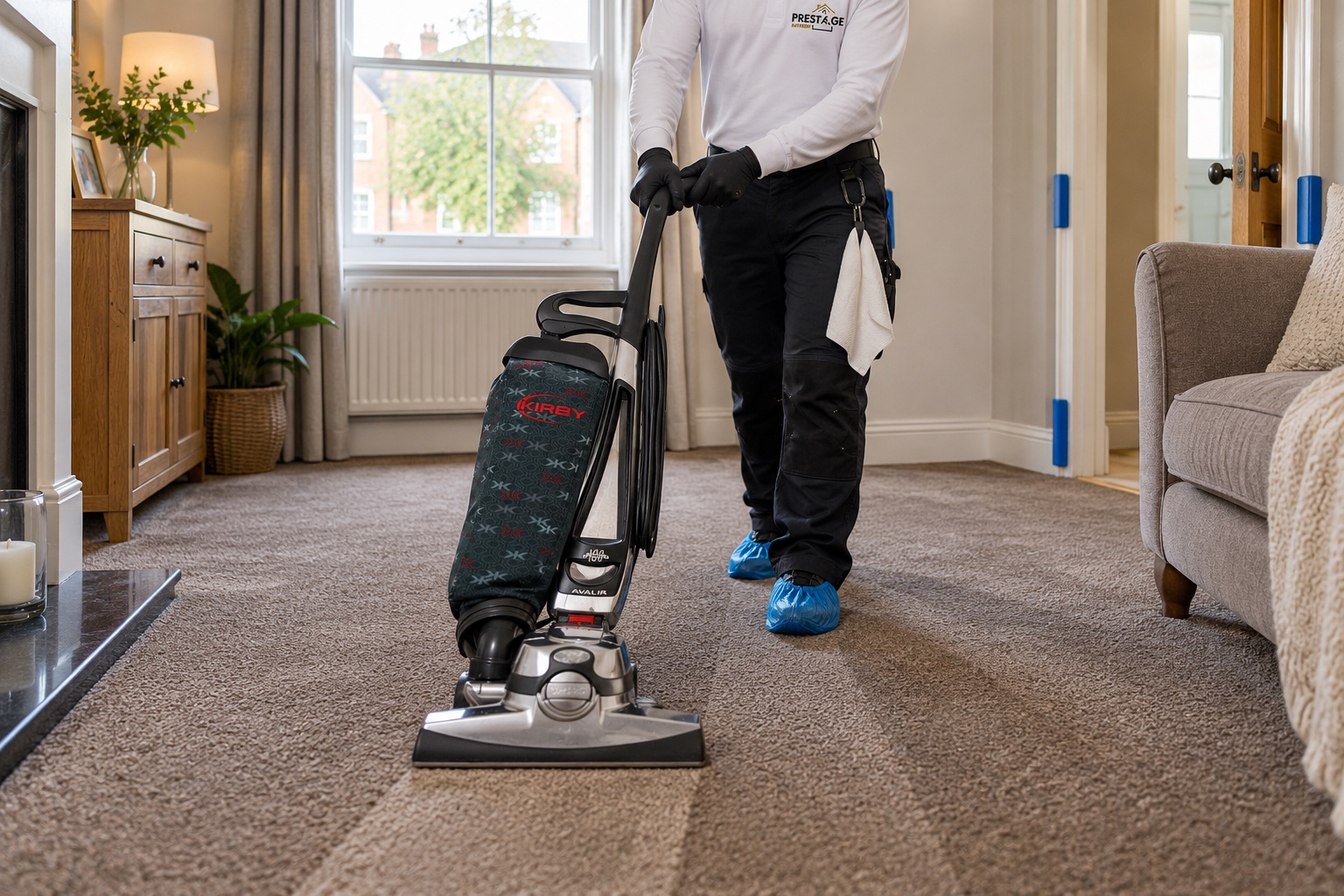
Dry Soil Out FirstA Kirby dry vacuum pass lifts the loose grit from the base of the pile, then we agitate and pre-spray to release what’s bonded.
Deep ExtractionHot water extraction with the Enforcer 400 flushes the pile and pulls the soil, oils and moisture straight back out.
Finish & ProtectDry pods speed the drying, a Gold Musk deodorise finishes the clean, and we groom the pile. Gold Guard protection is available if you want the result to last longer.
Why Prestige Refresh
When customers tell us why they chose us, the same four reasons come up. They’re the standard we hold every job to.
What Customers Say
We could tell you what a clean does for a room that “looked fine”. It means more coming from the people we’ve actually cleaned for. We’re rated 5.0 from 338 Google reviews, and these come straight from them, unedited.
Our Golden Guarantee
The Golden Guarantee
Straight advice on whether a clean is needed, straight work when it is, and a result that is backed in writing.
Quick Answers
My carpet looks fine. Does it really need cleaning?
Looks clean and is clean are different things. Carpet is designed to disguise soil, which is exactly what patterned and twist piles do. Grit, bonded oils and dust build at the base of the pile long before anything shows on the surface, and the grit wears the fibre permanently as it is walked in. A carpet can look fine and still be carrying years of hidden soil.
Does vacuuming keep a carpet clean enough on its own?
Vacuuming is well worth doing and it lifts the loose, dry soil near the surface. What it cannot reach is the sharp grit packed at the base of the pile or the oily film that bonds to the fibre and dulls the colour. Those need hot water extraction to break down and lift out.
How often should a carpet be professionally cleaned?
In our experience, busy family rooms benefit from a professional clean roughly once a year, sooner with pets and young children, and spare rooms can go longer. The straight answer is that it depends on condition, not the calendar, and we’re happy to tell you if yours can wait.
Is it really cheaper to clean before it looks dirty?
In our experience, yes. Soil removal is reversible, fibre wear is not. A carpet cleaned before the grit has ground the pile down comes back to its best. A carpet rescued after years of build-up can be made clean, but the wear in the fibre stays, so it never quite looks new again and is replaced sooner.