

Moving out is enough work without losing part of your deposit over the carpets. Here is what an end of tenancy clean actually covers, what agents and landlords look for at check-out, and the paper trail that settles the question before it becomes an argument.

The clean protects your deposit. The dated record proves it.
An end of tenancy clean returns the floors and fabrics to their check-in condition, and leaves you with a dated invoice to hand to the agent or landlord.

Jump to a section
What an end of tenancy clean includes
Why your deposit hangs on the floors
Fair wear and tear vs a cleaning issue
The hire-machine shortcut
Timing it around the move
Our end of tenancy floor process
The Golden Guarantee
What An End Of Tenancy Clean Includes
An end of tenancy clean is the deep clean a property gets when a tenancy ends, so it can be handed back in the condition the inventory recorded at the start.
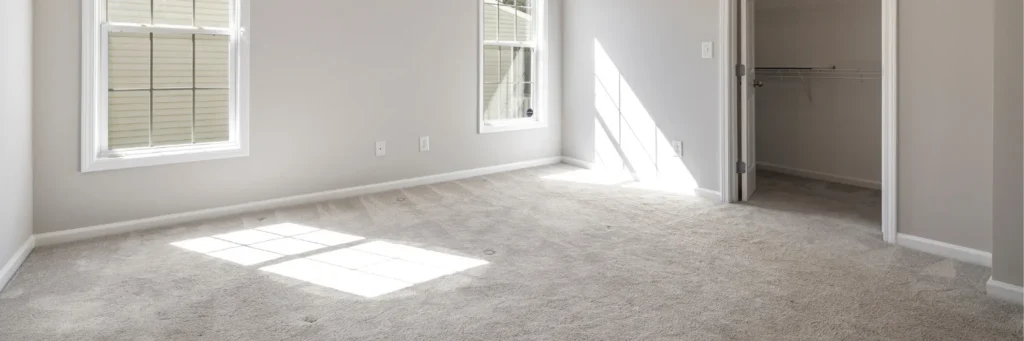
A full clean covers the whole property, but the part that decides most flooring disputes is the carpets and the soft furnishings, because that is where day to day living shows the most and where a tired finish is easiest to spot.
On the floors and fabrics, that means a professional clean of the carpets, upholstery, rugs, mattresses, hard floors, and tiles and grout.
Carpets are deep cleaned back to colour, sofas and any supplied soft furnishings are refreshed, hard floors and grout lines are cleaned rather than just mopped over, and any included mattresses are treated. The aim is simple: the floors and fabrics look the way they did on the day you moved in, and you have something in writing to prove it.
What it is not is a light surface tidy. A check-out inspection is done against the original inventory, often with photos, so a clean that only addresses what is on show will not hold up where it counts.

Why Your Deposit Hangs On The Floors
At the end of a let, the landlord or agent inspects the property against the inventory taken at check-in, usually with photos.
Carpets and soft furnishings are where everyday life shows the most: traffic lanes, the odd spill, a general dulling over a couple of years. That is why, in our experience, they are one of the most common places a deduction gets proposed.
The key point is that a proposed deduction is a conversation, not a foregone conclusion, and evidence is what settles it.
If you can show the floors were professionally cleaned at the end of the tenancy, with a dated invoice and before and after photos, you move the discussion from “the carpets look tired” to “here is the record they were returned properly cleaned”. That record is the single most useful thing you can hand over.
Red Flags: What Costs Deposits At Check-Out
These are the patterns we see when flooring deductions stick. Every one of them is avoidable.
- Carpets cleaned weeks before check-out, then lived on
- A hire machine that left the carpet damp and musty
- Edges, stairs and doorways left untouched
- Old stains that wicked back up after a DIY clean
- Odours the tenant stopped noticing, the inspector will not
- No invoice or photos to show at the inspection
Fair Wear And Tear vs A Cleaning Issue
Not every mark is yours to fix. Check-out reports draw a line between fair wear and tear, the gradual change that comes from normal living, and cleaning issues, which is anything a proper clean would put right. You are not expected to hand back a three-year-old carpet looking brand new. You are expected to hand it back clean.
Usually Read As A Cleaning Issue
- Greyed traffic lanes and soiled doorways
- Spills, spots and marks in the pile
- Odours held in the carpet or fabric
Usually Read As Fair Wear And Tear
- Gentle flattening in the walkways
- Fading from sunlight over the years
- Seams and edges showing their age
The distinction matters because the first column is exactly what a professional clean removes. In our experience, once the cleaning issues are dealt with and documented, what is left is wear, and wear is far harder to argue into a deduction.
On the walk-through we tell you straight which side of the line each mark sits on, so there are no false promises.
Moving Out Soon?
Tell us the property and the check-out date. We will tell you straight what will lift, what is wear rather than dirt, and the price before we start.
The Hire-Machine Shortcut, And Why It Backfires
The tempting route is to grab a supermarket hire machine and do the carpets yourself the night before check-out. It feels like the thrifty choice. In practice, it is where we see a lot of deposits quietly slip away.
A domestic or hire machine puts plenty of water down but has weak suction, so the carpet ends up soaked rather than cleaned. That trapped moisture does two things: it can wick old stains back up to the surface as it dries, so a mark you thought had gone reappears days later, and in a cold empty property it can leave a damp, musty smell that an inspector will note.
Worse, an over-wet carpet can take a day or more to dry, and you rarely have that long between cleaning and handover. None of it leaves you with a record, so if the agent decides the carpets look tired, it is your word against theirs.
The Hire Machine
- Puts water down, too weak to pull it back out
- Old stains wick back as the carpet dries
- A damp, musty smell in an empty property
A Professional Clean
- Recovers most of the water it puts down
- Stains treated, then flushed out for good
- Dry in hours, ready for the handover
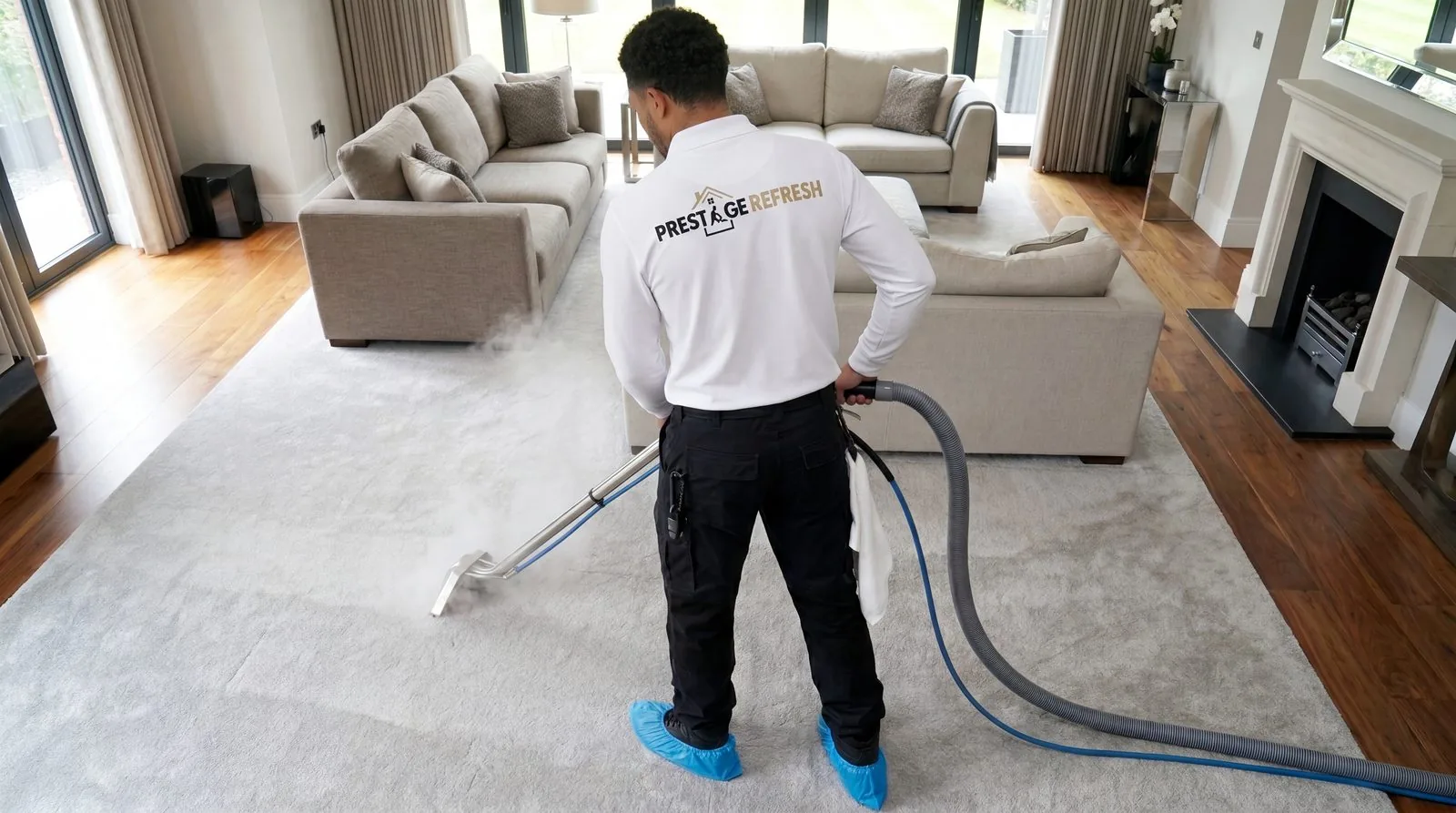
Professional extraction equipment is built the other way round: strong enough to recover most of the water it uses, so the dirt comes out and the carpet dries quickly. That is the difference between a carpet that looks freshly cleaned at handover and one that looks worse than when you started.
Timing It Around The Move
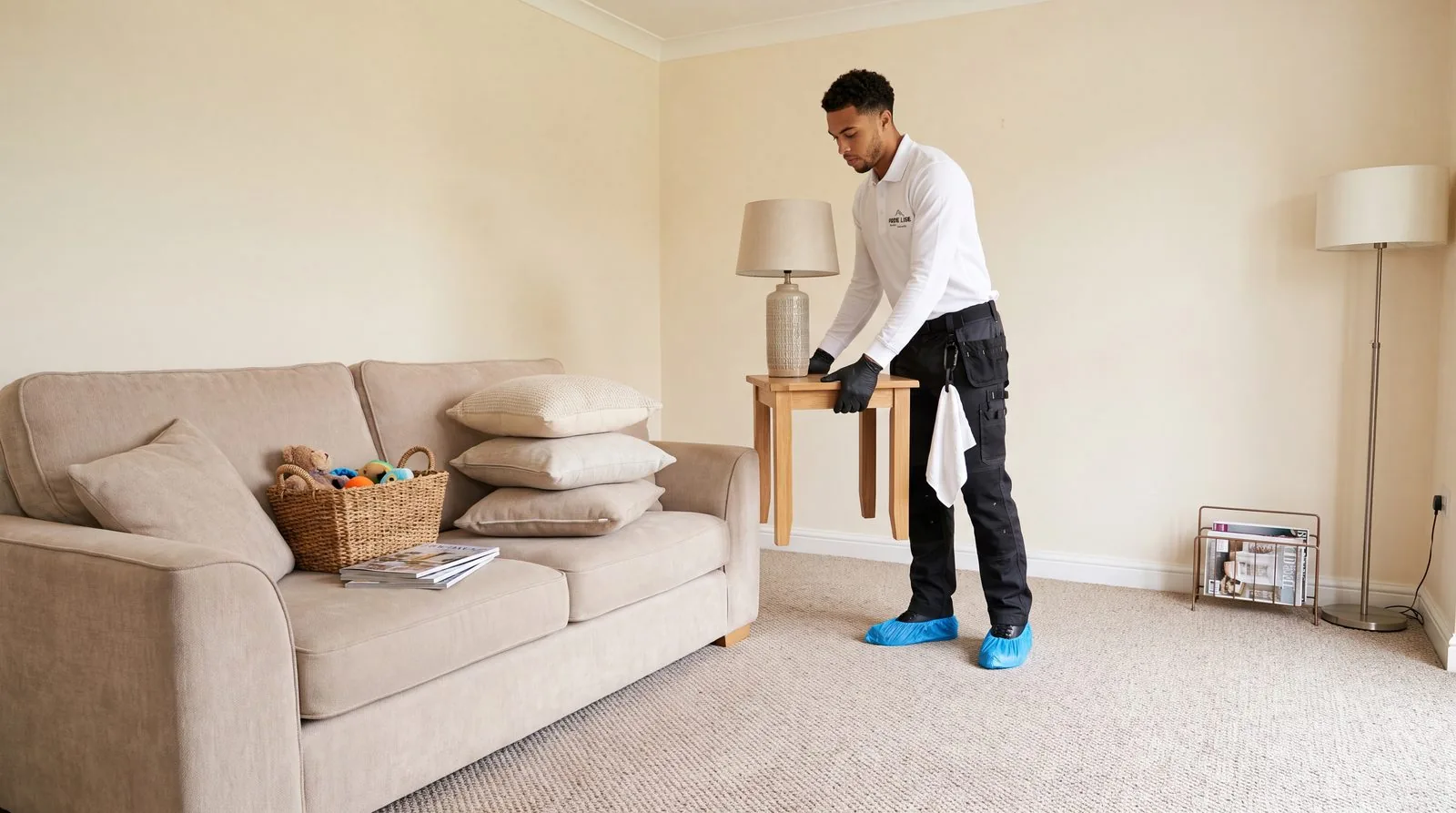
We work around your move. Most people book us once the property is empty or nearly empty, which lets us reach the whole floor, including where the furniture stood. We tell you the window and turn up within it.
Before we start we walk the property with you, note anything we want to flag, and tell you straight what will lift cleanly and what is permanent wear rather than dirt.
While we clean, you are free to carry on with the rest of the move. When we finish you get a dated invoice itemising what was cleaned, and on request before and after photos of the floors. That is the paperwork that does the heavy lifting at check-out.
Book the clean once the furniture is out and as close to the check-out as you can manage. Carpets usually dry in around four hours, though it can range from one to twelve depending on the material, so a morning clean is dry for an afternoon handover. If the schedule is tight, ask about our same-day dry as a priority.
The agent barely paused on the carpets. I handed over the invoice and the photos and that was the end of it.
Our End Of Tenancy Floor Process
The same disciplined steps in every property, so the result is consistent and the record stands up.
On carpets, that means an inspection and spot test first, a thorough dry vacuum with the Kirby to lift the grit and dry soil, then agitation and a pre-spray worked into the traffic lanes and marks.
Hot water extraction with the Enforcer 400 flushes the loosened dirt out and pulls the bulk of the moisture straight back out with it. Dry pods bring the drying time down, a Gold Musk deodorise leaves the property smelling fresh rather than damp, and a final groom sets the pile so it dries evenly.
Hard floors, tiles and grout follow the same principle: the right solution, proper agitation along the grout lines, and a clean finish rather than a film of dirty water left to dry. Upholstery and any included mattresses are cleaned to the fabric’s tolerance, spot tested first so nothing is put at risk.
Inspect & Spot TestWe walk the property with you, flag what is dirt versus wear, and test a hidden area first.
Dry Vacuum & PrepThe Kirby lifts the dry soil, then we agitate and pre-spray the traffic lanes and marks.
Extract & DryHot water extraction with the Enforcer 400, then dry pods to bring drying down to hours.
Groom & RecordGold Musk deodorise, an even groom, and a dated invoice for the check-out file.

For Landlords & Letting Agents
The same clean works from the other side of the tenancy. If you manage property, the gap between tenants is short, and the floors have to be right before the next viewing. We slot into the void, work to the same standard on every instruction, and leave you the paperwork for the file.
- One process and one standard, repeated across every property you send us
- Carpets, upholstery, rugs, mattresses, hard floors, and tiles and grout covered in a single visit
- A dated, itemised invoice for the file on every clean
- Straight reporting: we tell you what lifted and what is wear, so the inventory stays accurate
For carpets that take a beating between tenancies, ask about Gold Guard, our protection treatment that helps high-traffic areas resist everyday spills through the next let.

An end of tenancy clean returns the property to its check-in condition, and on the floors that means a professional deep clean of the carpets, upholstery, rugs, mattresses, hard floors and tiles and grout. The clean protects your deposit; the dated record proves it. Skip the hire machine, get it done properly once, and keep the receipt.
Why Prestige Refresh
When customers tell us why they chose us, the same four reasons come up. They’re the standard we hold every job to.
What Customers Say
We could tell you our cleans hold up at check-out. It means more coming from the people we’ve actually cleaned for. We’re rated 5.0 from 338 Google reviews, and these come straight from them, unedited.
Our Golden Guarantee
The Golden Guarantee
When your deposit is on the line, the clean has to be right, and provably so. A controlled process, straight reporting, and a written record, backed in writing.
Quick Answers
Do I need the carpets professionally cleaned when I move out?
Check your tenancy agreement and the check-in inventory first. In our experience, if the carpets were professionally cleaned at the start of the tenancy, or they show marks and traffic lanes now, a professional clean with a dated invoice is the safest way to hand them back. It moves the conversation from opinion to evidence.
What proof should I keep for my deposit?
A dated invoice itemising what was cleaned, plus before and after photos of the floors. Keep both with your check-out paperwork and hand copies to the agent or landlord at inspection. A record dated close to the check-out carries the most weight.
When should I book the clean around the move?
Once the property is empty or nearly empty, ideally after the removals and shortly before check-out. That lets us reach the whole floor, including where furniture stood, and carpets are usually dry in around four hours, so the same day still works. Same-day dry is available as a priority where the handover is tight.
What happens if a mark comes back after the clean?
Tell us and we come back and re-clean it free of charge until you’re 100% satisfied. That is the Golden Guarantee: whatever the reason, we come back free of charge until you’re happy.