

If you already have a cleaner you trust, keep them. This page is not about replacing anyone. It is about the one surface a weekly clean was never designed to reset, and how the two jobs fit together.
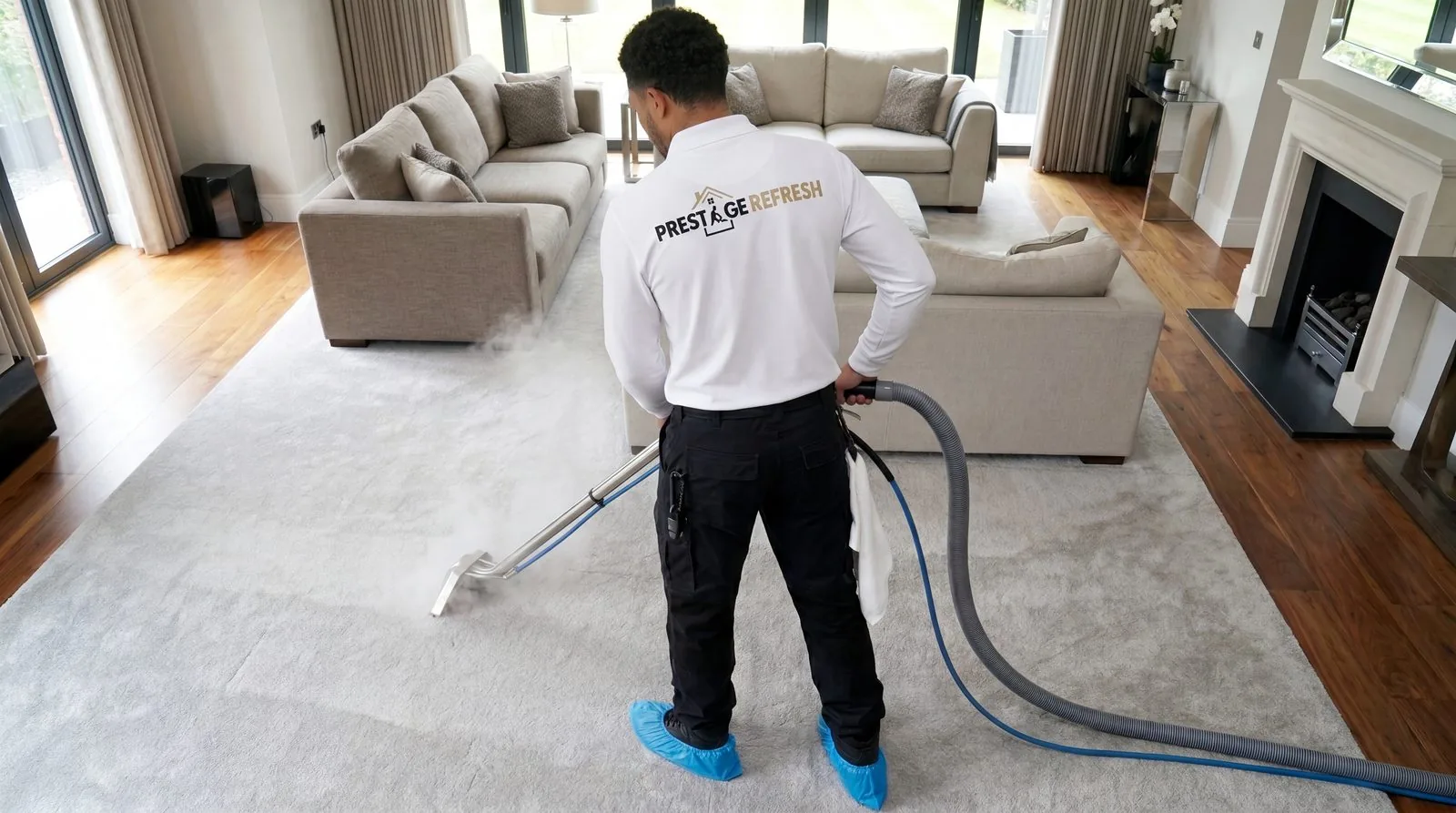
Keep your cleaner. This is a different job.
A weekly clean keeps surfaces right. A carpet lives on a different cycle: ground-in soil, oils and dust-mite load build at the base of the pile, and only a deep clean resets it.

Jump to a section
What your cleaner covers brilliantly
What no vacuum can reach
A different mechanism entirely
How the two work together
Fitting around your cleaner’s schedule
The deep clean, step by step
The Golden Guarantee
What Your Cleaner Covers Brilliantly
A good domestic cleaner is one of the best things a busy home can have. Surfaces stay right, the kitchen and bathrooms stay on top of themselves, the dust never gets a week’s head start, and the whole house holds its order. That is skilled, consistent work, and nothing on this page suggests otherwise.
Vacuuming is part of that value. A well-vacuumed carpet ages better, because the loose grit that would otherwise grind into the fibres gets lifted off the top of the pile every week.
In our experience, homes with a regular cleaner present noticeably better than homes without one. So if you have someone you trust, hold on to them. The question this page answers is a different one: what happens further down the carpet, where a vacuum was never designed to go.

What No Vacuum Can Reach
A carpet is deeper than it looks. The surface is one story; the base of the pile is another.
A vacuum works the top of the pile. It lifts loose, dry soil, and it does that well. But three things build lower down that suction alone cannot shift, in our experience of taking dirty water out of well-kept homes every week.
- Ground-in soil. Fine grit walked in on shoes and paws settles past the reach of suction and packs at the base of the pile.
- Bonded oils. Cooking vapour, skin oils and pet oils settle on the fibres and act like glue. Once soil bonds to oil, no vacuum will lift it; it has to be dissolved and rinsed out.
- Traffic-lane abrasion. In hallways and doorways, that trapped grit is ground against the fibres with every step. The lane goes flat and dull, and no amount of vacuuming brings the colour back.
There is a biological layer to this too. According to Allergy UK, house dust mite allergy is very common and is one of the main indoor triggers for asthma and allergy symptoms, and carpets and soft furnishings are exactly where that load gathers. A weekly vacuum keeps the surface in check; the deeper load builds quietly underneath it.
Signs The Carpet Is Due, Even With A Weekly Clean
None of these mean your cleaner is doing anything wrong. They mean the carpet has reached the part of its cycle a vacuum cannot reset.
- Traffic lanes look darker than the rest of the room
- The colour looks flat even straight after vacuuming
- A smell returns within a day of the room being cleaned
- White socks pick up grey after a walk across the room
- The pile feels rough or matted underfoot
- It has been more than a year since the last deep clean
A Different Mechanism Entirely
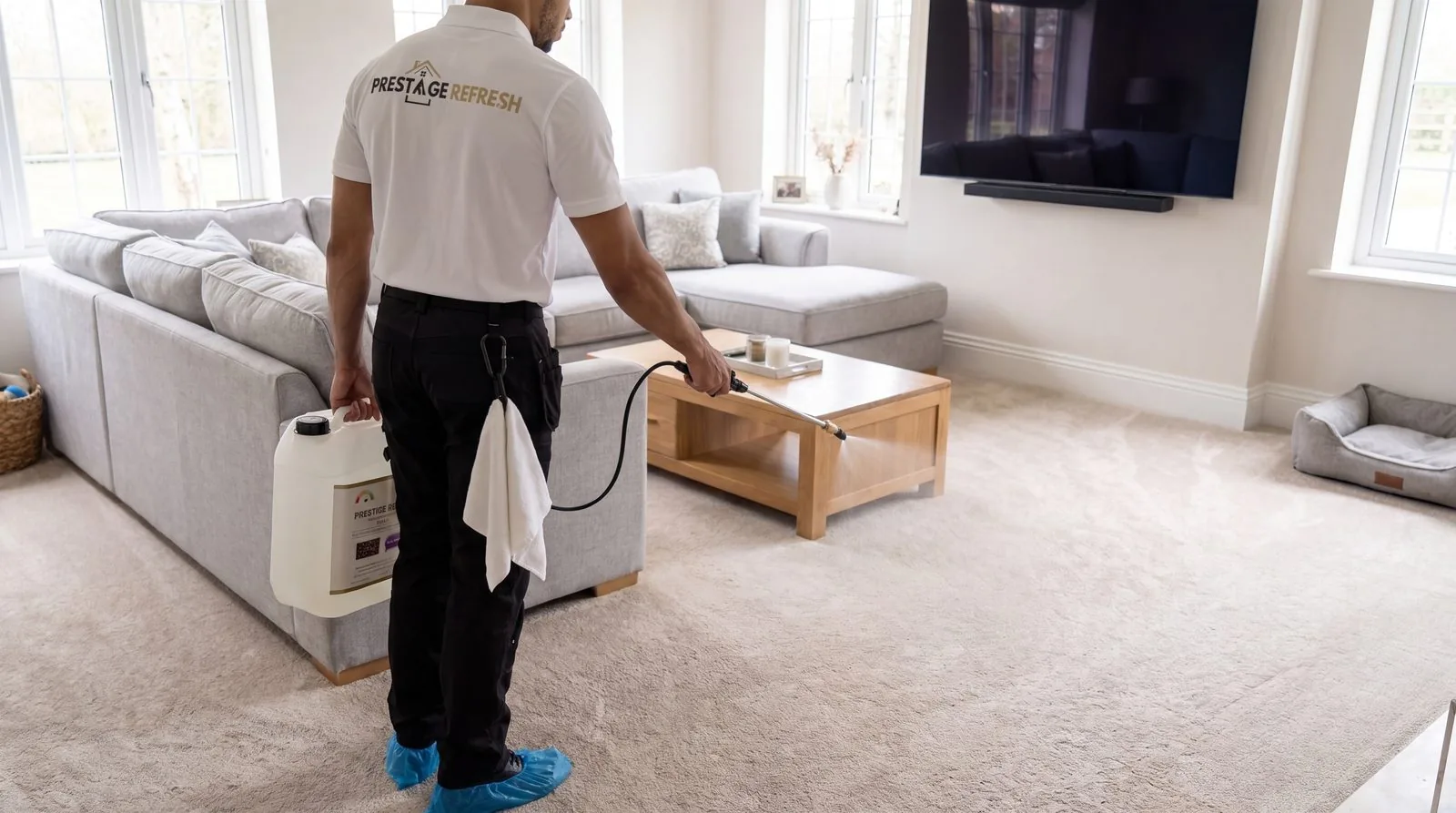
Hot water extraction is not a stronger vacuum. It works on a different principle, in three parts. Heat: water is heated so it loosens the oils that bond soil to the fibre, the way hot water cuts grease on a roasting tin where cold water slides off it.
Injection: that heated water is driven into the pile under pressure, down to the base where the build-up sits. Extraction: a powerful vacuum draws the water straight back out, and the dissolved soil, oils and allergen load come out with it, into the machine’s recovery tank rather than back into the room.
That is why the two jobs do not compete. A vacuum manages dry, loose soil at the surface. Hot water extraction dissolves and removes what is bonded at the base. One maintains, the other resets, and each makes the other’s work last longer.
It is also worth saying the deep clean carries the dust question in the right direction: according to a study by the German Allergy and Asthma Association, fine dust in a room with hard flooring is around twice as high as in a room with carpet, because carpet holds the dust in the pile until it is cleaned out rather than letting it circulate. The carpet is doing a filtering job for the room. A deep clean is how the filter gets emptied.
Our cleaner comes every week and the house is spotless. I never expected the water from the carpets to look like that.
How The Two Work Together
Think of it as one maintenance plan with two rhythms: weekly upkeep and a periodic reset.
The weekly clean is the heartbeat. It keeps the surface right, stops grit building a head start, and holds the whole home to a standard week after week. The deep clean is the reset button: in our experience, most family homes suit one every six to twelve months, sooner for busy hallways, pets and young children, longer for quiet rooms.
The two feed each other. A well-vacuumed carpet holds its deep clean for longer, and a deep-cleaned carpet responds better to the weekly vacuum because the fibres are open rather than coated.
The Weekly Clean Keeps
- Surfaces, kitchens and bathrooms at the standard
- Loose dust and grit lifted from the top of the pile
- The home presenting well every single week
The Deep Clean Adds
- Ground-in soil and bonded oils dissolved and extracted
- Dust-mite load lifted from deep in the pile
- Traffic lanes revived, colour and texture back
Working together, not competing. Your cleaner will notice the difference too: a freshly deep-cleaned carpet vacuums up brighter, and stays that way for longer between our visits.
Have A Cleaner Already? Good.
Keep them. Tell us which day they come and we’ll fit the deep clean around them, so the whole home lands at the same standard in the same week.
Fitting Around Your Cleaner’s Schedule
This is the practical bit, and it is simpler than people expect. We are happy to work around your cleaner, and we would rather know their routine than trample it. Many customers book us the day after the regular visit, so the vacuuming is fresh and the whole home is done in one sweep.
Others prefer us in first, so the cleaner’s next visit starts from a reset carpet. Either order works, and we will tell you straight which suits your week better.
Tell us which day your cleaner comes and we will book around it. We arrive in the window agreed, and the carpet is usually dry in around four hours (the realistic range is one to twelve depending on the material). If the diary is tight, ask about same-day dry as a priority.
The Deep Clean, Step By Step
Here is the real process, so you can see exactly where it goes beyond the weekly routine.
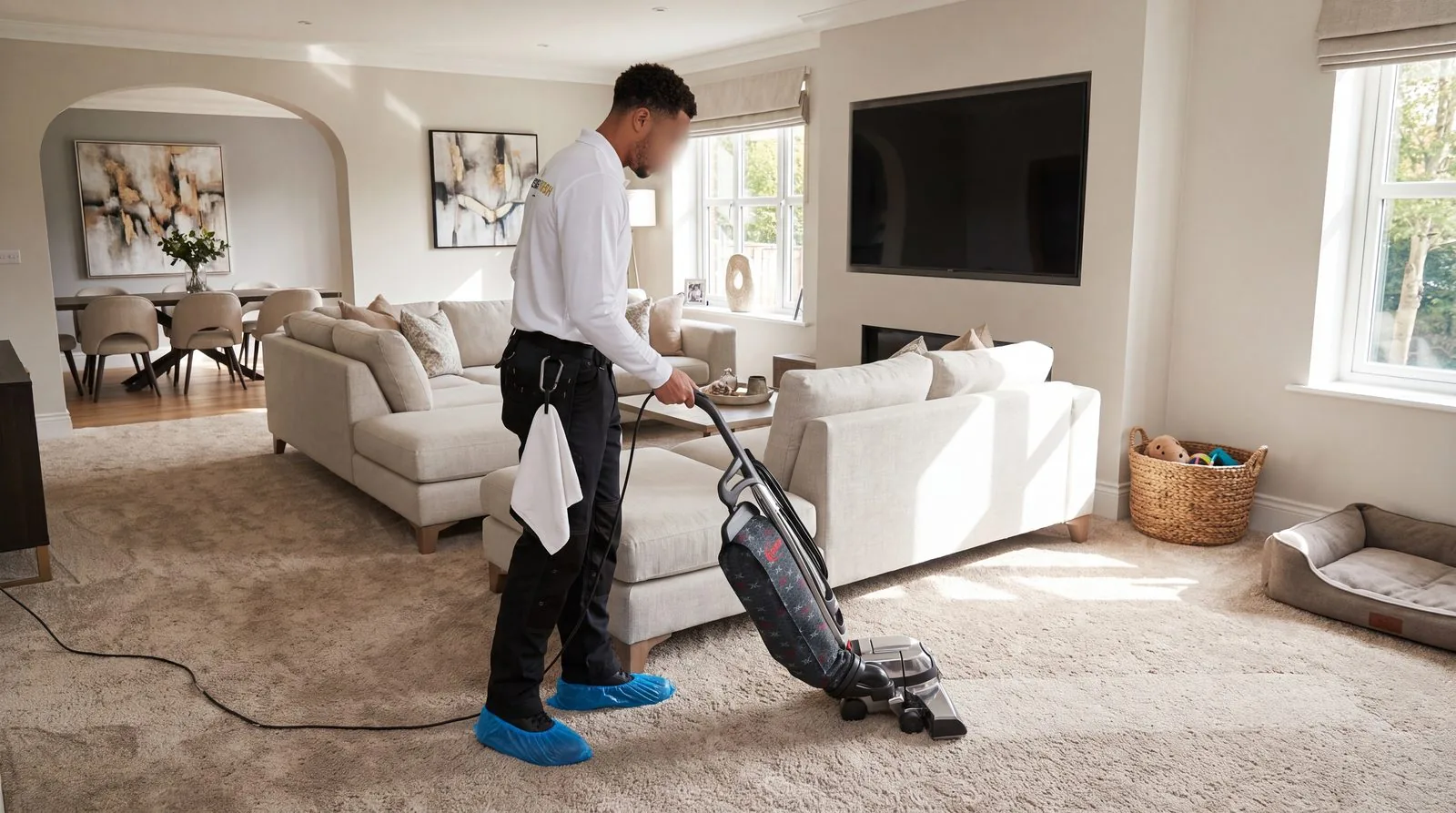
Inspect & PrepareWe inspect the carpet, spot test a hidden area, then run the Kirby dry vacuum over the top of the pile.
Agitate & Pre-SprayWe agitate the fibres and apply a pre-spray to start breaking down the bonded oils and ground-in soil.
Extract & DryHot water extraction with the Enforcer 400 pulls the soil out of the base of the pile, then dry pods speed the drying.
FinishGold Musk deodorise, optional Gold Guard protection, and a final groom so the pile dries upright and even.

Your cleaner keeps the home right week to week, and that work matters. A carpet also needs a periodic deep clean, because ground-in soil, bonded oils and dust-mite load build at the base of the pile where no vacuum reaches. Keep the weekly clean, add the reset, and book them around each other.
Why Prestige Refresh
When customers tell us why they chose us, the same four reasons come up. They’re the standard we hold every job to.
What Customers Say
Plenty of the homes we clean already have a brilliant regular cleaner. It means more coming from them. We’re rated 5.0 from 338 Google reviews, and these come straight from them, unedited.
Our Golden Guarantee
The Golden Guarantee
It is the question worth asking of anyone who works in your home: do they come back free if you’re ever not happy? Here is our answer, in writing.
Quick Answers
Do I still need a professional carpet clean if I have a regular cleaner?
Yes, and it is not a criticism of your cleaner. A weekly clean keeps surfaces right, and vacuuming lifts loose dust from the top of the pile. Ground-in soil, bonded oils and dust-mite load build at the base of the pile, where no vacuum reaches. A professional deep clean resets that base. The two jobs work together, not against each other.
How often should carpets be deep cleaned if they are vacuumed weekly?
In our experience most family homes suit a deep clean every six to twelve months. Busy hallways, pets and young children shorten that cycle; a quiet spare room stretches it. A well-vacuumed carpet holds its deep clean for longer, which is one more reason to keep your cleaner.
Will you work around my cleaner’s schedule?
Happily. Tell us which day your cleaner comes and we will book around it. Many customers have us in the day after the regular visit, so the whole home is done in one sweep. We arrive in the window agreed and leave the carpet near-dry, usually fully dry in around four hours.
What does hot water extraction do that vacuuming cannot?
Vacuuming lifts loose, dry soil from the top of the pile. Hot water extraction is a different mechanism: heated water is injected into the pile under pressure, it loosens the soil and oils bonded to the fibres, and a powerful vacuum extracts the water and the soil back out together. It cleans the part of the carpet a vacuum never touches.