

If you’ve had a bad clean before, or a quote that looked too good to be true, you’re right to be cautious. It’s a sensible thing to check before you let anyone near your carpets again, so here is a clear look at what goes wrong, and what a proper standard looks like.
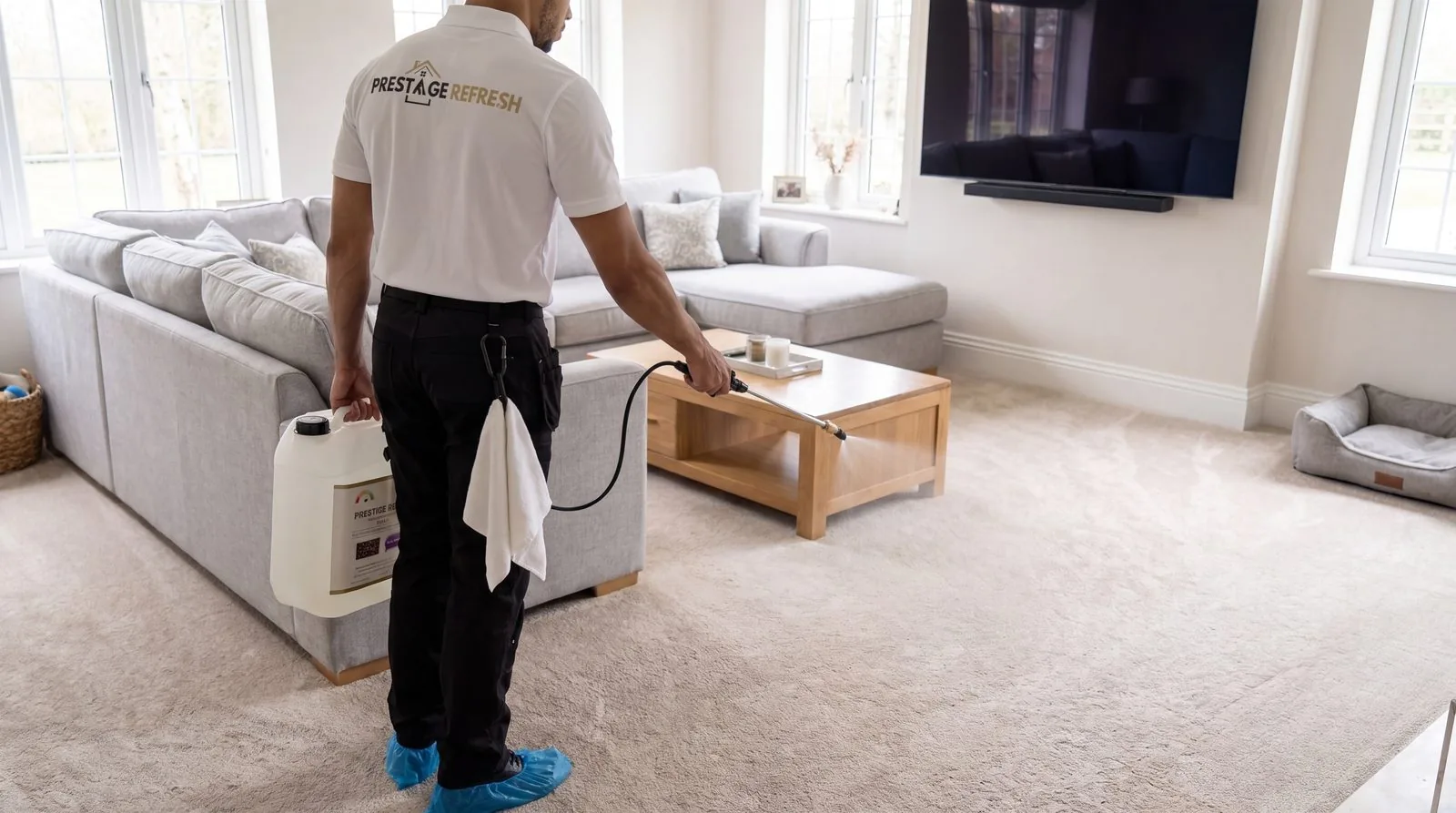
A bad clean is over-wetted, rushed, and leaves product in the pile. The marks come back because the soil was never lifted out.
It looks fine for a day, then the stains wick back, the pile turns stiff or sticky, and it stays damp far too long. Every one of those problems is avoidable once you know the warning signs.

Jump to a section
What a bad clean actually looks like
How a proper clean is meant to work
Where it goes wrong, and why
What to expect from a good clean
How we make sure it doesn’t happen
The Golden Guarantee
What A Bad Clean Actually Looks Like
Most people who have had a poor clean describe the same thing. On the day it looked acceptable, damp but acceptable. Then over the next few days it turned. The marks they thought had gone came creeping back.
The carpet felt crunchy or tacky to walk on. It stayed wet far longer than they were told it would, and in some cases a stale, musty smell settled in that was not there before.
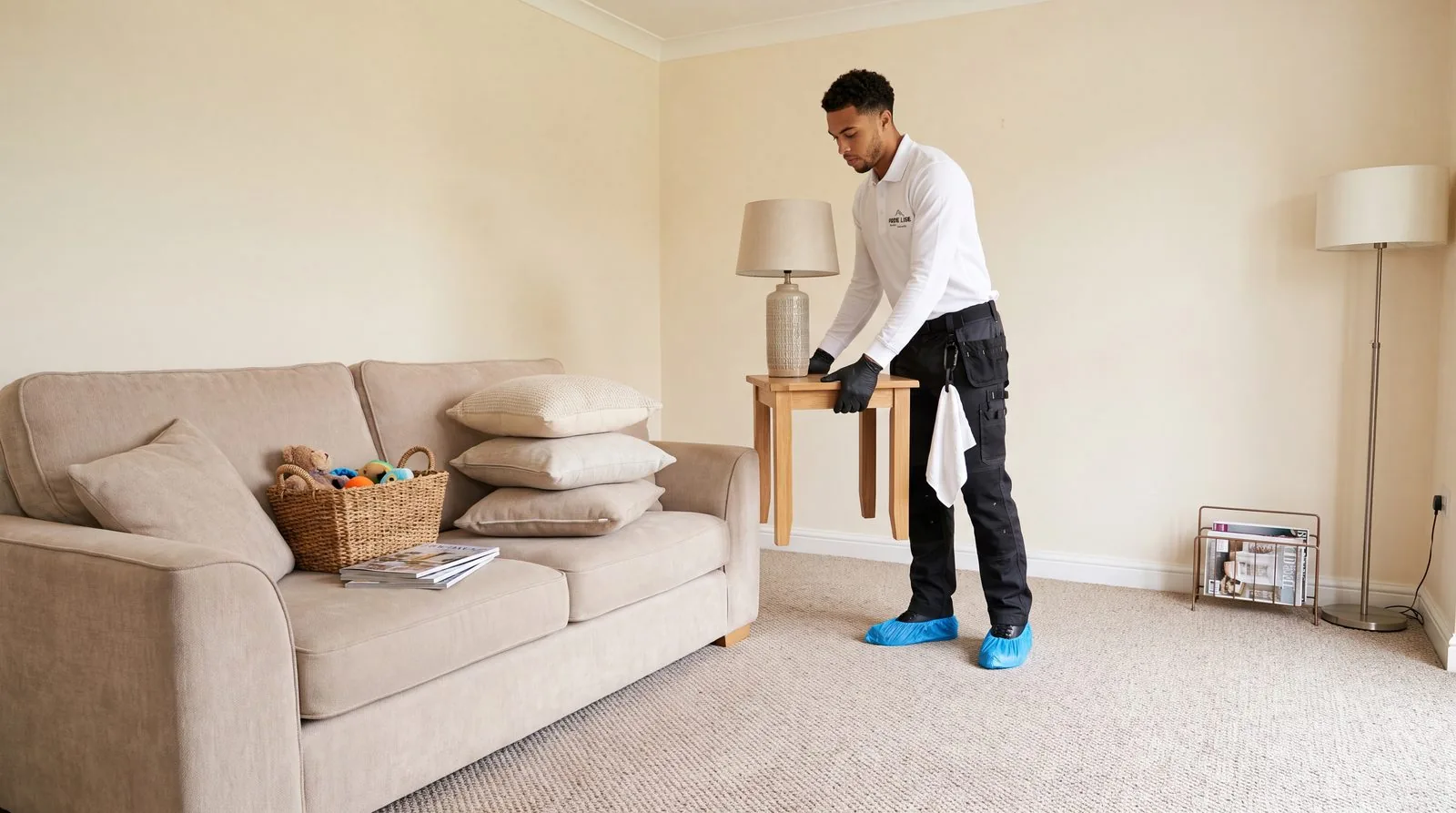
None of that is bad luck. In our experience it is the predictable result of cutting corners: too much water, too little extraction, product left behind, and no time taken to do the job properly. Below are the tell-tale signs, then the reasons each one happens.
The Signs Of A Bad Clean
If you see or feel any of these after a clean, the job was rushed or done with the wrong method. Worth keeping in mind when you are comparing cleaners.
- Stains that vanish on the day, then reappear within a week
- A stiff, crunchy or sticky feel underfoot once it dries
- The carpet still soaking hours, or even days, later
- A damp, musty smell that was not there before
- Patchy results, clean in the middle, grubby at the edges
- It looks dirty again far sooner than it should
To understand why those things happen, it helps to know what a proper clean is supposed to do in the first place.
How A Proper Clean Is Meant To Work
A good clean is a sequence, not a single pass with a machine. Each step exists for a reason, and skipping any of them is where the trouble starts.
Done properly, the work runs in order. It starts with an inspection and a spot test on a hidden area, so the method suits the fibre before anything touches it.
Then a thorough dry vacuum with our Kirby pulls out the loose, dry soil, because wetting dirt that could have been vacuumed first just turns it to mud. The pile is agitated to loosen what’s bound into the fibre, and a pre-spray goes on to break down the grease and grime.
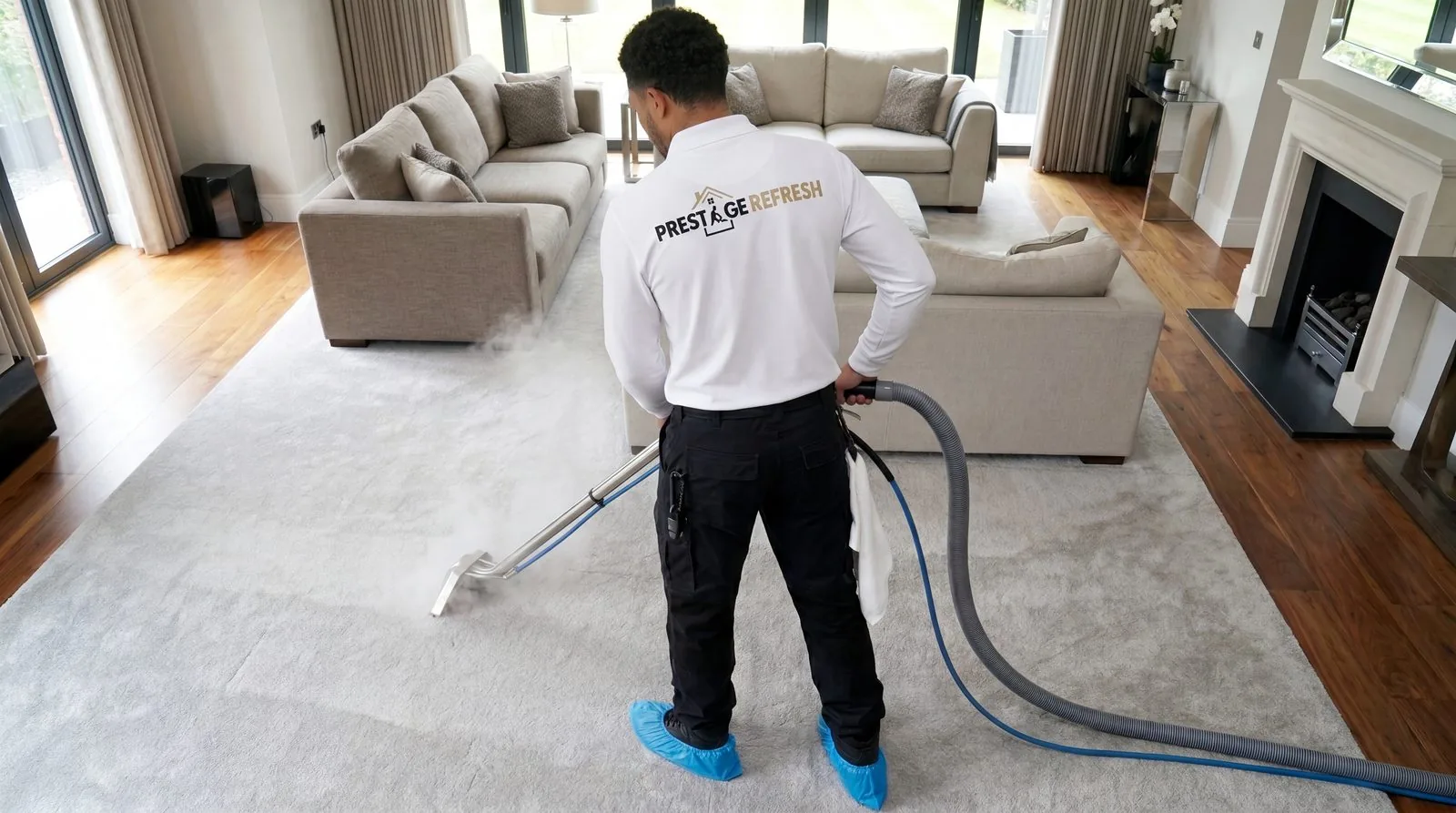
Only then comes hot water extraction with our Enforcer 400: hot water injected and immediately drawn back out under strong suction, taking the loosened soil and most of the moisture with it.
Dry pods keep the air moving so it dries in hours, a Gold Musk deodorise leaves it fresh, and the pile is groomed so it dries evenly. The point of the whole sequence is that the dirt and the cleaning solution both leave the carpet. What’s left is a clean, near-dry pile, not a damp sponge full of residue.
Where It Goes Wrong, And Why
In our experience, almost every bad clean traces back to one of four shortcuts. They are quicker and cheaper for whoever is doing the work, and they are exactly why a low quote can cost you more in the end.
The Four Shortcuts
- Over-wetting: too much water, weak suction, left soaking
- Residue: too much detergent, never rinsed out of the pile
- Wicking: deep soil rises back up as the wet carpet dries
- Rushed single-pass work: no vacuum, no spot test, no prep
What A Proper Clean Does
- Controlled moisture and strong suction, dry in hours
- Products correctly diluted, then rinsed and extracted out
- Soil lifted out of the pile so it cannot wick back
- Spot test first, full method, time taken to do it right
Wicking is the one that catches most people out. When a carpet is left too wet, the dirt deep in the base and the underlay travels up the damp fibres as they dry and resettles at the surface.
That’s why a stain can look gone on the day and be back by the weekend. It was never lifted out, it was only pushed down and watered. Strong extraction and controlled moisture are what stop it.
Each of the other shortcuts has its own signature. Over-wetting means days of damp and a musty smell, sometimes worse underneath. Residue leaves a sticky pile that grabs dirt, so the carpet greys over again within weeks. And rushed single-pass work gives a surface-only result that never reached the real soil.
Had A Bad Clean Before?
Tell us what went wrong last time, the marks that came back, the damp, the smell, and we’ll tell you straight whether it can be put right and how we’d approach it. Take your time deciding.
What To Expect From A Good Clean
A clean done properly should leave you with none of the problems above. Here is what a good result actually looks and feels like.
The carpet should be damp to the touch, not soaking, and dry within hours rather than days. Drying usually takes around four hours, though it can range from one to twelve depending on the material and the airflow, and same-day dry is available as a priority where timing matters.
When it dries, the pile should feel soft and clean, never stiff or tacky, with a fresh, neutral smell rather than a detergent one.
And it should last. A clean that lifts the soil out, rather than hiding it, stays looking clean for weeks, not days. The same standard applies across everything we clean: carpets, upholstery, rugs, mattresses, hard floors, and tiles and grout. The method changes to suit the material, but the principle never does.

A bad clean is over-wetted, full of residue, and rushed, so the marks come back and the carpet feels worse than before. A good clean lifts the soil out, rinses the product away, controls the moisture, and lasts. Knowing the difference is how you avoid paying twice.
How We Make Sure It Doesn’t Happen
Our method is built to avoid every shortcut on this page. It is the same sequence on every job, with professional equipment and the time to use it properly.
Inspect & Spot TestEvery clean starts with an inspection and a spot test on a hidden area, so the method suits the fibre.
Vacuum & PrepA thorough Kirby dry vacuum lifts the loose soil, then the pile is agitated and pre-sprayed.
Extract & TreatHot water extraction with the Enforcer 400 draws the soil and most of the moisture back out, with stubborn spots treated individually.
Dry & FinishDry pods speed the drying, a Gold Musk deodorise leaves it fresh, and the pile is groomed to dry evenly.
If you’d like the result protected once it’s done, Gold Guard is available as an add-on for the carpet we’ve just cleaned. It helps the pile resist spills and everyday soiling in the months that follow.

Why Prestige Refresh
When customers come to us after a poor clean elsewhere, the same four reasons come up. They are the standard we hold every job to.
What Customers Say
We could tell you we do the job properly. It means more coming from the people we’ve actually cleaned for. We’re rated 5.0 from 338 Google reviews, and these come straight from them, unedited.
Our Golden Guarantee
The Golden Guarantee
We do the job properly the first time. The full method, the right equipment, controlled moisture, and a result that holds, backed in writing.
Quick Answers
Why did my carpet look clean, then the stains came back?
That is wicking. When a carpet is left too wet, deep soil in the base and underlay travels up the damp fibres as they dry and resettles at the surface. The mark was never lifted out, only pushed down. Strong extraction and controlled moisture are what prevent it, which is why a properly done clean stays clean.
The last clean looked fine for about a week, then every mark came back. This time I watched the whole process, and a month on it still looks new.
Why does my carpet feel sticky or crunchy after cleaning?
That is detergent residue. If too much cleaning product is used and not rinsed and extracted out, it dries in the pile and leaves a tacky or stiff feel. Worse, that residue attracts dirt, so the carpet greys over again quickly. A good clean rinses the product back out and leaves a soft, clean pile.
How long should a carpet take to dry after cleaning?
Usually around four hours, though it can range from one to twelve depending on the material and the airflow, never days. A carpet still soaking the next day is a sign of over-wetting and weak extraction. Controlled moisture and strong suction are what keep drying times short.
How do I avoid a bad clean when comparing quotes?
Ask what the actual process is. A proper clean includes an inspection and spot test, a dry vacuum first, agitation and a pre-spray, then hot water extraction, not a single quick pass.
Be wary if a quote is unusually cheap, the method is vague, or there is no written guarantee. We are happy to talk you through exactly what we would do before you decide anything.