

Wet school runs, dog walks in the rain, gritted pavements walked straight into the hallway. Between October and March, the most-walked carpets in a North West home take more punishment than they do all summer. Here is how to get them through to spring.
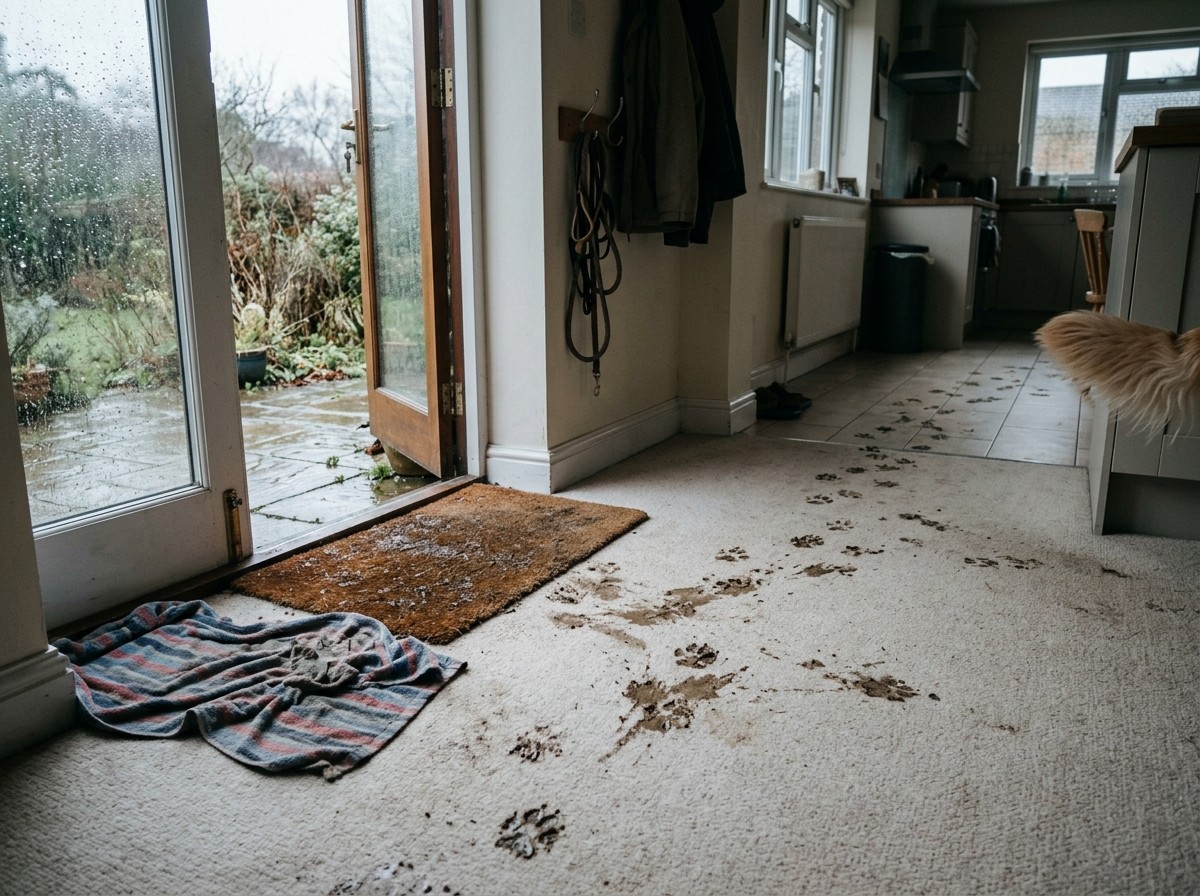
Winter is won at the front door.
Two doormats, a shoes-off habit, and a twice-weekly vacuum of the hallway and stairs will carry most carpets through to spring.

Jump to a section
Why winter is hardest · The doormat system · Hallway and stairs routine · Mud, handled right · Radiators, condensation and fresh air · When winter earns a professional clean · Golden Guarantee
Why Winter Is Hardest on Carpets
It is not one big disaster, it is months of small ones. School shoes in from a wet playground, the dog shaking off in the hall, pushchair wheels, and everything the pavement leaves on your soles. In a North West winter the front door barely gets a dry week, and every crossing deposits a little more into the pile.
The quiet fibre-killer is grit. Councils salt the pavements, the salt and grit travel in on shoes, and once it settles into the pile it abrades the fibres like sandpaper underfoot. In our experience it is not staining that ages a hallway carpet fastest, it is thousands of gritty footsteps grinding the pile flat and dull along the traffic lane.
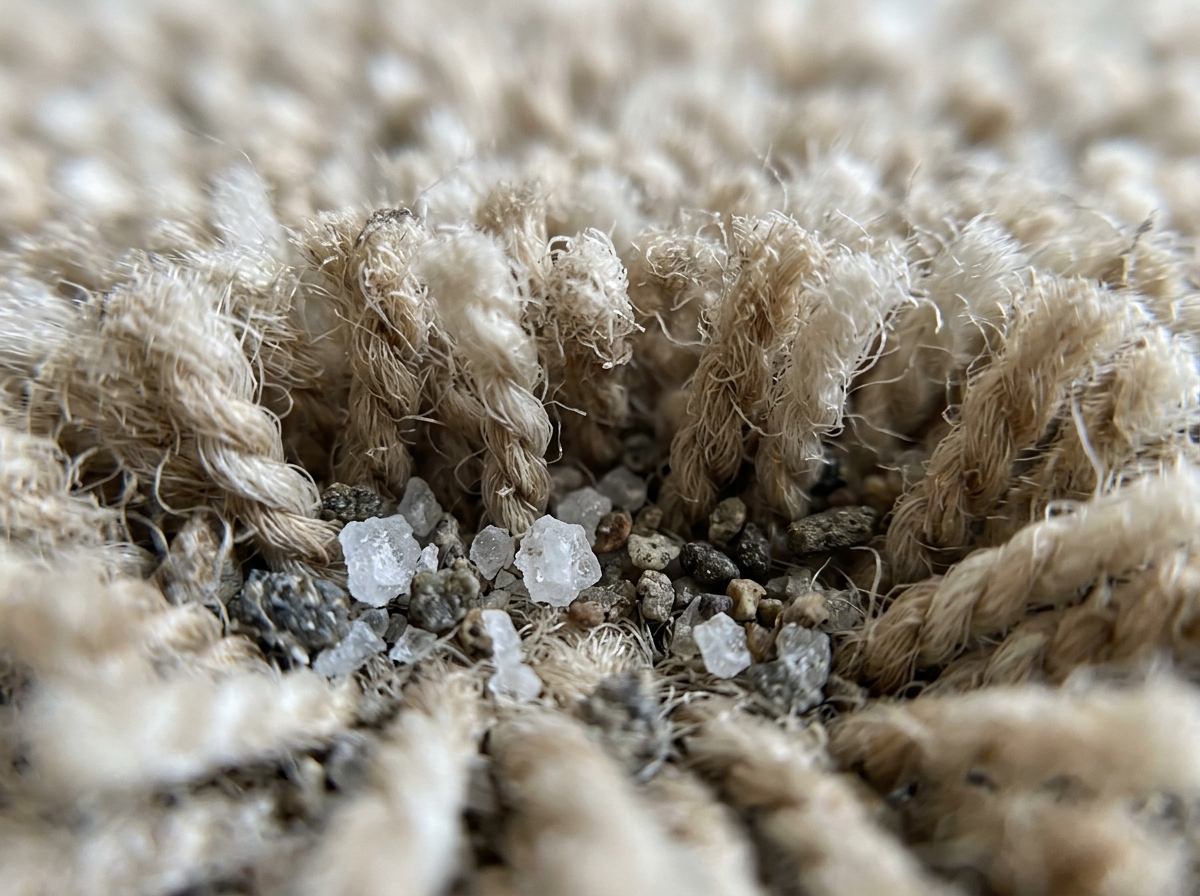
Signs Winter Is Getting The Better Of Your Carpets
Catch these early and the habits below will hold the line. Leave them until March and the hallway will need more than a vacuum.
- A grey line forming down the middle of the hallway
- Pile that feels gritty or crunchy underfoot
- Tide marks and watermarks just inside the front door
- A damp, earthy smell that hangs around the hall
- Flattened, darkened treads on the stairs
- A doormat that is full and smearing rather than catching
The good news: most of it can be stopped at the door, with a set-up that takes one weekend and costs less than a takeaway.
The Doormat System
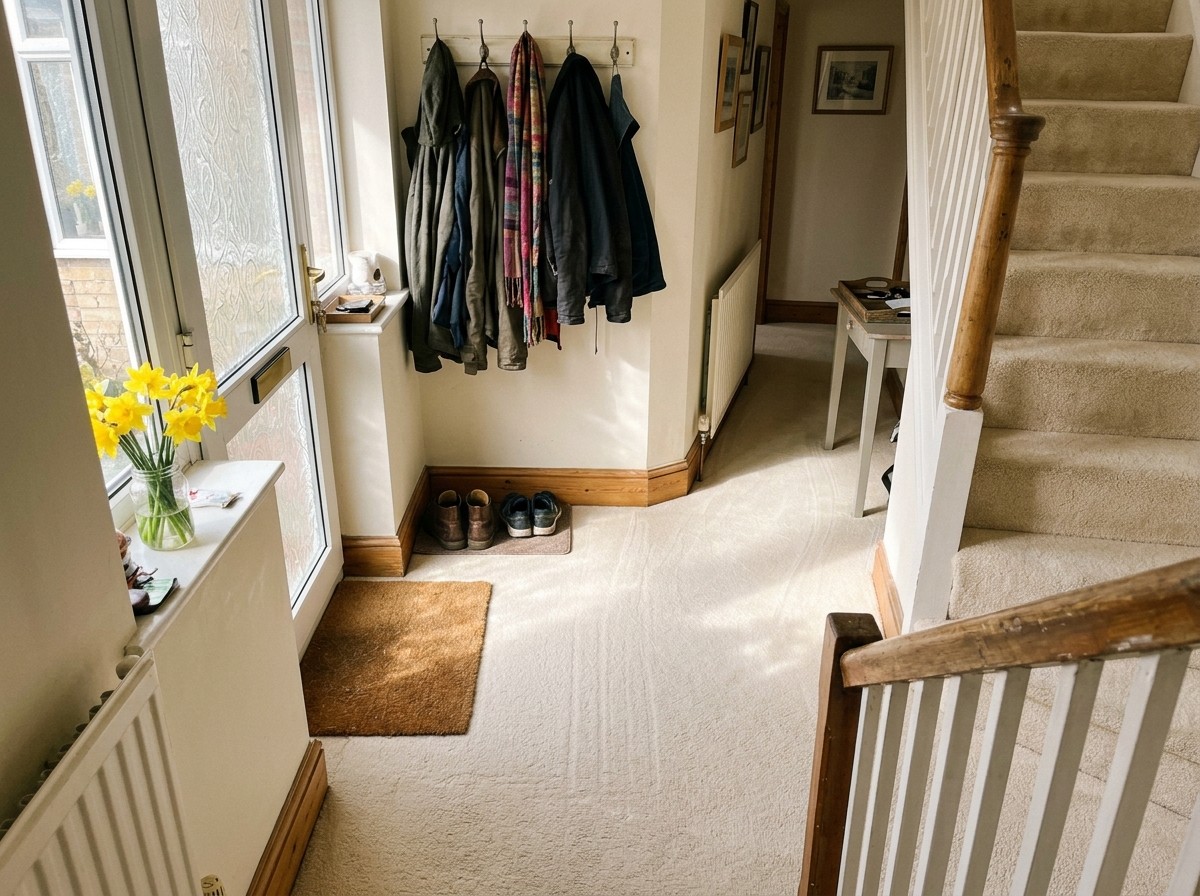
One mat is not a system. The homes that come through winter best run four simple lines of defence at the front door.
The idea is to make the first three metres of your home do the hard work, so the carpet never has to. Set it up once in October and it runs itself until spring.
- A coarse mat outside the door: bristled or rubber-backed, to scrape off mud and grit before anyone steps inside
- An absorbent mat inside the door: cotton or microfibre, to soak up the damp the first mat cannot catch
- Shoes off, made easy: a bench, a rack or a basket by the door, positioned where the household will actually stick to the habit through January
- A towel by the door for the dog: paws and undercarriage after every wet walk, before they reach the carpet
Shake the outside mat weekly and wash the inside mat monthly, because a saturated mat stops catching and starts smearing. If yours is more than a few years old, replace it before the season starts. In our experience it is the cheapest carpet protection there is.
We added the second mat and made shoes-off stick. By February the hallway still looked like it did in September.
The Hallway and Stairs Routine
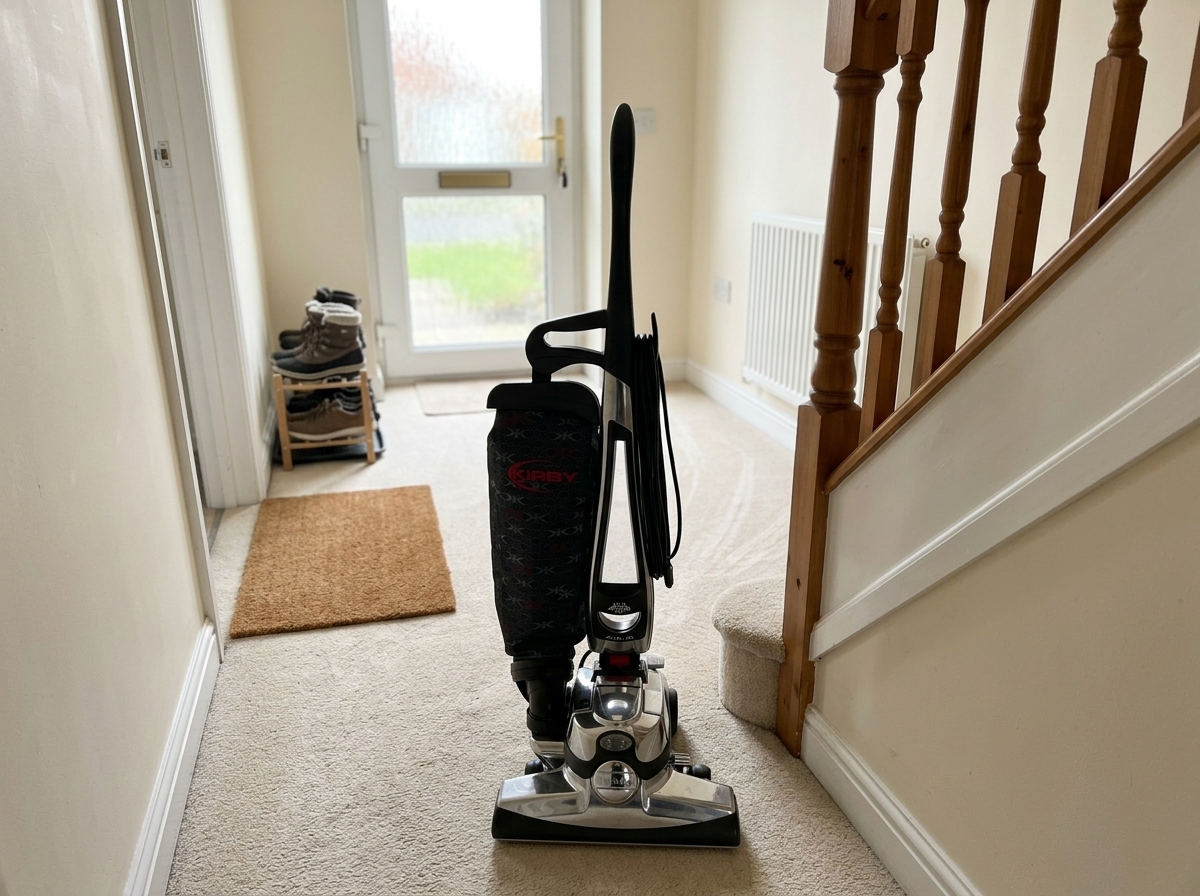
The hallway and stairs carry more footsteps than every other carpet in the house combined, and in winter each of those footsteps arrives carrying grit. So the routine is simple: from October to March, vacuum these two zones twice as often as anywhere else in the house.
Twice a week is the sweet spot for most homes. Go slowly, with several passes in different directions, because grit sits low in the pile and a quick once-over glides straight past it. On the stairs, give extra attention to the front edge of each tread. That is where the pile bends, the wear concentrates and the grit collects.
It is not glamorous, but it is the single habit that decides whether a hallway carpet looks tired or ruined by spring. Ten focused minutes, twice a week, protects the most-walked carpet in the house.
To be clear, this isn’t a medical treatment, and we’d never claim it cures anything. But a cleaner home generally means cleaner air, and many of our customers with allergies or asthma tell us a deep clean leaves the house noticeably easier to breathe in.
Mud, Handled Right
Wet mud is the one mess where acting fast makes it worse.
Every instinct says grab a cloth and scrub while it is fresh. Resist it. Wet mud is fine soil carried in water, and rubbing it pushes that soil down the fibres and spreads it sideways into the pile around it. A footprint you could have vacuumed away becomes a brown smear sitting at the base of the carpet.
Dry, Vacuum, Then Blot
- Leave it to dry completely. Put a towel over it so nobody walks it further, and give it a few hours or overnight
- Break up the dried crust gently with your fingers or the back of a spoon, so the soil sits loose on top of the pile
- Vacuum slowly, with several passes in different directions, until nothing more comes up
- Blot what is left with a clean, damp white cloth, working from the outside in, then blot dry with a fresh one. Dab, never rub
Most mud comes out completely this way. What is sometimes left is a faint shadow from the colour of the soil. Do not chase it with a shop-bought spray or anything with bleach in it. Many of those products are left in the fibre rather than rinsed out, and the residue attracts fresh dirt, so the patch comes back darker.
If a shadow is still there once everything is dry, leave it. It is exactly the kind of mark hot water extraction lifts at the next clean, and it comes out far more easily when it has not been scrubbed in first. Muddy paw prints work the same way: the towel by the door does most of the job, and this routine handles the rest.
Radiators, Condensation And Fresh Air
In winter, the damp inside the house is as hard on carpets as the wet coming in from outside.
Through the colder months the house gets closed up. Windows stay shut, washing dries on the radiators, and the moisture from cooking, showers and everyday living has nowhere to go. It condenses on cold windows and walls, and some of it settles into soft furnishings, carpets included. That is usually where the damp, earthy smell in a winter hallway or back bedroom comes from.
A carpet copes well with the odd wet footprint. What it does not like is staying slightly damp for weeks on end. Carpet along an outside wall, or under a window that streams with condensation every morning, can stay damp for long stretches, and that is when smells set in and the backing starts to suffer. A few small habits keep the air moving:
- Open the windows for a short spell every morning, even when it is cold, to let the overnight damp out
- Wipe streaming windows first thing, so the water does not run down onto the sill and the carpet edge below
- Use the extractor fan when cooking or showering, and keep the bathroom door shut while the steam clears
- Dry washing in one room with a window open a crack, rather than across radiators all over the house
- Keep sofas and wardrobes a little away from cold outside walls, so air can move behind them
Radiators do no harm to a carpet, but do not use one to dry a wet patch fast. Strong heat on a soaked spot can leave a ring as the water wicks to the edge and dries there. Blot it, open a window and let the air do the work.
Fresh air matters on the day of a clean too. A carpet dries more slowly in winter: typically 4 to 6 hours, up to 24 in a cold or damp room. The heating on and a window open a crack, so the damp air has somewhere to go, is the quickest combination.
Winter Getting The Better Of The Hallway?
Tell us what the hallway and stairs look like and we’ll say plainly what a winter clean would do, and whether it’s worth doing now or in March.
When Winter Earns A Professional Clean
Doormats and a good vacuum hold the line, but they cannot reach what has already settled deep in the pile.
The habits on this page deal with the surface. What they cannot do is pull out the grit and fine soil that has worked its way to the base of the fibres over a season, or rinse away the residue of everything walked in since autumn. That needs hot water extraction: hot water rinsed through the pile and pulled straight back out, taking the grit with it. If you are seeing the signs from earlier, a grey lane down the hall, gritty pile, darkened stair treads or a smell that will not shift, the routine has done what it can.
Two Good Moments To Book
- Early in the season, in October or November, so the carpet starts winter clean and the house is ready for guests over Christmas
- At the end of it, in March or April, to lift the grit and salt a whole winter has ground in before it does any more damage to the pile
- Any time one of the signs above shows up and a vacuum will not move it
A winter clean is no harder for us than a summer one. We spot test a hidden area first, use WoolSafe-approved products, control the moisture and leave the room aired. For a typical home it takes around 1.5 to 3 hours, and we will tell you before we start if a mark is unlikely to fully lift.
And it is backed by the Golden Guarantee: if you’re not satisfied with the clean, we come back free of charge until you’re 100% satisfied.
Why Prestige Refresh
When customers tell us why they chose us, the same four reasons come up. They’re the standard we hold every job to.
What Customers Say
We could tell you we’re careful with sensitive homes. It means more coming from the people we’ve actually cleaned for. We’re rated 5.0 from 338 Google reviews, and these come straight from them, unedited.
Our Golden Guarantee
The Golden Guarantee
We work cleanly, safely, and openly. Controlled processes, products rinsed and extracted out, and clear communication, backed in writing.
Quick Answers
How do I get dried mud out of carpet?
Let it dry completely first, then break up the crust and vacuum slowly in several directions. Blot anything left with a clean, damp white cloth, working from the outside in. Never scrub wet mud, because it pushes the soil deeper and spreads it.
Is it worth having carpets cleaned in winter?
Yes. A winter clean works just as well as a summer one, it just takes a little longer to dry: typically 4 to 6 hours, up to 24 in a cold or damp room. The heating on and a window open a crack speeds it up. Many people book at the start of winter to begin the season clean, or at the end to lift the grit it left behind.
How often should I vacuum the hallway and stairs in winter?
Twice a week is the sweet spot for most homes from October to March. Go slowly, with several passes in different directions, because grit sits low in the pile. On the stairs, give extra attention to the front edge of each tread, where the wear concentrates.
Why does my hallway carpet smell damp in winter?
Usually it is moisture with nowhere to go: wet shoes and coats in the hall, condensation, and a house that stays closed up. Air the house for a short spell each day, keep the inside doormat washed, and do not leave wet things sitting on the carpet. If the smell stays after a week of airing, a professional clean can often lift it, and we will tell you honestly if the cause is something a clean cannot fix, such as a leak or damp in the wall.