If a pet has had an accident on your carpet, the smell that keeps coming back is the real problem, and you cannot get rid of it for good with a spray off the shelf. Here is what actually works.
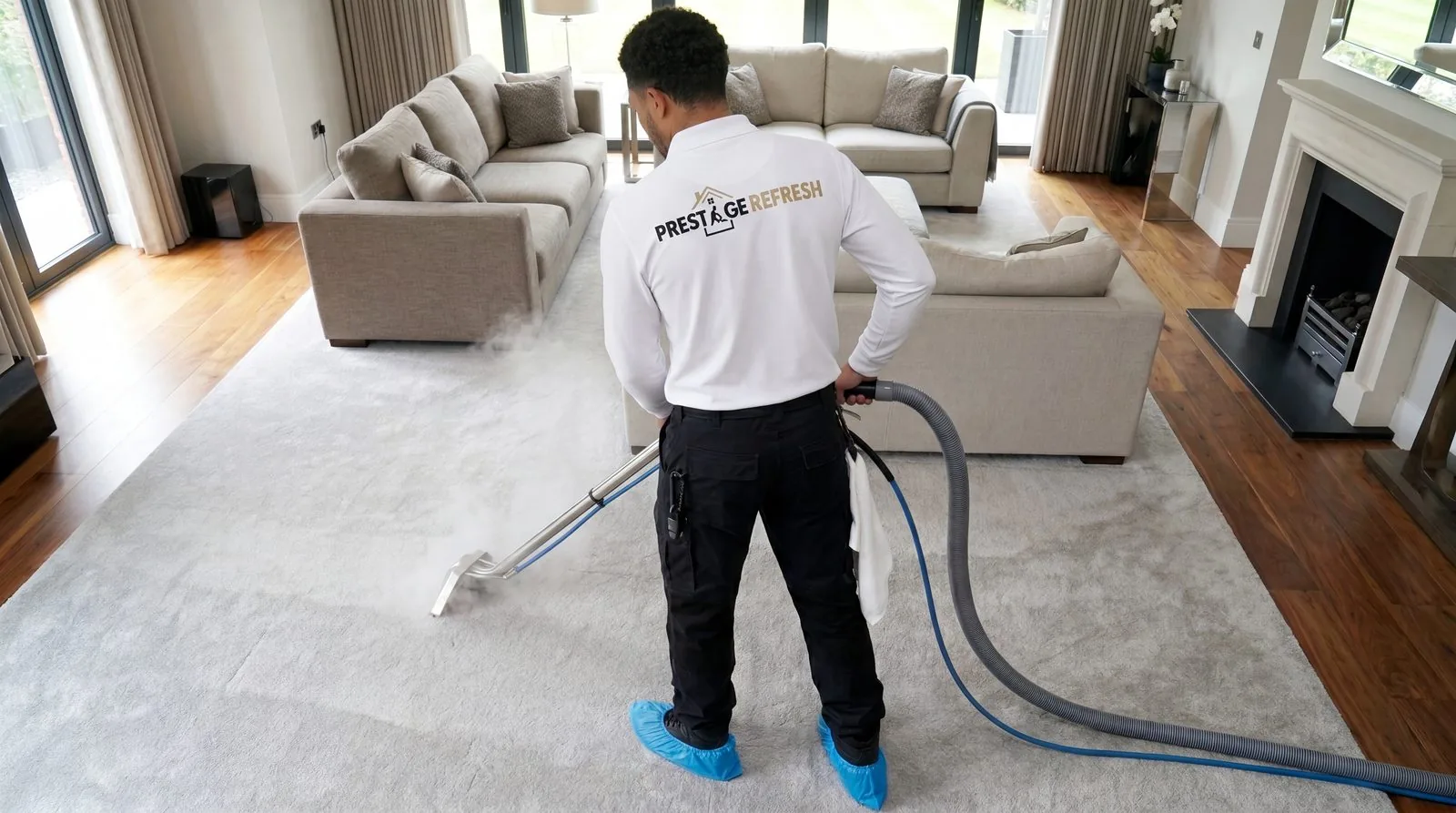
Find every patch, break it down at the source, flush it out.
Urine does not sit on the surface. It wicks into the backing and underlay and dries into salts that release the odour every time the air gets damp. The only thing that ends it is reaching all of it and rinsing it out, not covering it up.

Jump to a section
Why the smell keeps coming back
The UV torch check
How you actually get rid of it
What to do before we arrive
What to expect, frankly
Our urine & odour process
The Golden Guarantee
Is It Actually Safe?
Done properly, professional carpet and upholstery cleaning is safe for the whole household: pets, young children and anyone with asthma included. It comes down to two things, what goes into the carpet and whether it comes back out, and a proper clean gets both right.
For allergy and asthma sufferers it often does more than that. According to Asthma and Lung UK, 1 in 2 people with a lung condition say that dust makes their condition worse, and dust mites gather in carpets and soft furnishings, which is exactly the load a deep clean lifts out of the room.
The rest of this page shows how we keep it safe, and where the real risk actually sits.
Red Flags: When A Clean Is Not Safe
If you hear or see any of these, it’s not the clean that’s the danger, it’s the operator. Worth a screenshot when you’re comparing cleaners.
- Reaches for harsh, cheap chemicals on every job
- Soaks the carpet and leaves it sodden for days
- Leaves a sticky residue you can feel underfoot
- No interest when you mention asthma, allergies or pets
- Won’t tell you what products they’re using
- A damp, musty smell that lingers after they leave
So what’s really going into your carpets and sofas? Far less than most people imagine.
What Chemicals Are Used in a Clean?
If you picture buckets of harsh chemicals soaking into the fibre, that isn’t how a proper clean works. Here’s what really happens.
The heavy lifting is done by hot water and powerful extraction. The water loosens and lifts the soil, the extraction pulls it straight back out, along with most of the moisture.
That mechanical action, not chemistry, is what does the bulk of the cleaning. Hot water extraction is also the method most carpet manufacturers recommend for a professional deep clean, which is one reason we lead with it.
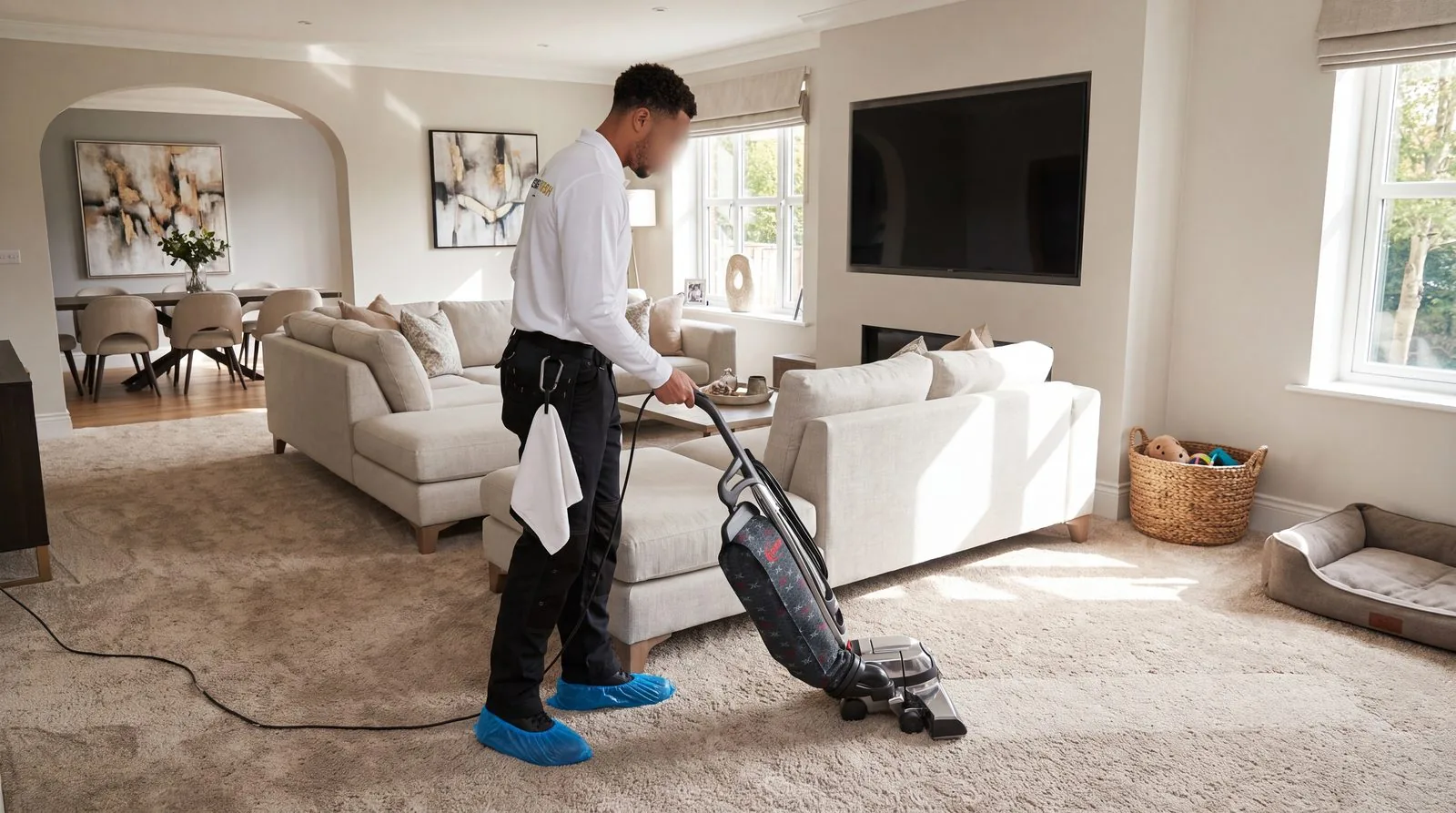
Where a cleaning product is used, it’s there to help break down grease or treat a specific area, used at the correct dilution, then rinsed and extracted out.
It isn’t poured on and left to dry into the fibre. By the time we leave, what’s left behind is a clean, near-dry surface, not a chemical residue for your family to sit on.
Does It Help with Allergies & Asthma?
This is the part people don’t expect. According to Allergy UK, house dust mite allergy is very common and is one of the main indoor triggers for asthma and allergy symptoms.
They gather exactly where we spend the most time: carpets, upholstery and mattresses, along with pet dander, household dust and pollen carried in from outside. Day to day it sits deep in the fibres, and walking, sitting, and plumping cushions stirs it back into the air.
A deep clean with strong extraction lifts a large amount of that trapped load out of the home for good. Mattresses matter here too, where dust mites are most concentrated, and a clean mattress can make a real difference for anyone who wakes up congested.
The Myth
- “Cleaning kicks up dust and makes it worse”
- “It just fills the room with chemicals”
- “Carpets are bad for asthma full stop”
What Actually Happens
- Trapped dust, mites, dander & pollen extracted out
- Water-led process, correctly diluted products rinsed away
- A clean carpet holds far less allergen than a neglected one
There is research behind this, not just our word for it. According to a study by the German Allergy and Asthma Association, fine dust in a room with hard flooring is around twice as high as in a room with carpet, because carpet holds the dust in the pile until it is cleaned out rather than letting it circulate. A clean carpet works with you here, not against you.
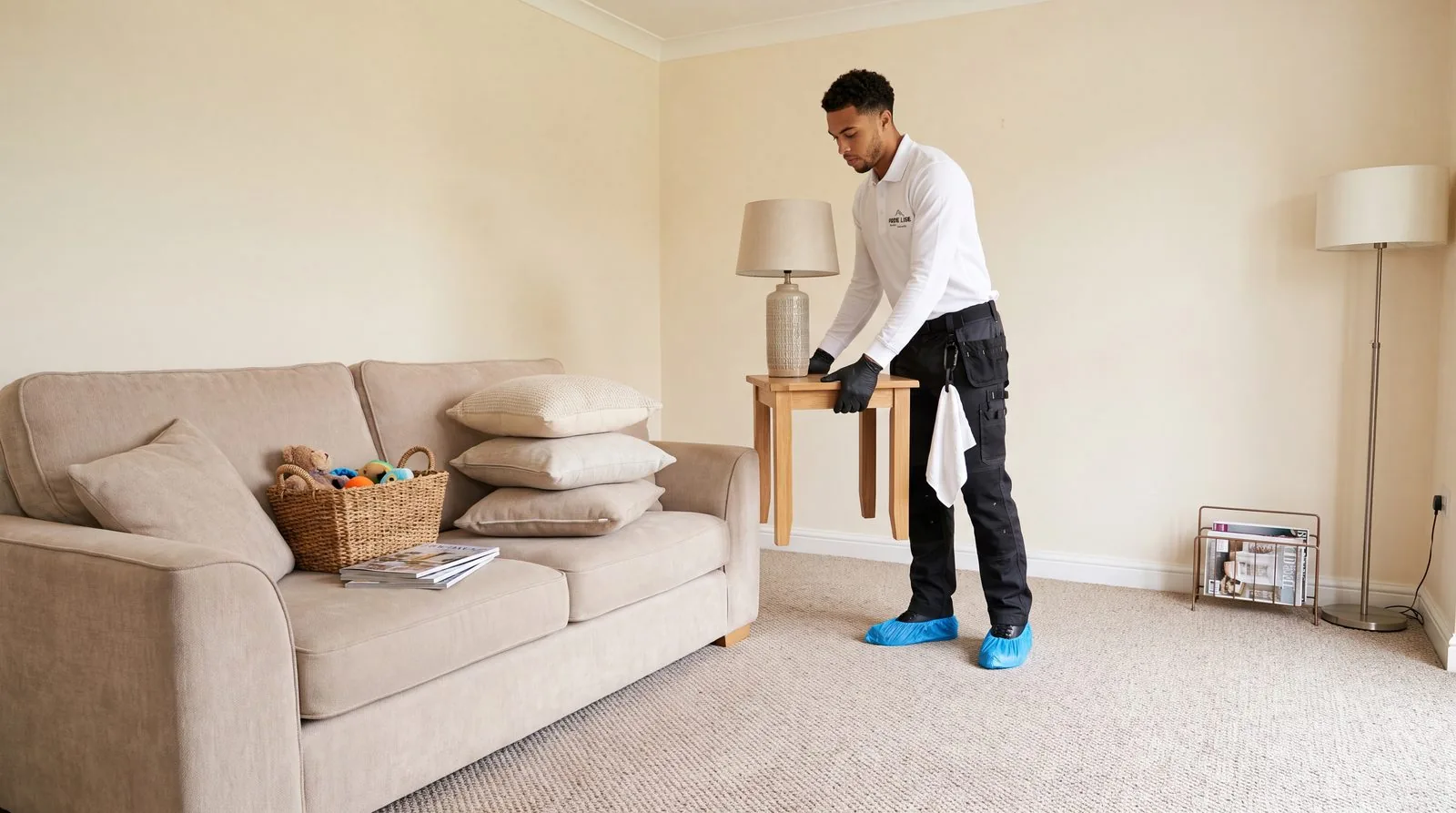
To be clear, this isn’t a medical treatment, and we’d never claim it cures anything. But a cleaner home generally means cleaner air, and many of our customers with allergies or asthma tell us a deep clean leaves the house noticeably easier to breathe in.
Cleaning For A Sensitive Household?
Tell us if anyone has asthma or allergies, or you’ve pets and little ones about, and we’ll tell you exactly what we’d use and how we’d keep it safe.
Keeping Pets & Children Safe on the Day
None of this needs to be complicated. A few simple steps keep everyone comfortable while the area dries.
The main thing to know is that a freshly cleaned carpet or sofa is damp, not dangerous. The sensible approach is just to stay off it until it’s dry, the same as you would with a freshly mopped floor. How long that takes depends mostly on the material and the airflow.
Opening the windows helps it dry, and it does one more thing: Asthma and Lung UK advises keeping your home well-aired to lower humidity, which helps keep dust mites down.
- Keep pets and children off the cleaned area until it’s dry, usually about four hours
- Open windows and keep the air moving to speed drying
- Pop pets somewhere comfortable for the day, ideally a room we’re not working in
- Once it’s dry, everything is back to normal, cleaner than before
Drying usually takes around four hours, though it can range from one to twelve depending on the material. Keep everyone off until then and open the windows, the airflow carries off the last of the moisture. If timing matters for a sensitive household, ask about our same-day dry as a priority.
Are DIY Carpet Cleaners Safe?
Here’s the part that surprises people. The thing most likely to leave harsh chemicals where your family sits isn’t a professional clean, it’s the shop-bought spray or powder under the sink. It’s one of the clearest gaps between DIY and a professional clean.
Many DIY products are designed to be applied and left, not rinsed out. So whatever is in them, fragrance, surfactants, sometimes bleaching or oxidising agents, stays in the fibre after the surface looks clean. That residue sits exactly where pets sleep and toddlers crawl, and it can also attract dirt faster, so the carpet looks grubby again sooner.
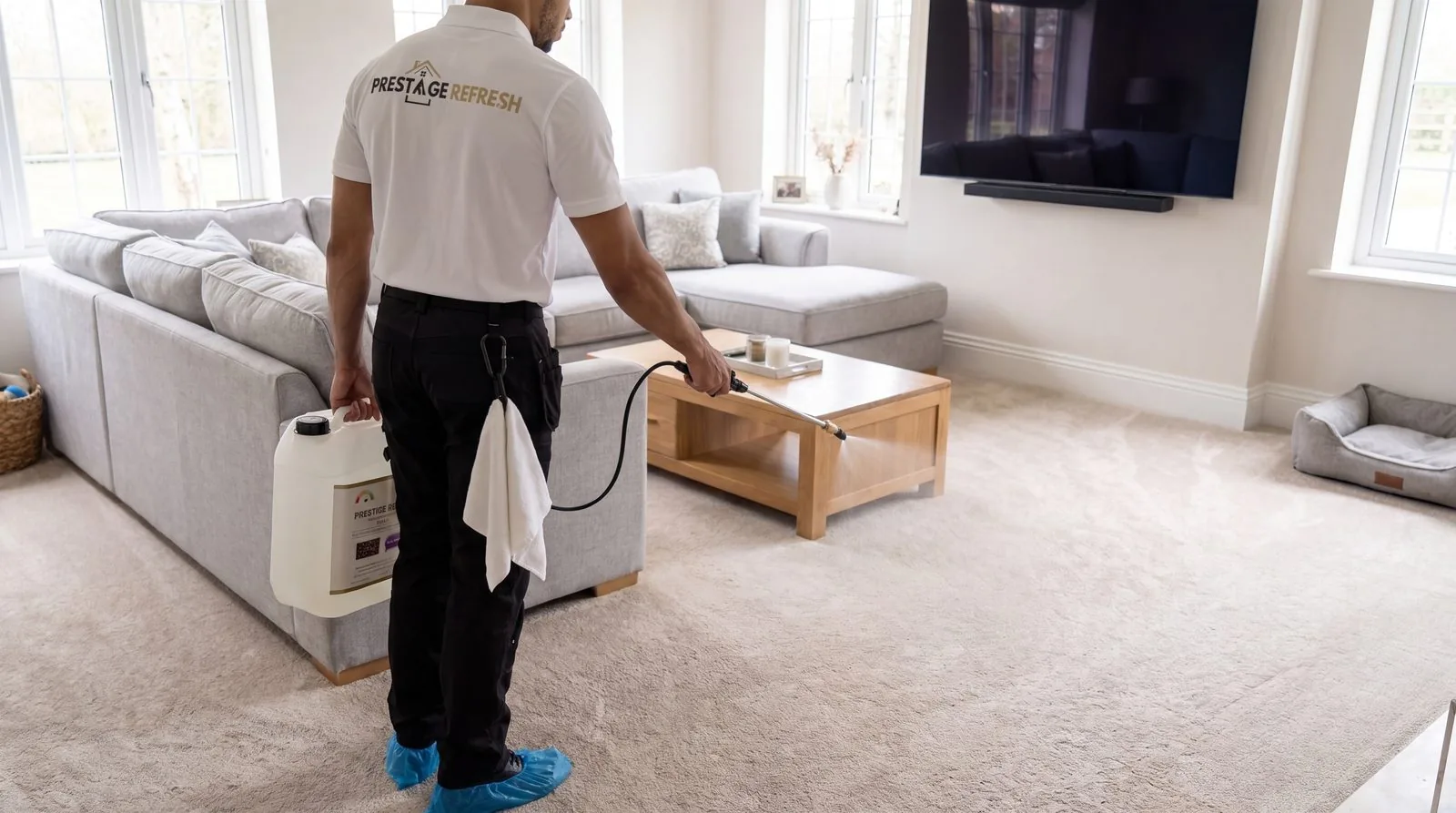
DIY Spray Or Powder
- Often left in the fibre, not rinsed out
- Residue stays where pets & kids sit
- Can leave harsh chemicals soaking in
A Proper Professional Clean
- Mostly hot water and extraction
- Products correctly diluted, then rinsed and extracted out
- A clean, near-dry surface left behind
If a spill happens between cleans, the safest move is simple: blot it with a clean dry cloth, don’t soak it in a chemical remover, and give us a call if it won’t shift.
Our Approach: Controlled, Rinsed, Proven
Our whole method is built around being safe to live with. Our products are WoolSafe approved, which means they are independently tested as safe for delicate fibres and for the people and pets living on them.
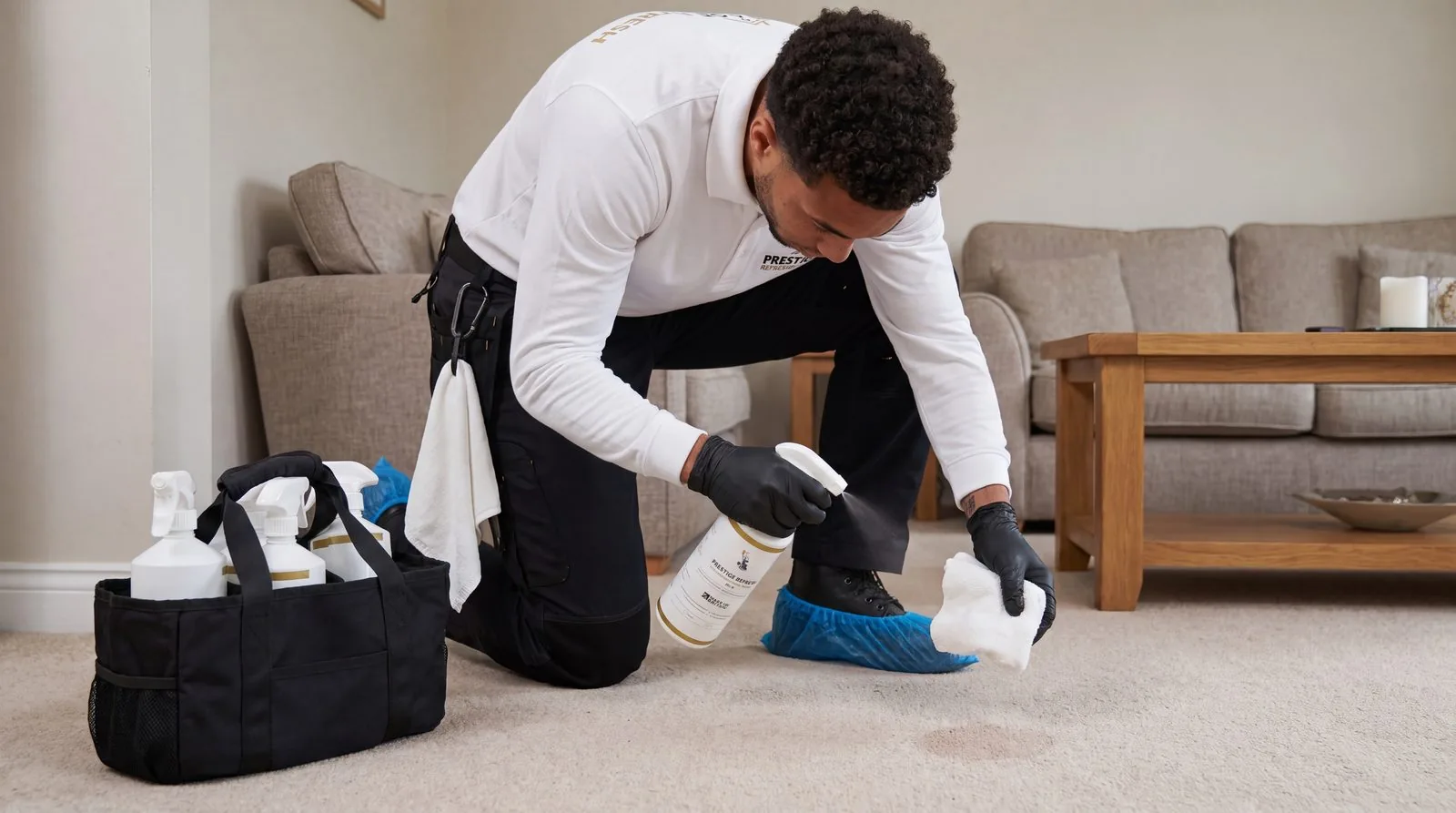
We control the moisture so the area dries quickly, we spot-test a hidden area first, and we use products at the right dilution then extract them back out rather than leaving them soaking. We are happy to share the safety data sheet for anything we use, and if a mark needs something stronger we will always tell you before we use it.
Done properly, professional cleaning is safe for pets, children, and people with asthma, and for allergy sufferers it often helps by removing trapped allergens. Stay off until dry, ventilate, and you’re left with a cleaner, fresher, easier-to-breathe home.
Our Safe Carpet Cleaning Process
It isn’t one step. It’s a simple sequence built to keep your household comfortable from start to finish.
Clear The AreaPets and children move to another room before we start, so everyone’s settled and out of the way.
Deep CleanHot water and strong extraction do the work, with any product correctly diluted then rinsed and extracted out.
Speed-DryWe control the moisture and keep the air moving so it dries quickly, usually about four hours.
Back To NormalOnce dry, the room is yours again, cleaner, fresher, and holding far fewer trapped allergens.
Why Prestige Refresh
When customers tell us why they chose us, the same four reasons come up. They’re the standard we hold every job to.
What Customers Say
We could tell you we’re careful with sensitive homes. It means more coming from the people we’ve actually cleaned for. We’re rated 5.0 from 338 Google reviews, and these come straight from them, unedited.
Our Golden Guarantee
The Golden Guarantee
We work cleanly, safely, and openly. Controlled processes, products rinsed and extracted out, and clear communication, backed in writing.
Quick Answers
Is professional carpet cleaning safe for pets and children?
Yes, when it’s done properly. The work is mostly hot water and powerful extraction. Any cleaning product is used at the correct dilution, then rinsed and extracted out rather than left soaking in the fibre. Keep pets and children off the area until it’s dry, usually about four hours, and ventilate the room.
I assumed it’d be full of strong chemicals. It was basically hot water and a really powerful machine.
Can carpet cleaning help with asthma and allergies?
It often helps. Carpets, upholstery, and mattresses trap dust, dust mites, pet dander, and pollen. Deep cleaning with strong extraction removes a large amount of that trapped allergen load, which can ease symptoms for allergy and asthma sufferers. It’s not a medical treatment, but a cleaner home generally means cleaner air.
How long should pets and children stay off the carpet after cleaning?
Stay off until it’s dry, usually around four hours, though it can range from one to twelve depending on the material. Open windows to speed drying, and pop pets somewhere comfortable until then. Same-day dry is available as a priority where it matters.
Are shop-bought carpet cleaners safer than professional cleaning?
Often the opposite. Many DIY sprays and powders are left in the fibre rather than rinsed and extracted out, so residue and any harsh chemicals stay where pets and children sit. A proper professional clean is controlled, correctly diluted, then rinsed and extracted away.