
You have looked at the carpet, sighed, and started pricing up a new one. Before you do, it is worth knowing that sometimes replacing is the right call, and quite often it is not. Here is how to tell the difference frankly.
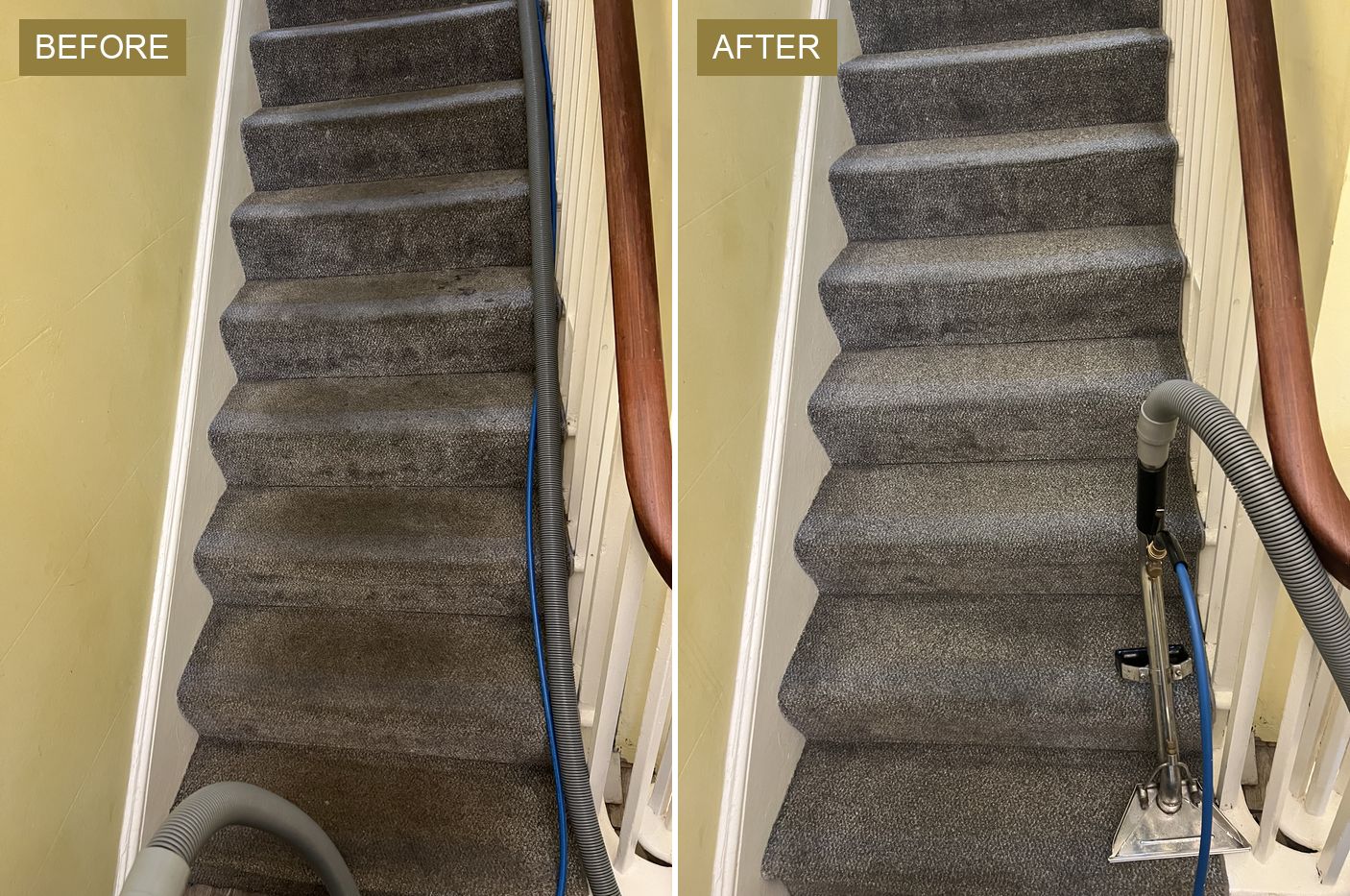
Clean first when in doubt. Replace when it is genuinely damaged.
Most tired carpets are dirty, not worn, and if we think cleaning will not save yours, we say so at the walk-through rather than take the job.

Jump to a section
When replacement is the right call
Dirty, not worn: the usual story
How to tell dirt from damage
The cost reality
The sensible order: clean first
What a professional clean brings back
What a clean-first visit involves Which carpets come back best Clean or replace, by situation The Golden Guarantee
When Replacement Really Is the Right Call
Let’s start with the straight part, because it is the part most cleaning companies skip. Some carpets are genuinely finished, and no clean, however good, will bring them back. Cleaning removes soil.
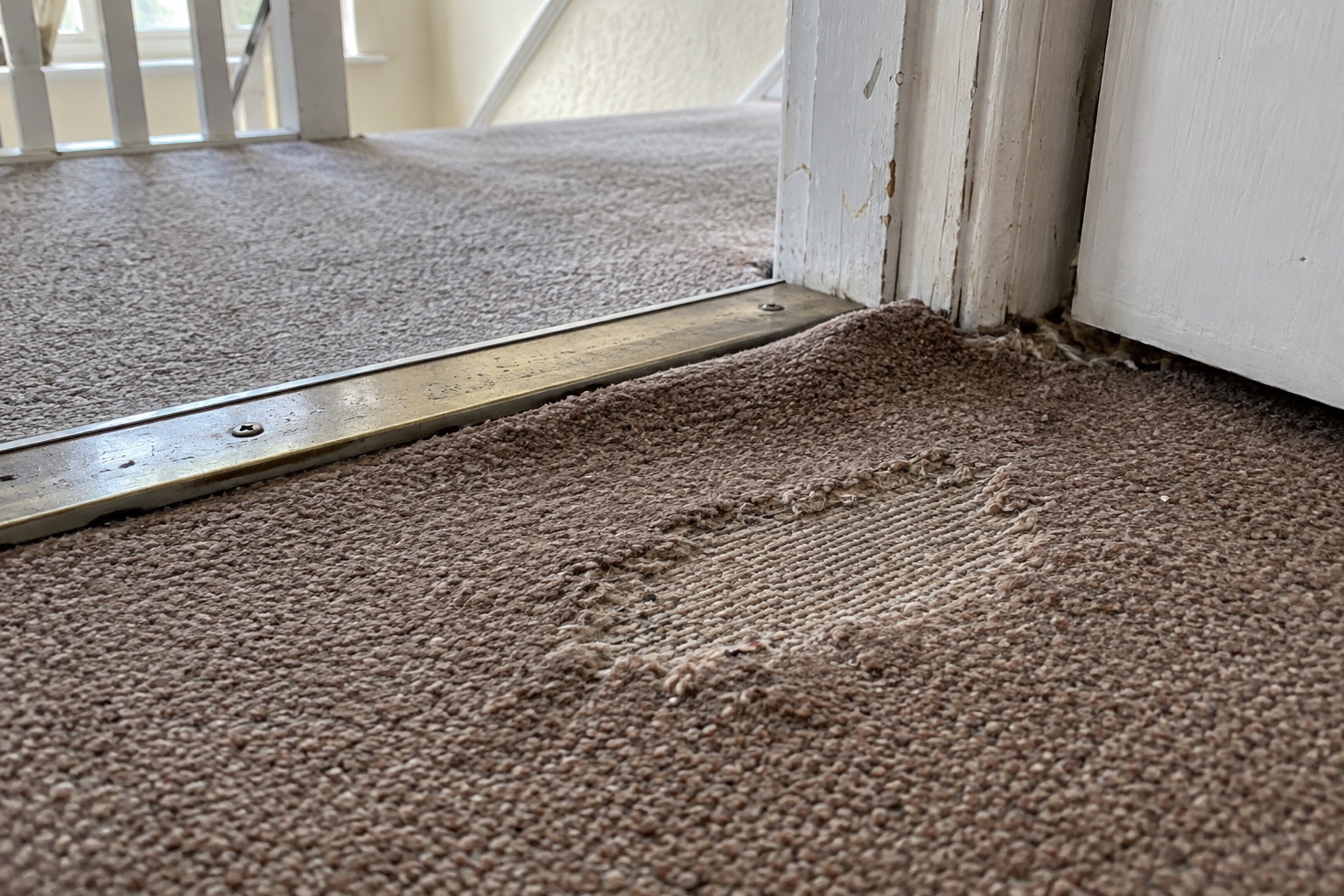
It cannot rebuild fibre, re-glue backing, or undo chemical damage. If your carpet has any of the problems below, replacement is the better use of your money, and we will tell you that to your face.
What we can promise is a straight answer. Every job starts with a walk-through, and if we do not believe cleaning will save your carpet, we say so there and then rather than take the job. That costs us work sometimes. We think it is the only way to run a professional company.
Signs A Carpet Is Beyond Cleaning
These are damage, not dirt. Cleaning cannot reverse any of them, and a straight company will tell you so before quoting.
- Delaminated backing: the carpet ripples, bubbles or has come away from its base
- Extensive bleach or dye damage across the visible areas
- Burns and melted fibres, from irons, hair tools or embers
- Threadbare traffic lanes where the pile itself is worn away and the backing shows
- Persistent odour that has soaked through into the underlay beneath
Here is the good news: in our experience, most carpets people are ready to replace have none of those problems.
Most Tired Carpets Are Dirty, Not Worn
What reads as “worn out” from standing height is usually years of soil sitting in the pile. Here is what is really going on.
The three things that make a carpet look finished are greyed traffic lanes, flattened pile, and a general dinginess across the whole room. All three are usually soil, not damage. Traffic lanes grey because gritty soil is walked into the same strip thousands of times.
Pile flattens because that grit, plus footfall, folds the fibres over and holds them down. And the overall dullness is a fine film of soil sitting over the colour, the same way a dirty window dulls the view.
None of that is the carpet failing. The fibre is still there, the colour is still underneath, and the structure is intact.
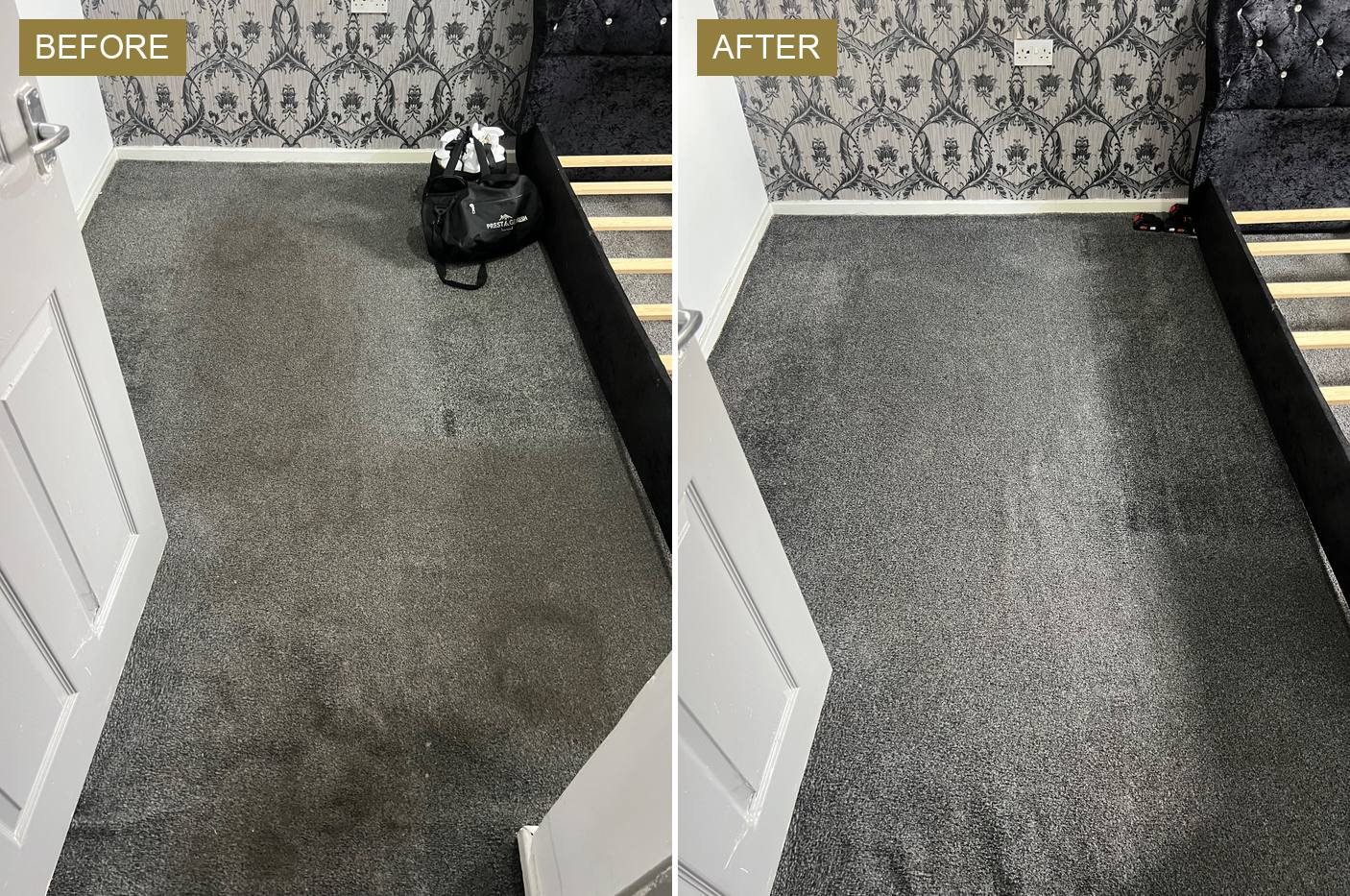
What we see on jobs, week in and week out, is a carpet the owner had mentally written off coming back several shades brighter once the soil is lifted out, with the pile standing back up after grooming. Dirt looks remarkably like wear until it is removed.
How to Tell Dirt from Damage
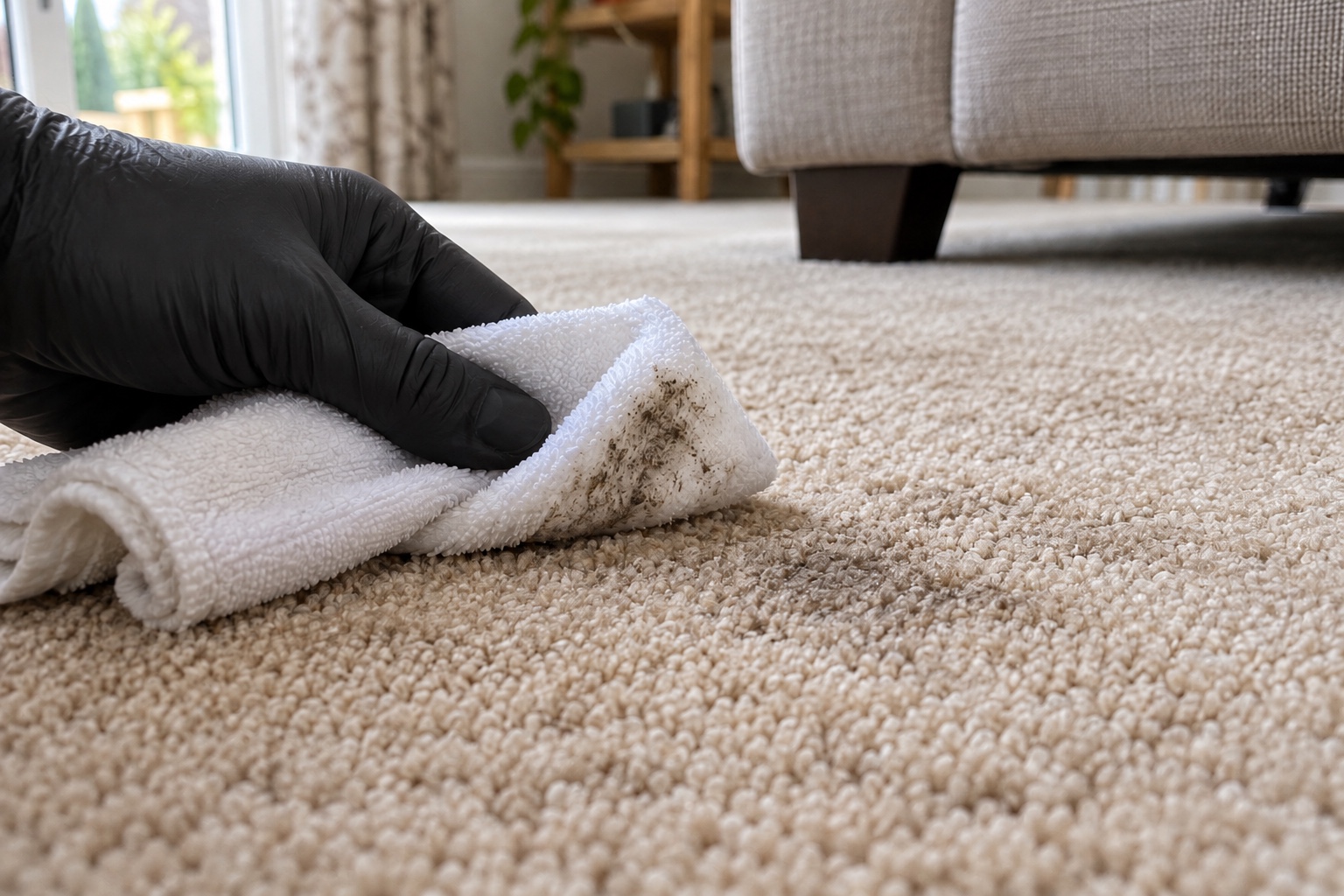
You can get a long way towards the answer yourself, in about two minutes, with two simple checks. The first is the damp white cloth test. Dampen a plain white cloth with warm water and rub it firmly over a greyed traffic lane for a few seconds.
If the cloth comes away grey or brown, that colour is soil sitting in the fibre, and soil comes out. A worn fibre does not transfer colour, because there is nothing in it to transfer.
The second check is under the furniture. Slide the sofa or sideboard out and look at the patch it has protected for years.
If that patch still shows the original colour and a fuller pile, then the difference between it and the rest of the room is dirt and flattening, not wear. That protected patch is what your whole carpet still is underneath the soil.
True Damage: Cleaning Won’t Fix It
- Backing shows through, or the carpet ripples and bubbles
- Bleach marks, burns or melted fibres
- Odour that returns because it lives in the underlay
Usually Just Dirt: It Cleans Out
- The damp white cloth picks up grey or brown
- The patch under the sofa still shows the original colour
- Flattened pile and even dinginess across the room
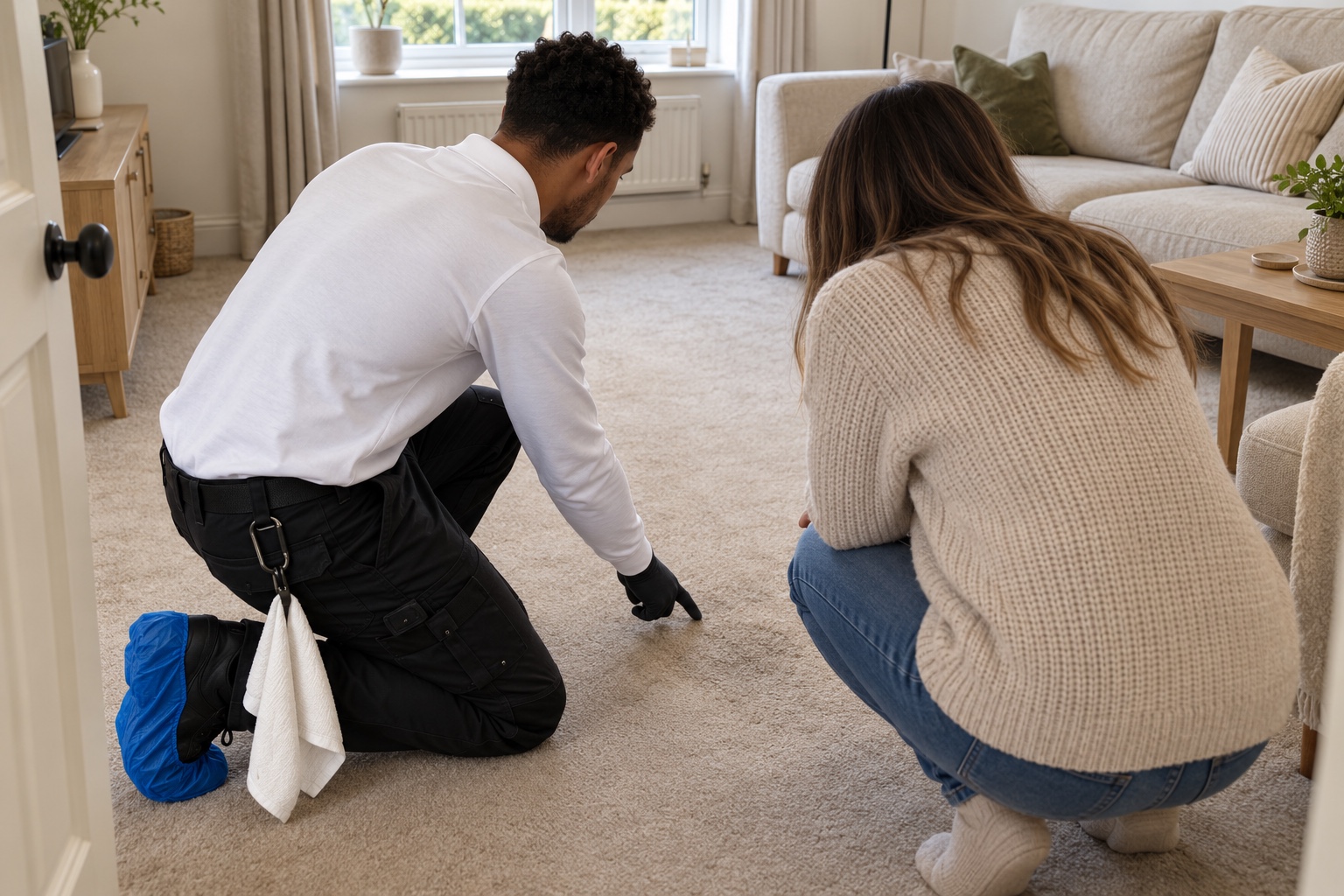
If the checks point to dirt, the carpet is a strong candidate for cleaning. If they point to damage, or you are frankly not sure, that is exactly what the walk-through is for. We check the pile, the backing and the underlay before we quote, and we give you our straight verdict either way.
Not Sure Which Way To Go?
Send us a couple of photos or book a walk-through. If we think cleaning will save it, we will say so, and if we think it won’t, we will say that too. Take your time deciding.
The Cost Reality: Replacing vs Cleaning
Replacement quotes have a habit of growing once the details land. Worth seeing the whole picture before you decide.
In our experience, replacing a carpet in an average room rarely stops at the price on the roll.
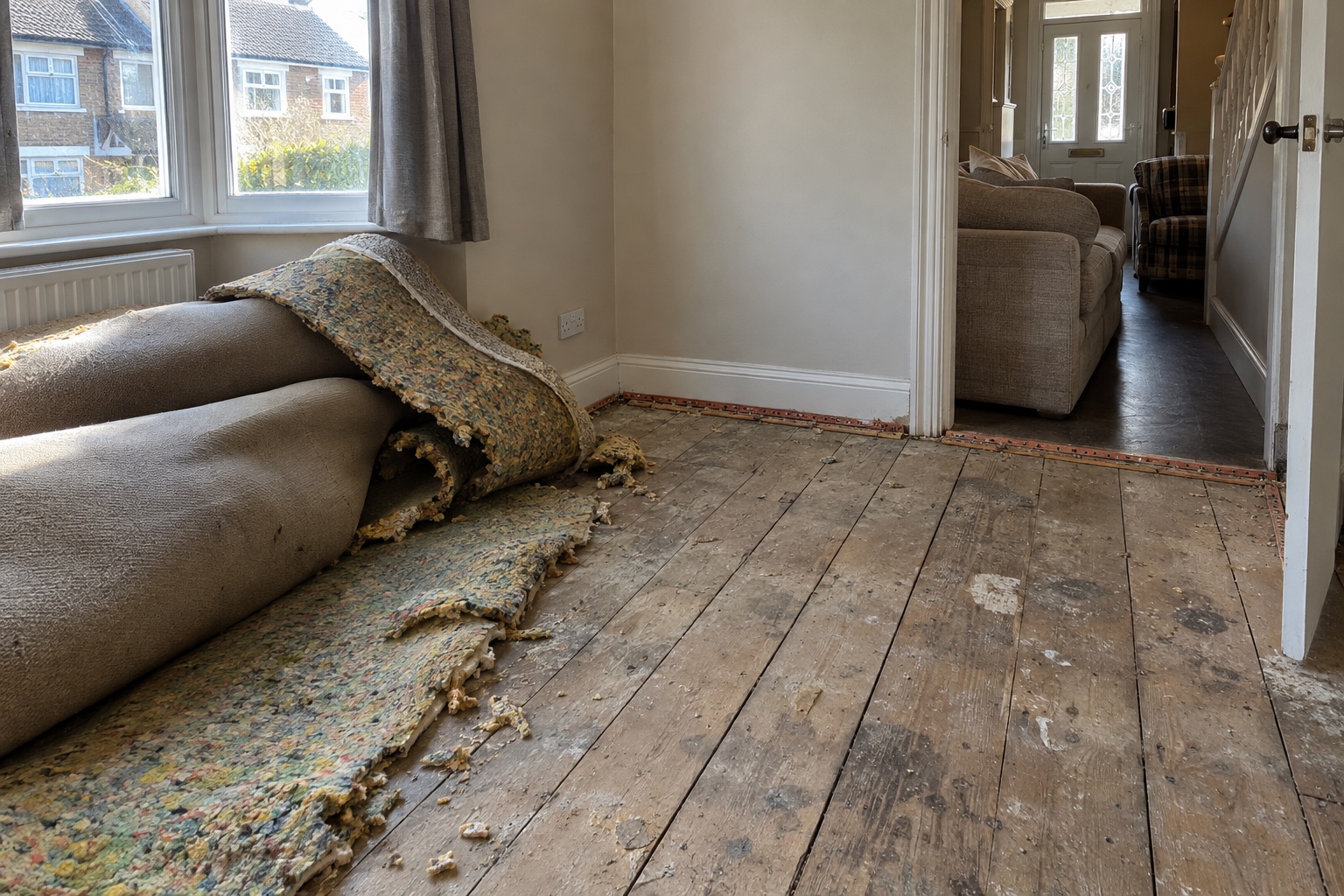
By the time it is actually down and the room is back together, the bill has usually collected several extras along the way, and the disruption is a cost of its own: a day or more of upheaval, and every heavy piece of furniture out and back in again.
- The carpet itself, plus new underlay, which fitters usually recommend replacing at the same time
- Fitting, gripper and door bars, and often doors trimmed to clear the new pile height
- Furniture moved out of the room, stored, and moved back
- Uplifting and disposing of the old carpet and underlay
A professional clean starts from £125 for one or two areas, takes a few hours rather than days, and the room is back in use the same day, drying usually takes six to twelve hours. The exact price is confirmed at the walk-through before any work starts, and the price quoted is the price paid.
The Sensible Order: Clean First When in Doubt
If the checks point to dirt, or you are simply not sure, the order that protects your money is clean first. If the clean brings the carpet back, and in our experience it usually does, you have just saved yourself the full cost and upheaval of replacement.
If it turns out the carpet really is finished, you replace it knowing you gave it a proper go, rather than wondering afterwards whether a clean would have done.
And here is the promise that makes clean-first a safe bet with us rather than a gamble: if we do not think cleaning will save your carpet, we tell you at the walk-through and we do not take the job.
We would rather send you to buy new carpet with a clear conscience than charge you for a clean we do not believe in. That is the standard we hold ourselves to on every job.
Replace Straight Away
- The biggest spend, made on a guess
- Days of upheaval, furniture out and back
- You never find out what a clean would have done
Clean First
- A fraction of the cost, from £125 for one or two areas
- Room back in use the same day
- A straight verdict at the walk-through before you spend anything
Either way, you end up with the right answer for your home, reached in the right order: the cheap, reversible step first, the expensive, permanent one only when it is truly needed.
Our Approach: Straight at the Walk-Through
Every quote starts with a proper look, not a guess over the phone. We check the traffic lanes, the pile, the backing and the underlay, and we spot-test a hidden area before any clean.
If we believe cleaning will bring your carpet back, we say so and quote a fixed price. If we do not, we say that too, plainly, before any work is booked. The price quoted is the price paid, and the work is done to a result, not a clock.
Some carpets are finished, and replacement is the right call. Most are just dirty, and a professional clean brings them back for a fraction of the cost. When in doubt, clean first, and if we think cleaning will not save yours, we will tell you at the walk-through rather than take the job.
What A Clean-First Visit Involves
A tired carpet gets the full method with more time in the places that are tired. Here is what that looks like on the day.
The verdict at the walk-throughThe white-cloth test on a lane, a look under the furniture, a check of the pile, backing and underlay. If it is dirt, we quote. If it is damage, we say so and you keep your money.
Dry vacuum, slowlyThe Kirby works the lanes in two directions. On a carpet that has not been deep cleaned for years, this step alone lifts a surprising amount of what looked like wear.
Pre-spray, dwell, agitateThe lanes and the dingy middle get a heavier pre-spray and a longer dwell, then agitation to open the flattened pile and release the oils that have bonded the soil on.
Extraction with extra passesHot water extraction on the whole room, then the lanes again, then dry passes. Watch the water in the wand window: on a carpet like this it runs dark for a long time.
Groom and dryThe pile raked upright, which is what brings the flattened lanes back, and air movers on. Dry in six to twelve hours. The carpet you see the next morning is the one that answers the question.
A restoration clean on a tired lounge takes a little longer than a maintenance clean, often an hour rather than 45 minutes, and we tell you that at the walk-through. It still costs a fraction of a new carpet and the room is back the same day.
Which Carpets Come Back Best
The fibre decides a lot of the answer. Here is how each one tends to respond to a clean-first decision.
Wool
- Comes back remarkably well: the fibre is resilient and the pile stands up again after grooming
- Hides soil, so it is often dirtier than it looks and the change is bigger than expected
- Needs WoolSafe products, less water and fast drying
Polypropylene
- Lanes grey and crush but the colour is locked into the fibre, so the clean brings it back
- Crushed pile in lanes does not always fully recover; it cleans but can stay a little flat
- Cheap to replace, so if it is genuinely worn, replacing is sensible
Nylon and polyester
- Clean up well and hold their pile better than polypropylene
- Oil-bonded soil in the lanes needs the dwell time and the heat
- Older nylon can have faded in sunlight: that is not dirt, and a clean will not change it
What no fibre recovers from
- Bleach marks, burns and melted fibre
- Backing that has delaminated or rippled
- Pile worn through to the backing
- A smell that lives in the underlay rather than the carpet
Clean Or Replace, By Situation
The right order is nearly always clean first. Who is asking changes the details.
Landlord between tenants
- A clean every tenancy is far cheaper than a replacement every third one
- We tell you which marks are cleaning and which are damage before you decide
- A dated receipt and photos for the file
Selling the house
- A clean before the photos and viewings; buyers see fresh groom lines and no lanes
- If a carpet really is finished, a clean still presents the room better than leaving it
- Dry and ready the same day
Elderly parent’s home
- Older carpets often look worse than they are: years of soil, not wear
- A clean avoids the upheaval of clearing a room they have lived in for decades
- We work around them and keep the bathroom route dry
Family with pets
- If the smell is in the carpet, a clean fixes it; if it is in the underlay, we say so
- Lanes and the dog’s spot get the heavy pre-spray and extra passes
- Clean first, and replace the underlay section only if it is needed
What To Ask Us
- Here are photos of the lanes: is this dirt or wear, honestly?
- Is it wool or synthetic, and how well does that kind come back?
- If the clean does not bring it back, what would you suggest next?
- We are selling in a month: is a clean worth it before the photos?
Ask any of them by replying to the message that brought you here, or ring your local number. We answer plainly, and there is no pressure from us either way.
Why Prestige Refresh
When customers tell us why they chose us, the same four reasons come up. They’re the standard we hold every job to.
What Customers Say
We could tell you we’re careful with sensitive homes. It means more coming from the people we’ve actually cleaned for. We’re rated 5.0 from 338 Google reviews, and these come straight from them, unedited.
Our Golden Guarantee
The Golden Guarantee
We work cleanly, safely, and openly. Controlled processes, products rinsed and extracted out, and clear communication, backed in writing.
Quick Answers
Is professional carpet cleaning safe for pets and children?
Yes, when it’s done properly. The work is mostly hot water and powerful extraction. Any cleaning product is used at the correct dilution, then rinsed and extracted out rather than left soaking in the fibre. Keep pets and children off the area until it’s dry, usually six to twelve hours, and ventilate the room.
Can carpet cleaning help with asthma and allergies?
It often helps. Carpets, upholstery, and mattresses trap dust, dust mites, pet dander, and pollen. Deep cleaning with strong extraction removes a large amount of that trapped allergen load, which can ease symptoms for allergy and asthma sufferers. It’s not a medical treatment, but a cleaner home generally means cleaner air.
How long should pets and children stay off the carpet after cleaning?
Stay off until it’s dry, usually six to twelve hours hours, sooner with warmth and airflow and longer without. Open windows to speed drying, and pop pets somewhere comfortable until then. Same-day dry is available as a priority where it matters.
Are shop-bought carpet cleaners safer than professional cleaning?
Often the opposite. Many DIY sprays and powders are left in the fibre rather than rinsed and extracted out, so residue and any harsh chemicals stay where pets and children sit. A proper professional clean is controlled, correctly diluted, then rinsed and extracted away.
Will the traffic lanes fully recover?
The colour usually does, because the grey is soil sitting on the fibre and the clean lifts it. The pile usually stands back up after grooming, though on an older polypropylene carpet a lane that has been crushed for years can stay a little flatter than the rest. We tell you which to expect at the walk-through.
Does a wool carpet respond better to cleaning than a synthetic one?
Wool often comes back the most dramatically, because it hides soil well and the fibre is resilient, so the pile stands up again. It just needs the careful route: WoolSafe products, less water and fast drying. Synthetics clean up well too; the difference is that a crushed polypropylene lane can stay slightly flat.