Coffee & Tea Stains: What Works and What Sets Them
The first five minutes decide most coffee and tea spills. Here is what to do, what never to do, and the point at which to call us.
- The cold water first aid that saves most spills
- WoolSafe-approved products, spot tested first
- Backed by our re-clean guarantee

The morning rush and a full mug goes down the stairs. A cuppa knocked off the arm of the sofa. Coffee and tea are the most everyday stains a home collects, and what you do in the first five minutes decides whether they come out. Here is the calm, straightforward way to handle both.
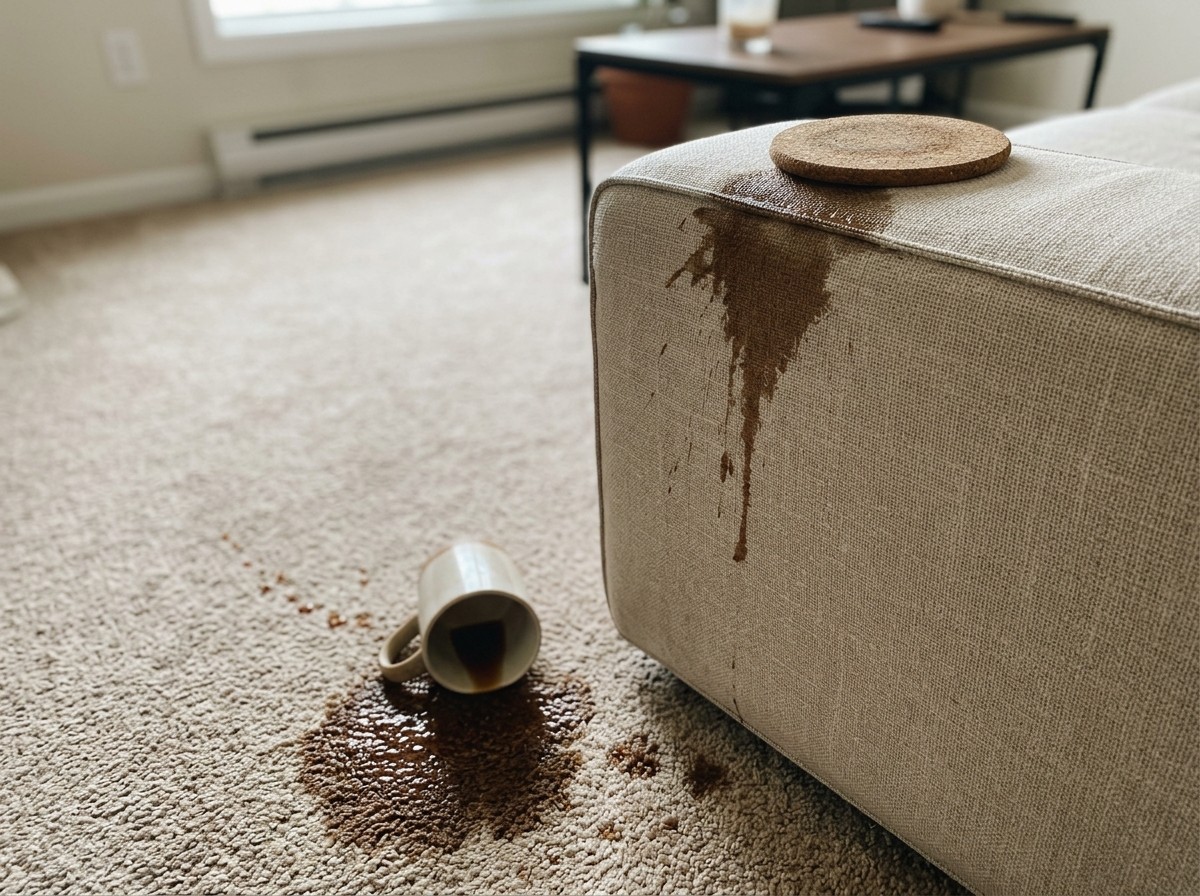
Blot fast, cold water only, work from the outside in. Never use heat.
Coffee and tea are tannin stains, natural dyes. Caught fresh and kept cold, most spills lift completely. Heated or scrubbed, they can set for good.

Jump to a section
Why coffee & tea stains stick
First aid: the first five minutes
Never use heat
Milk & sugar change the job
Do shop sprays work?
When to call us in
The Golden Guarantee
Why Coffee & Tea Stains Stick
Coffee and tea both carry tannins, the same natural compounds that give a brew its colour. Tea is the stronger of the two. It is, quite literally, a dye bath: tea leaves have been used to dye fabric for centuries, which is why a mug of builders’ tea on a cream carpet is a serious spill, not a small one. Coffee brings its own tannins plus oils, and the darker the roast, the more it leaves behind.
The fibre matters too. A synthetic carpet gives you a little room for error. Wool and other natural fibres take dye readily, which is exactly what makes them lovely and exactly what makes a tea spill on them urgent. Either way the rule is the same: the sooner the liquid comes out, the less dye is left to bond with the fibre.
The Mistakes That Set A Tannin Stain
Almost every coffee or tea mark we cannot fully lift was set by one of these before we arrived. Worth a screenshot for the fridge.
- Hot or warm water on a fresh spill
- A hairdryer, heater or radiator used to dry the patch
- Running a steam cleaner over an untreated stain
- Scrubbing, which spreads the ring and frays the pile
- Coloured cloths, which can transfer their own dye into damp carpet
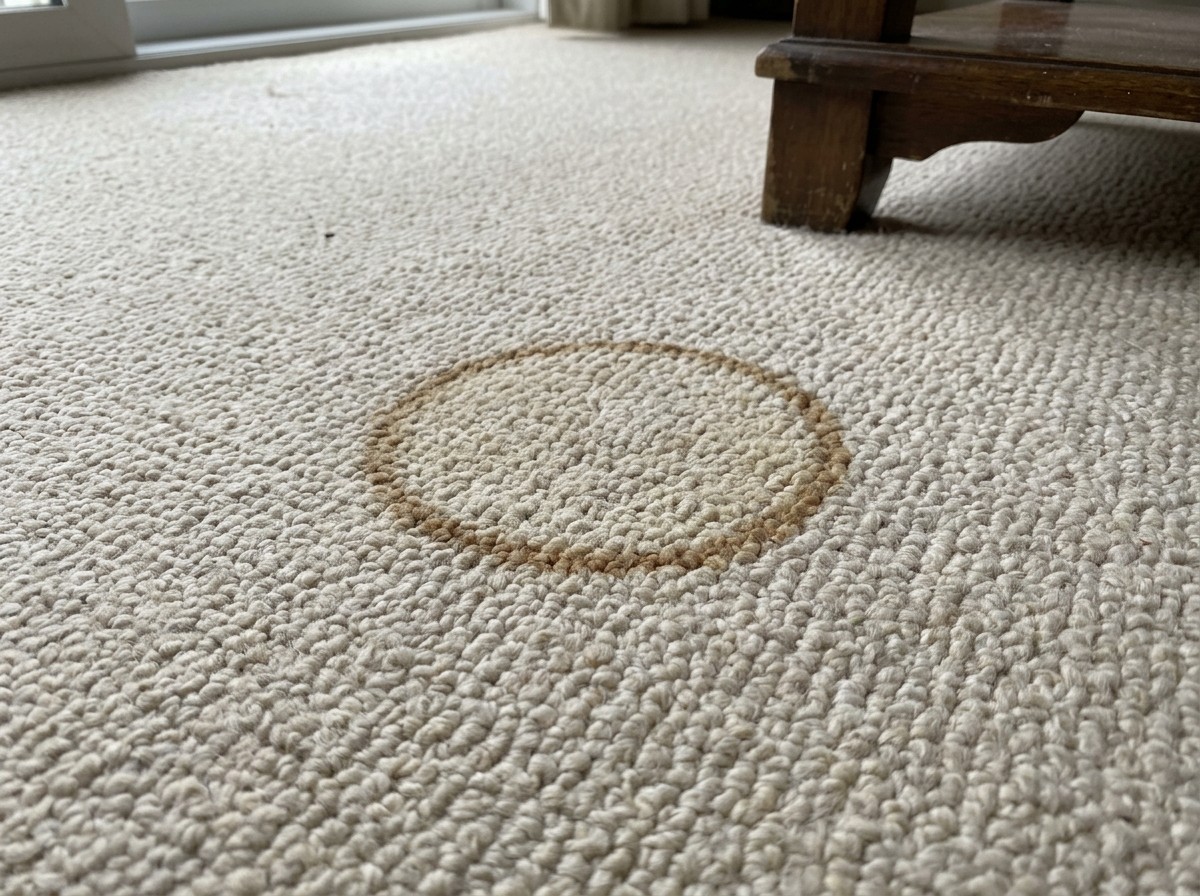
- Over-soaking, which pushes the spill into the underlay where it wicks back up as a brown ring
So the mug has gone over. Here is what to do, in order, with things already in the kitchen.
The First Five Minutes
No special products and no shop trip. A clean white cloth, cold water, and a steady hand do most of the work.
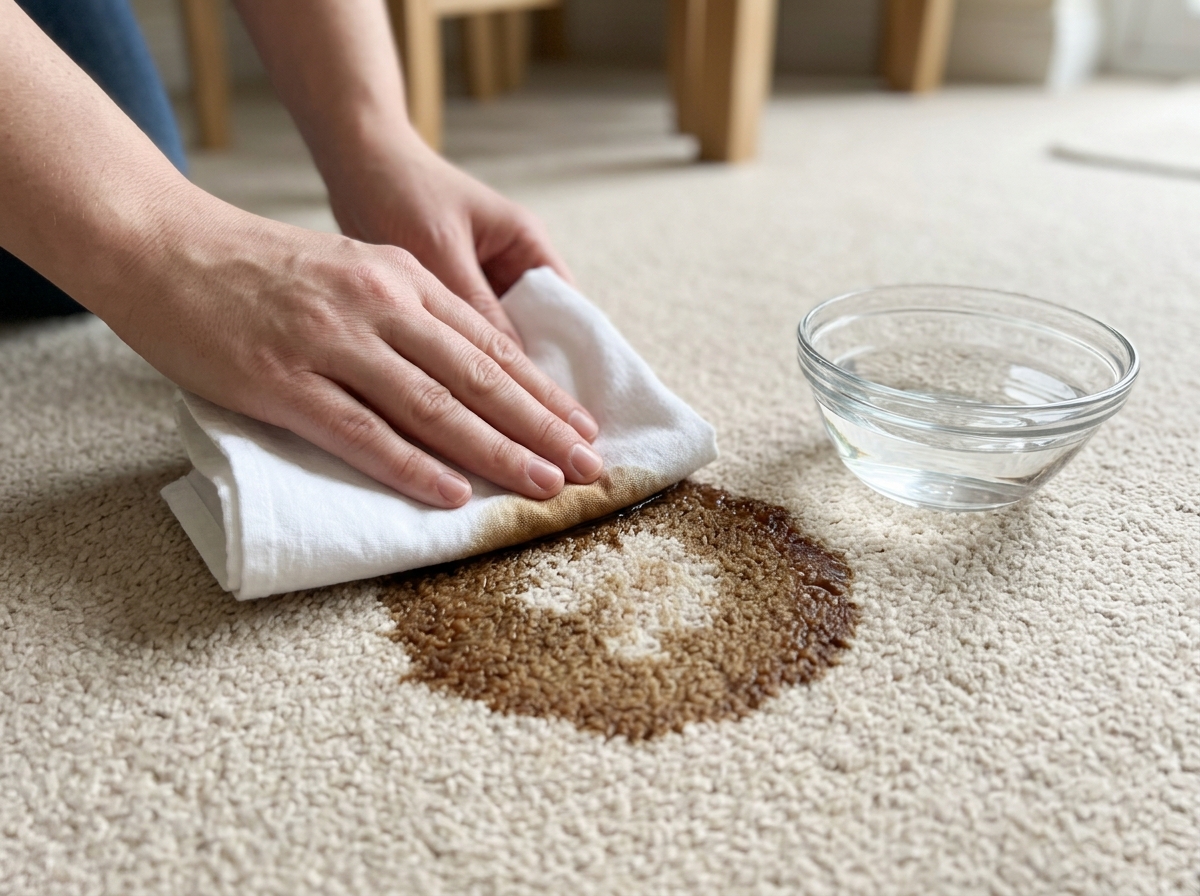
- 1. Blot, do not rub. Press a clean white cloth or plain kitchen roll firmly into the spill and soak up as much liquid as you can. Rubbing drives the dye deeper into the pile and spreads it wider. Press, lift, turn to a dry section, press again.
- 2. Blot with cold water, outside in. Dampen a fresh cloth with cold water and keep blotting, always working from the edge of the stain towards the middle so the ring cannot grow. Swap cloths as they pick up colour.
- 3. Add a mild solution if a mark remains. Mix a teaspoon of washing-up liquid into a cup of cold water. Blot it on, leave it for a minute, blot it off, then rinse by blotting with plain cold water so no sticky residue is left behind.
- 4. Let it dry on its own. Blot the area as dry as you can with a towel and let the air do the rest. No hairdryer, no heater. Check it in daylight before deciding whether it needs another pass.
A full mug of tea went down the cream stairs on a school morning. Cold water and blotting held it, and after the clean you would never know.
The Cardinal Sin: Never Use Heat
If you take one thing from this page, make it this: heat sets a tannin stain permanently. Tannins are dyes, and heat is how dye is fixed into fabric on purpose. Hot water on the spill, a hairdryer on the damp patch, a heater dragged over to speed things up, an iron, a steam cleaner run across the mark before it is treated: every one of them can turn a liftable spill into a permanent one.
In our experience this is the quiet reason so many coffee and tea marks never come out. The spill itself was manageable. The hot water that followed it, or the rental machine run over it before the stain was treated, did the real damage. Cold water does the same first-aid job with none of the risk.
Cold water at every stage, air drying only, and no steam or heat until the stain is fully out. The households that follow this one rule save far more carpets than they lose, even when the spill looks dramatic.
Milk & Sugar Change the Job
A black coffee or a plain tea is a straightforward tannin stain. Add milk and sugar and it becomes two stains in one. Milk brings protein, and protein behaves the same way in carpet as it does in a pan: it sets with heat, clings to the fibre, and if it is left in the pile or the underlay it can sour and smell. One more reason the cold water rule matters.
Sugar is sneakier. It dries invisible, but it stays sticky in the fibre, and a sticky patch collects everyday soil with every footstep. That is why a spill that looked gone so often reappears weeks later as a dull grey patch. The stain did not come back. The residue was never rinsed out, and it has been gathering dirt ever since. Proper rinsing and extraction is the difference between the two.
Do Shop Sprays Work?
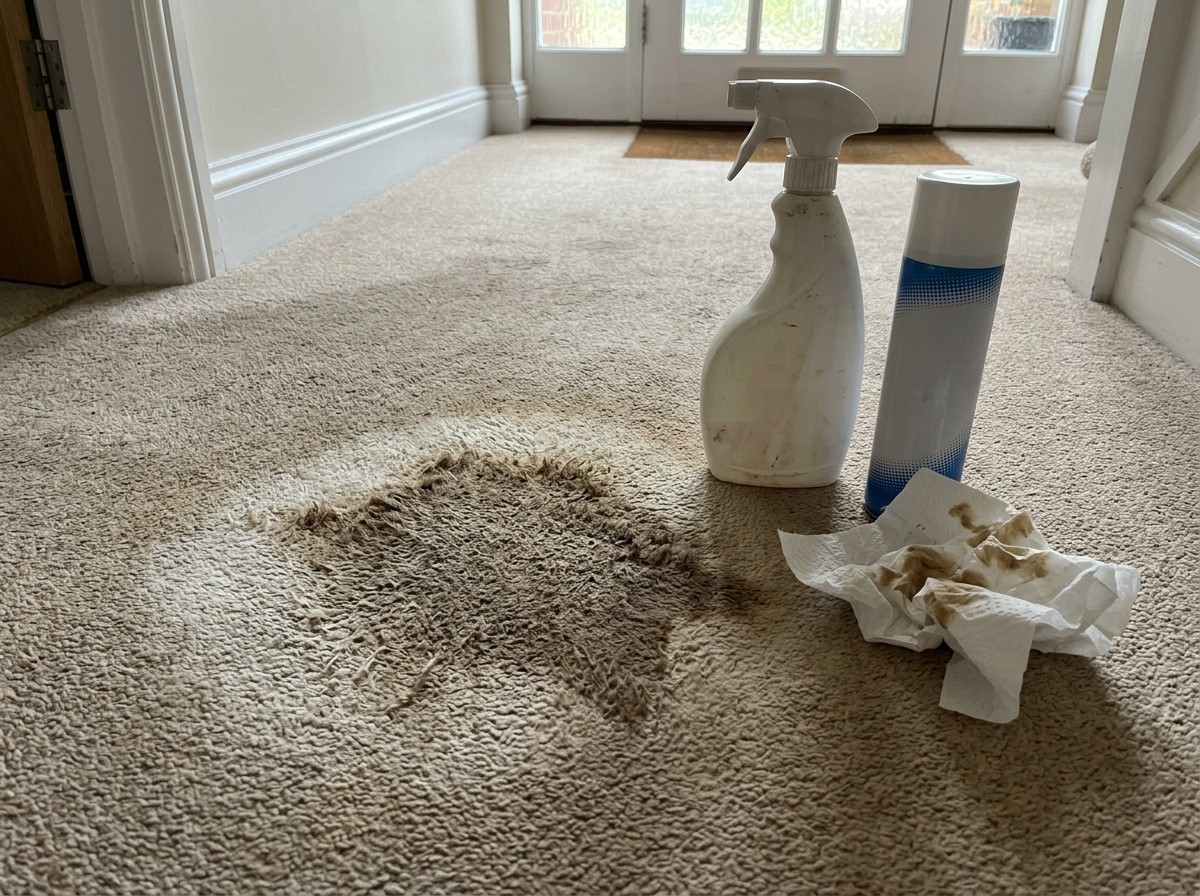
Frankly, sometimes. On a small, fresh mark on a synthetic carpet, a supermarket stain remover used sparingly can do the job. But they deserve more caution than the labels suggest. Some rely on strong oxidising agents, and those do not always know when to stop: they can take the carpet’s own colour out along with the stain. A bleached pale patch is permanent in a way a coffee mark rarely is, and wool is especially vulnerable.
Whatever the bottle, patch test it somewhere hidden first, inside a cupboard or behind a door, and give it a few minutes before you trust it near the stain. And if a spray has already been tried and failed, stop there. Every extra product in the fibre makes the stain harder to read and the final result harder to predict.
The Shop Spray Gamble
- Can bleach a pale patch worse than the stain
- One formula for every fibre and every stain
- Residue left in the pile attracts fresh dirt
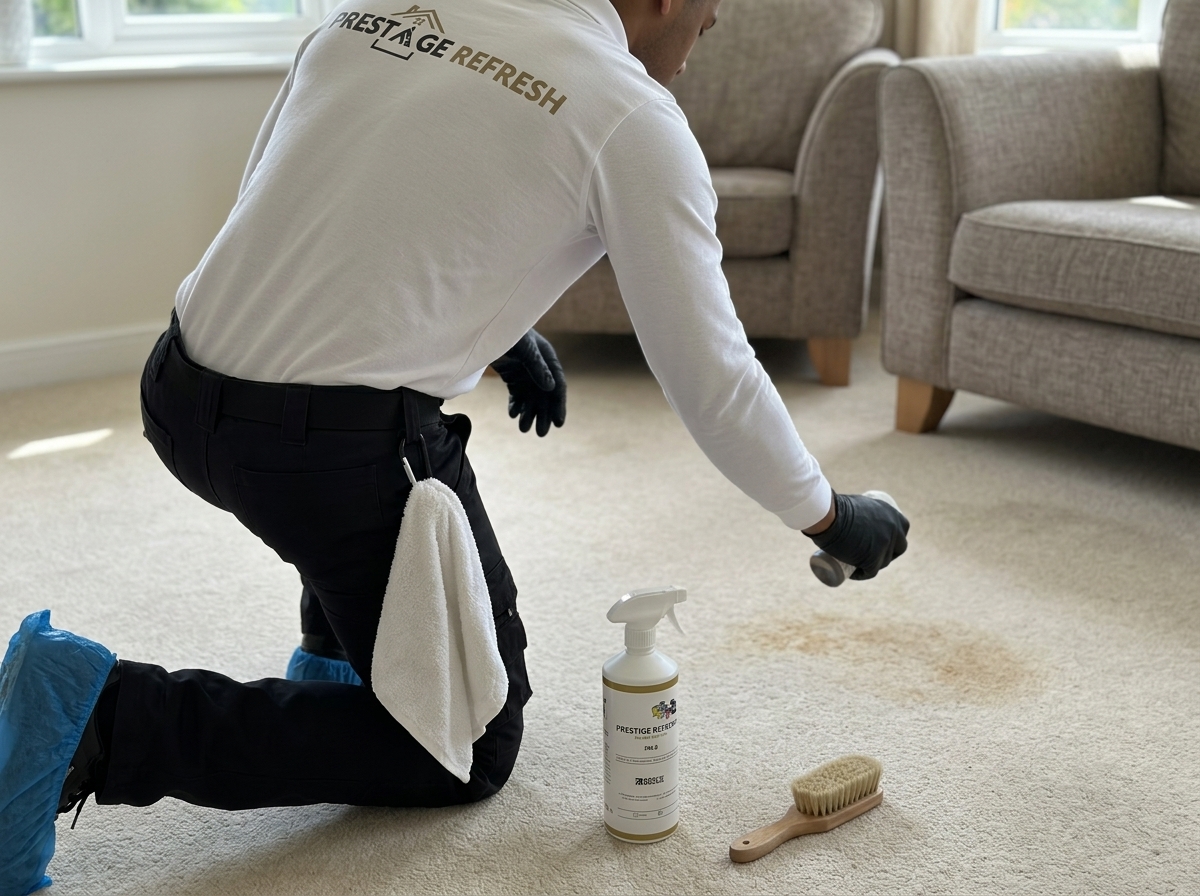
A Professional Treatment
- Treated for what it is, a tannin stain
- WoolSafe-approved products, spot tested first
- Rinsed and extracted out, nothing left behind
Tried A Spray And The Mark Is Still There?
Send us a photo of the stain and tell us what has been used on it so far. We will tell you straight whether we think it will lift, and you can take your time deciding.
When To Call Us In
Most small, fresh spills are a job you can do yourself, and we would rather tell you that than sell you a visit you do not need. There are a few cases where stopping and asking is the cheaper decision in the long run.
- An older stain that has browned into a ring. That is usually wicking: the spill reached the underlay and crept back up the fibre as it dried. Surface cleaning cannot reach it, extraction can.
- A wool or natural-fibre carpet, which takes dye readily and is easily bleached or felted by the wrong product.
- The repeated spill zone around the sofa, where months of small splashes have built into a shadow that no spray touches.
- Anything already treated with a product that did not work, where the safest next step is a professional read of what is in the fibre before anything else goes on it.
And a straight word on results. A fresh tannin stain treated correctly usually lifts completely. An old one, a heated one, or one that has been through several products is less predictable, and we will not pretend otherwise. What we promise is the right method, careful work, and a straight answer on the likely result before we start. We cover Manchester, Merseyside, and Lancashire.
Inspect + Spot TestWe identify the fibre, check what has already been tried, and spot test a hidden area first.
Tannin Pre-TreatmentThe stain is treated correctly for a tannin mark, with WoolSafe-approved products at the right dilution.
Hot Water ExtractionOnce the stain is broken down, our Enforcer 400 rinses and extracts it out of the pile.
Dry + GroomDry pods speed the drying, the pile is groomed, and the room is back to normal in hours.
Blot fast, keep it cold, and work from the outside in, and most coffee and tea spills come out completely. Heat, scrubbing, and harsh sprays are what set them. If the mark has browned, the carpet is wool, or a spray has already failed, a straight professional opinion costs nothing.
Why Prestige Refresh
When customers tell us why they chose us, the same four reasons come up. They’re the standard we hold every job to.
What Customers Say
We could tell you we’re careful with stains and upfront about results. It means more coming from the people we’ve actually cleaned for. We’re rated 5.0 from 338 Google reviews, and these come straight from them, unedited.
Our Golden Guarantee
The Golden Guarantee
We work carefully, frankly, and to a result. The right treatment for the stain, products rinsed and extracted out, and a straight answer before we start, backed in writing.
Quick Answers
How do I get coffee or tea out of carpet?
Blot up as much liquid as you can with a clean white cloth, then keep blotting with cold water, working from the outside of the stain towards the middle. If a mark remains, a teaspoon of washing-up liquid in a cup of cold water, blotted on and rinsed off, lifts most fresh spills. Never use hot water or heat.
Does tea stain carpet permanently?
It can. Tea is rich in tannins, which are natural dyes, and heat or time can fix them into the fibre exactly as a dye bath would. Caught fresh and kept cold, most tea spills come out. An old or heated tea stain is harder, and a browned ring usually needs professional treatment.
Why did the stain come back after it dried?
Two common reasons. Sugar and milk residue left in the pile stays sticky and attracts everyday dirt, so the patch resoils and turns grey. Or the spill reached the underlay and wicked back up the fibre as it dried, showing as a brown ring. Both respond well to a proper clean with rinsing and extraction.
Do shop-bought stain removers work on coffee and tea?
Sometimes, on a small fresh mark on a synthetic carpet. But some rely on strong oxidising agents that can bleach the carpet, leaving a pale patch that is worse than the stain, and many leave a residue that attracts dirt. Always patch test on a hidden area first, and be especially careful on wool.
Let us know how we can help you today.