
Some rugs are easy. A machine-made runner can take a proper deep clean without a second thought. A hand-knotted wool or oriental rug is a different job entirely, and treating it like fitted carpet is how treasured pieces get ruined. Here is how it should be done.
Yes. Wool and delicate rugs can be cleaned safely, when the method matches the fibre.
We identify the fibre first, test a hidden corner before any product touches the rug, and clean with WoolSafe-approved products. The rug is cleaned to protect it, never to risk it.

Jump to a section
Can every rug be cleaned?
Why a rug is not fitted carpet
Fibre first: identify & test
How we clean a rug
Should you DIY a rug clean?
What does rug cleaning cost?
A rug clean, step by step How each fibre is cleaned What a rug clean cannot fix Rug questions, by household The Golden Guarantee
Can Every Rug Be Cleaned?
Nearly every rug can be cleaned safely, as long as it’s handled to its fibre. What works beautifully on a synthetic runner can ruin a hand-knotted wool piece, so the first job is always knowing what’s in front of us. These are the four kinds of rug we see most across Manchester, Merseyside, and Lancashire:
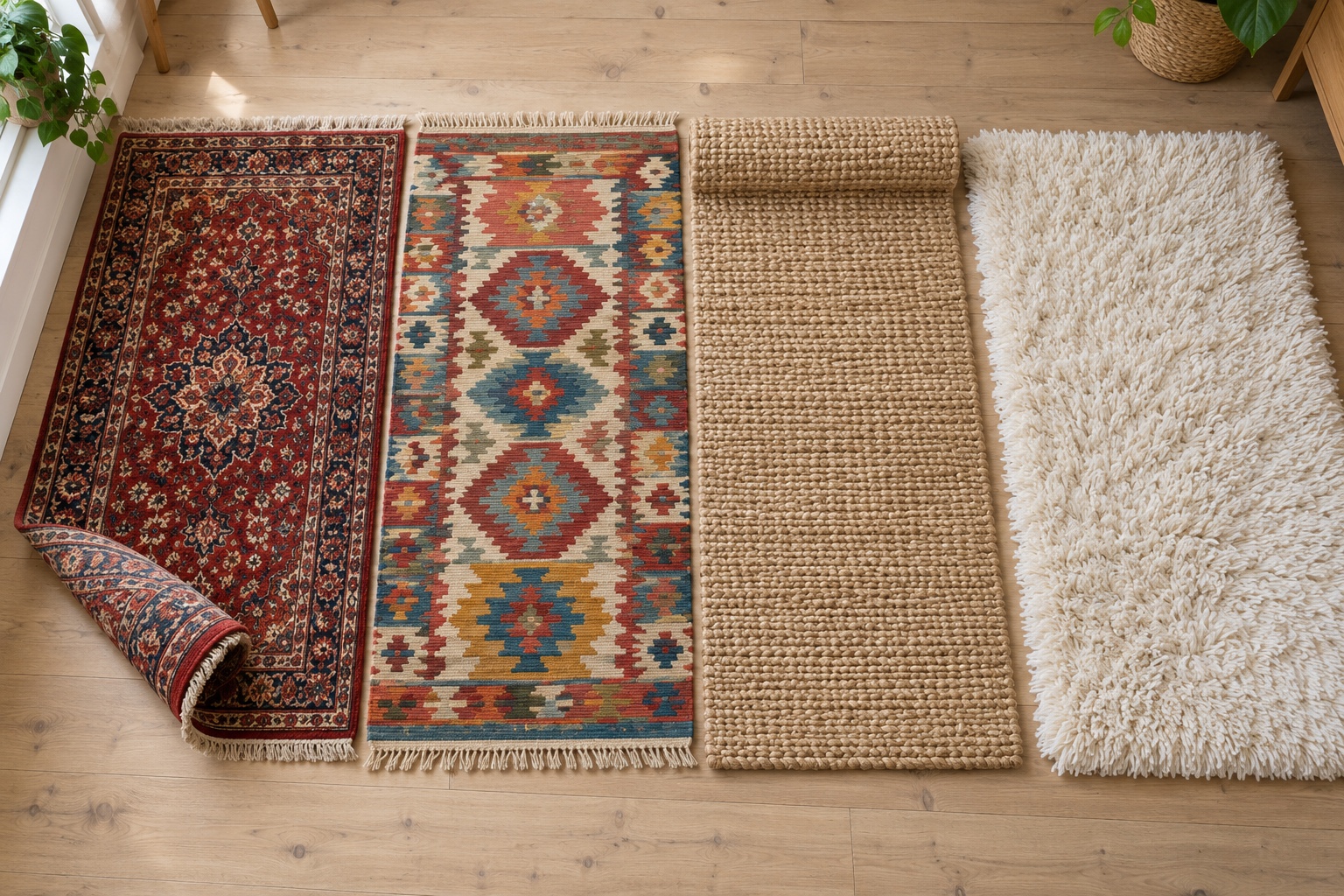
- Wool rugs. Natural, hard-wearing, and worth looking after. Cleaned gently so the wool stays soft and the colours stay true.
- Synthetic rugs. Everyday machine-made rugs and runners. Hot water extraction lifts ground-in dirt and refreshes flattened pile.
- Oriental and Persian rugs. Hand-knotted, with rich dyes. We test for colour-fastness and clean carefully to protect the pattern and the pile.
- Silk, vintage and antique rugs. Treated with the most caution, cleaned with the least moisture, and we tell you plainly if a piece is one for a specialist rug workshop rather than a clean in the home.
Red Flags: When A Rug Clean Goes Wrong
If you hear or see any of these, the rug is at risk. Worth a screenshot when you’re comparing cleaners.
- One method for every rug, wool or synthetic
- No colour-fastness test before they start
- The rug soaked through, so backings shrink and warp
- Harsh, cheap chemicals straight onto wool
- Extras added once the work has started
- No comeback if you’re unhappy with the result
So why do rugs punish a careless clean so hard? Because a rug is not fitted carpet.
Why a Rug Is Not Fitted Carpet
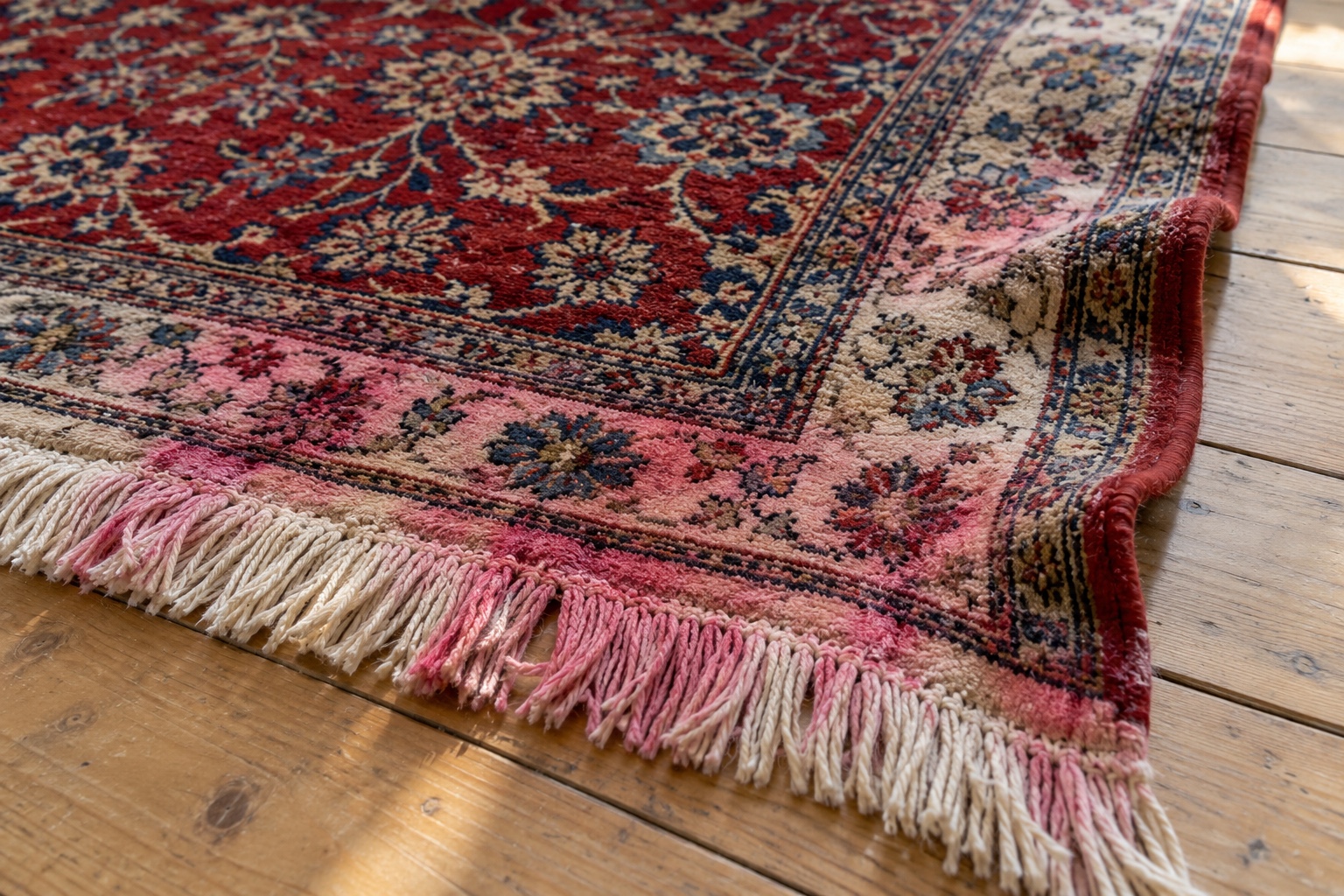
Rugs hold dyes, natural fibres and backings that fitted carpet does not, and they punish a careless clean.
Soak a wool or oriental rug with the wrong method and the dyes can bleed, the backing can shrink, and a treasured piece can be ruined in a single afternoon.
That is exactly why a one-spray-fits-all approach is a risk on anything but the most basic synthetic rug. The fibre, the dye, and the age of the rug all change what is safe to do.
There’s another difference worth knowing: a rug is loose. Unlike fitted carpet, it can be cleaned on both sides, its fringe can be detailed by hand, and it has to be dried flat so it keeps its shape.
Done properly, that’s an advantage. In our experience, a rug cleaned front and back comes up noticeably fresher than one that’s only ever been surface-cleaned.
Fibre First: Identify & Test Before Anything Touches the Rug
Every rug clean starts the same way: working out exactly what we’re cleaning. We look at the fibre, the pile, the backing and the dyes, because each one changes the method. Then we spot test.
A hidden corner is tested for colour-fastness before any product goes near the visible face of the rug, and we flag anything, an old stain, a worn patch, a fragile fringe, that may not fully lift, so you know before we start rather than after.
The One-Spray Approach
- Same product on every rug, whatever the fibre
- No test, so dye bleed shows up mid-clean
- Problems discovered after the damage is done
The Fibre-First Approach
- Fibre and dye identified before anything else
- Hidden corner tested for colour-fastness first
- Anything that may not fully lift flagged up front
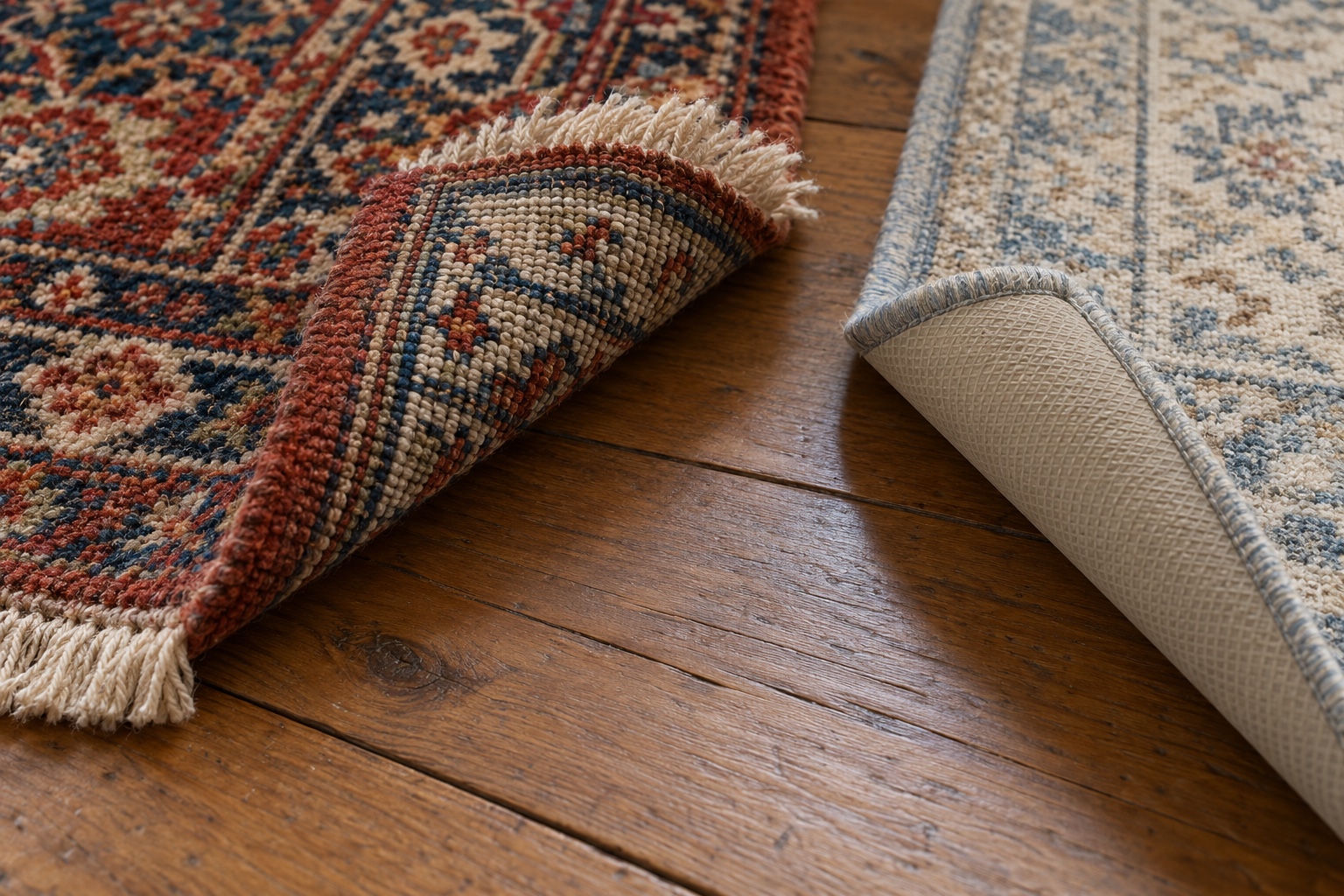
Turn a corner over and look at the back. Hand-knotted rugs show the pattern clearly through the base; machine-made rugs usually have a uniform mesh or latex backing. If you’re still not sure, send us a photo on WhatsApp and we’ll tell you straight what you have and how we’d clean it.
Got A Rug You’re Nervous About?
Tell us what it is, or send a photo if you’re not sure, and we’ll tell you straight how we’d clean it, including when a specialist workshop is the safer choice. Take your time deciding.
How We Clean a Rug
Both sides, the fringe, and a flat dry. A rug clean done properly is a sequence, not a spray.
Most rugs we clean in your home. The heavy lifting is done by controlled hot water extraction: the water loosens and lifts the soil, and the extraction pulls it straight back out along with most of the moisture.
On wool and delicate pieces, every product we use is WoolSafe approved, which means independently tested as safe for wool and the people and pets living on it. Delicate, silk and antique rugs get a gentler, fibre-safe approach, and where a rug is so fragile or so heavily soiled that it would be better with a specialist rug workshop than a clean in the home, we say so before we start rather than take the job.
Identify & TestThe fibre is identified and a hidden corner tested for colour-fastness before any product touches the rug.
Dust & Pre-TreatA thorough dry vacuum on both sides lifts the dry soil out first, then marks are pre-treated to suit the fibre.
Clean To The FibreA controlled hot water extraction clean for wool and synthetics, a gentler hand-finish for delicate pieces.
Fringe, Groom & Dry FlatFringe detailed, pile groomed, finished with our Gold Musk deodorise, and dried flat so it keeps its shape.
Drying usually takes six to twelve hours, sooner with warmth and airflow and longer without, and we dry rugs flat so they keep their shape.
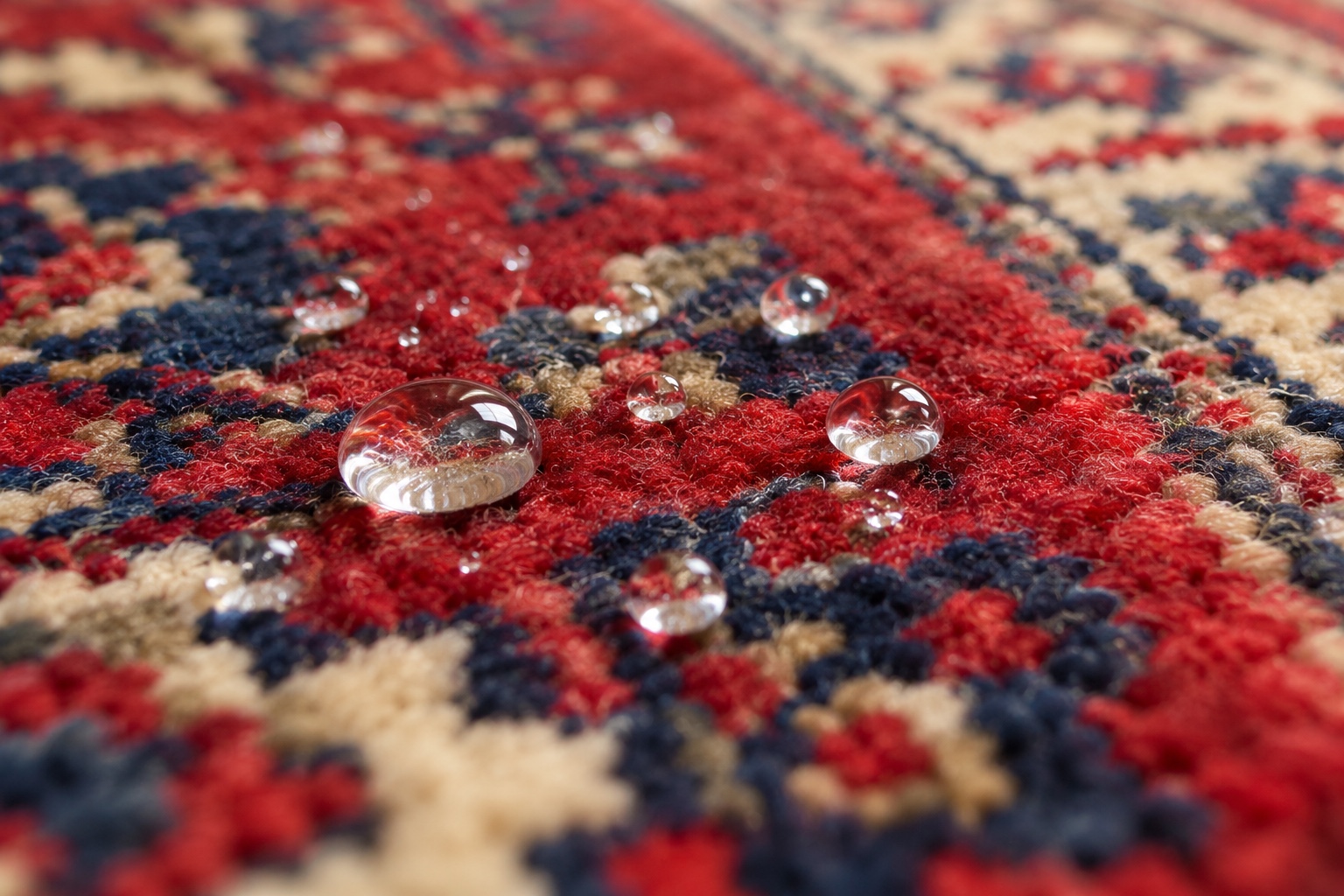
If the rug sits in a busy spot, Gold Guard protection can be added after the clean, so spills bead on the surface instead of soaking in. Ask us whether it suits your rug.
Should You DIY a Rug Clean?
For everyday care, absolutely. Regular vacuuming on both sides keeps grit from cutting at the pile, and if a spill happens the safest move is simple: blot it with a clean dry cloth, working from the outside in, with plain water if needed. That advice is safe on almost any rug and it genuinely works.
Where DIY goes wrong is products and machines. Supermarket sprays and hire machines are made for synthetic fitted carpet, not for wool or hand-knotted rugs.
The sprays can be too alkaline for wool, the machines can over-wet a backing that was never meant to be soaked, and whatever isn’t rinsed out stays in the fibre as residue. On a rug you’d be happy to replace, that’s a gamble. On a rug you care about, it isn’t worth taking.
DIY Spray Or Hire Machine
- Made for synthetic carpet, not wool or silk
- Easy to over-wet, so backings shrink and warp
- Residue left in the fibre attracts dirt faster
A Proper Professional Clean
- WoolSafe-approved products matched to the fibre
- Controlled moisture, rinsed and extracted out
- Tested first, dried flat, backed in writing
What Does Rug Cleaning Cost in Manchester?
Rugs are priced by size and fibre, because a small synthetic runner and a large hand-knotted wool rug are very different jobs. We give you a clear quote before we start, free deodorising and sanitisation are included on every clean, and nothing is added on the day. The price we quote is the price you pay.
If a specialist treatment would genuinely help, we tell you before we start, never after, and you decide. The real quote is confirmed once we’ve seen the rug, which protects you as much as it protects us: nobody can price a rug frankly without knowing its fibre and condition.
Nearly every rug can be cleaned safely when the method matches the fibre. Identify, test a hidden corner, clean both sides, detail the fringe, dry flat. If anyone offers to clean a wool or oriental rug without testing it first, keep looking.
A Rug Clean, Step By Step, Where It Lies
We clean rugs in your home, on the same visit as the carpets if you like. Here is the sequence and what you will see.
Identify, 5 minFibre, pile, backing, dyes, fringe. We turn a corner over: a hand-knotted rug shows its pattern through the back; a machine-made one has a mesh or latex backing. That decides everything that follows.
Colour-fastness testA damp white cloth pressed on each colour in a hidden corner with the product we intend to use. If any dye moves, the method changes. On a rug this is not optional.
Dust both sides, 10 minThe rug is vacuumed face down and face up. Grit falls out of the base of the pile when it is turned, which is why a rug cleaned front and back comes up so much fresher.
Pre-treat and dwellA WoolSafe-approved pre-spray on wool and natural fibres, a matched spotter on marks, left to work. Fringes are treated by hand.
Clean to the fibreControlled hot water extraction on wool and synthetics, with less water and more dry passes than a fitted carpet gets. Delicate pieces get a gentler hand-finish with the least moisture possible.
Fringe, groom, dry flatThe fringe combed straight, the pile groomed in the direction it lies, the rug laid flat on a dry surface with an air mover across it. Dry in six to twelve hours, sooner with airflow.
A large rug takes 30 to 45 minutes on its own, and less if it is done with the carpets because the kit is already in. Rugs are priced by size and fibre, free deodorising and sanitisation included, and the exact price is confirmed once we have seen it.
Wool, Synthetic, Silk And Jute: How Each Is Cleaned
A rug’s fibre is the whole method. Here is what changes.
Wool and hand-knotted
- WoolSafe products only, less water, a colour test on every colour
- Both sides dusted; the pile groomed with the lay
- Dried flat and fast so the backing cannot shrink or smell
Synthetic and machine-made
- Take a firmer hot water extraction clean and dry quickly
- Latex backings can crumble with age, so we check before wetting
- Fringes are usually sewn on and clean easily
Viscose, bamboo silk and silk
- Mark from water alone and flatten when wet, so moisture is kept to a minimum
- A gentle hand method, groomed as it dries
- Some marks are better improved than chased; we say which first
Jute, sisal and seagrass
- Plant fibres brown when soaked, so they are cleaned nearly dry
- Vacuumed thoroughly, spot-treated with low moisture, dried fast
- Not a hire-machine job under any circumstances
What A Rug Clean Cannot Fix
A short, straight list, so you know before we start.
- Dye that has already run. If a previous clean or a flood moved a red into an ivory border, it is in the fibre now. Specialist dye correction exists, but it is not a cleaning job.
- Moth damage and dry rot. Missing pile and a backing that cracks when folded are structural. We will show you and suggest a repairer.
- Sun fade. One side paler than the other is light, not dirt, and no clean changes it. Turning the rug every few months slows it.
- Urine that has soaked the foundation. Surface accidents lift; months of use in one spot can need a specialist flush that a home clean cannot safely give.
- A fringe that has greyed into the knots. We get it much brighter by hand, but a very old fringe rarely goes back to white.
A very fragile antique or a rug soaked through with urine may be better with a specialist rug workshop that can immerse and flush it. We do not offer that, so we will tell you plainly rather than attempt a clean that could do harm.
Rug Questions, By Household
Three rugs we are asked about most.
The inherited Persian
- Tested on every colour before anything touches it; you watch us do it
- Dusted both sides, cleaned with the least water, dried flat
- We tell you if it is one for a workshop instead
The family-room wool rug with a dog
- UV torch check for patches you did not know about
- Urine treated at the source, then flushed and dried fast
- Gold Guard afterwards if it lives in a busy spot
The hallway runner
- Usually synthetic and usually very dirty at the door end
- Both sides dusted, the lane pre-treated, dried flat
- Cheapest done with the hall carpet on the same visit
What To Ask Us
- Here is a photo of the rug and its back: what is it, and how would you clean it?
- There is a mark on the fringe: will it come out?
- Is this one safe to clean at home, or should it go to a workshop?
- Can you do it on the same visit as the carpets, and what does that save?
Ask any of them by replying to the message that brought you here, or ring your local number. We answer plainly, and there is no pressure from us either way.
Why Prestige Refresh
When customers tell us why they chose us, the same four reasons come up. They’re the standard we hold every job to.
What Customers Say
We could tell you we’re careful with rugs people treasure. It means more coming from the people we’ve actually cleaned for. We’re rated 5.0 from 338 Google reviews, and these come straight from them, unedited.
Our Golden Guarantee
The Golden Guarantee
We work cleanly, safely, and openly. Tested before we clean, controlled processes, and clear communication, backed in writing.
Quick Answers
Can you clean wool and oriental rugs?
Yes. Wool, oriental, and antique rugs need gentler handling than a synthetic rug, so we identify the fibre, test a hidden corner for colour-fastness first, and match the method to the fibre using WoolSafe-approved products. The rug is cleaned to protect it, never to risk it.
How much does rug cleaning cost in Manchester?
Rugs are priced by size and fibre, because a small synthetic runner and a large wool rug are very different jobs. We give you a clear quote before we start, free deodorising is included, and nothing is added on the day. The price we quote is the price you pay.
Do you clean rugs in my home or take them away?
Most rugs we clean in your home. Where a rug is so delicate or so heavily soiled that it would be better with a specialist rug workshop than a clean in the home, we say so before we start rather than take the job. Either way, you know the plan before any work begins.
What if I’m not happy with the result?
If you’re not satisfied with the clean, we’ll come back free of charge until you’re 100% satisfied. That is the Golden Guarantee, and it applies to every rug we clean.
Do you take rugs away to clean them?
No. We clean rugs in your home, on the same visit as the carpets if you like, which also works out cheaper. If a rug is so fragile or so heavily soiled that it needs a specialist workshop that can immerse and flush it, we tell you plainly rather than attempt a clean that could do harm.
How do I know if my rug is wool or synthetic?
Turn a corner over. A hand-knotted wool rug shows the pattern clearly through the back and the fringe is part of the rug. A machine-made synthetic rug usually has a uniform mesh or latex backing and a sewn-on fringe. If you are not sure, send us a photo and we will tell you.