
Rug Doctor machines are everywhere: the supermarket foyer, the DIY shed, the local hardware shop. Hiring one feels like the sensible middle ground between doing nothing and calling a company in, and sometimes it is. Here is our straight take on what it does well, where it falls short, and how to tell which your carpet actually needs.
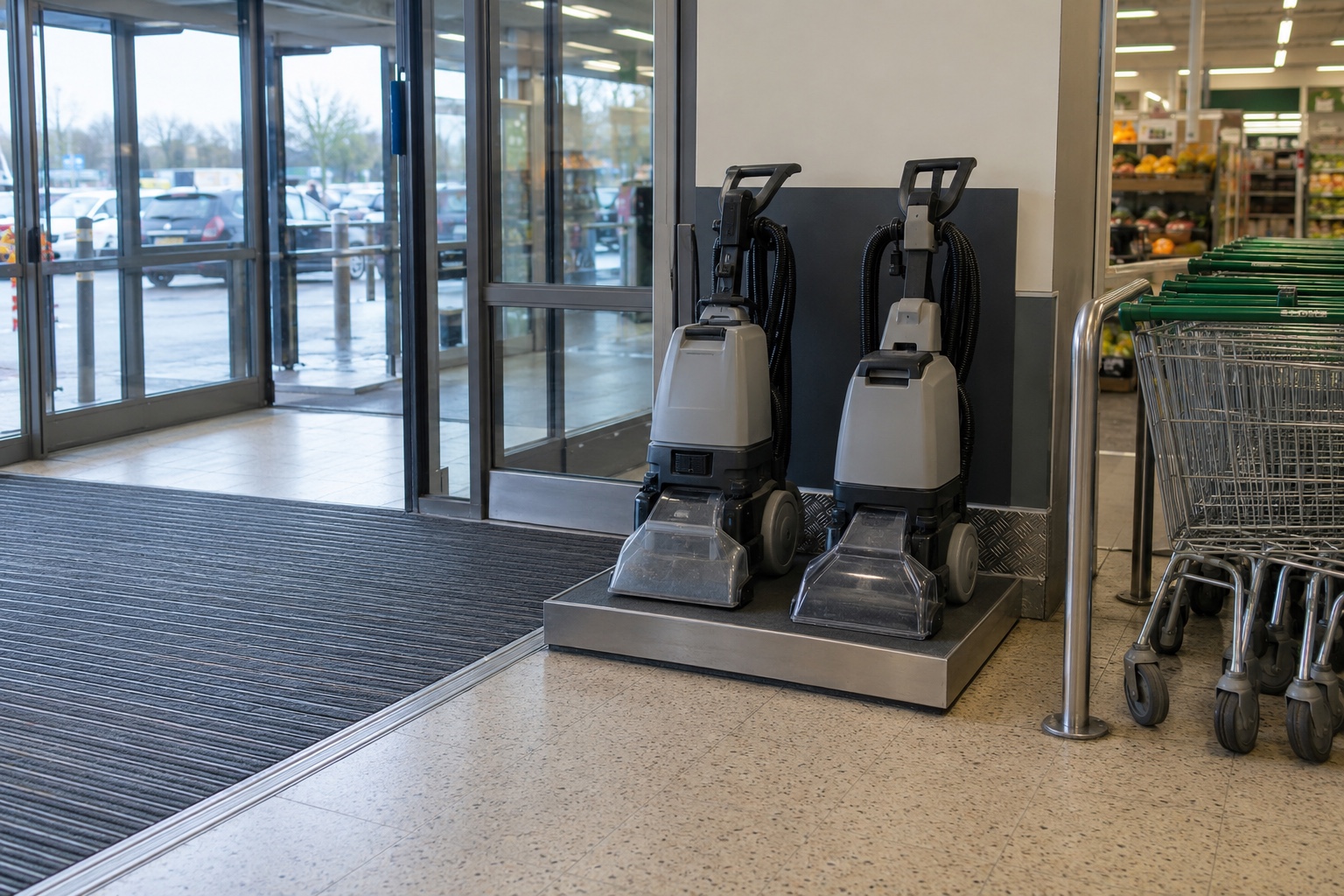
For a light freshen-up, a Rug Doctor does a reasonable job. For a deep clean, it can’t match a professional machine.
A hire machine puts water down and pulls some of it back. It lacks the heat, suction and agitation to lift ground-in soil, so the carpet stays wet for a long time and the marks often wick back within days.

Jump to a section
What a Rug Doctor actually does
The real cost of a hire weekend
Heat, suction & agitation
The over-wetting problem
When hiring genuinely makes sense
What a professional clean involves
The 48 hours after Where it is a risk Hire or book, by situation The Golden Guarantee
What A Rug Doctor Actually Does
Credit where it’s due. A Rug Doctor is a sturdy, simple machine, and for a light refresh it beats a sponge and a supermarket spray comfortably.
You fill it, push it across the carpet, and it lays down warm water and detergent then draws some of it back through a small vacuum. On paper, that is the same idea a professional uses.
In practice, the gap is in the power and the method. The water cools quickly, so it struggles to break down grease and ground-in soil. The suction is domestic, so a lot of what goes down stays down.
And there is no dry vacuum, agitation or pre-spray beforehand, so the soil is never properly loosened before the machine tries to lift it. The carpet looks fresher while it’s damp. What happens as it dries is the part nobody warns you about, and we cover it below.
The Real Cost Of A Hire Weekend
The hire fee on the shelf is only the start of it. Here’s what the weekend actually adds up to.
By the time you’ve paid the day’s hire, bought the cleaning solution sold alongside it, left the deposit, and driven to collect and return the machine, the “cheap” option has quietly grown. Then there’s the part no receipt shows: moving the furniture yourself, filling and emptying the tank over and over, and giving it most of a Saturday.
Set that against the result. In our experience, a hire clean fades in weeks because the soil left at the base of the pile works its way back up, so plenty of people end up paying for the hire and then booking a professional clean anyway.
For comparison, our professional cleans start from £125 for one or two areas, the exact price is confirmed at the walk-through, and the price quoted is the price paid.
Heat, Suction & Agitation: The Real Gap
Three things decide how deep any carpet clean goes. Heat, to break down grease and soil. Suction, to pull the loosened dirt and the water back out.
And agitation, to work the solution down into the pile before extraction. A hire machine is short on all three, not because it’s badly made, but because it’s built to be small, light, and safe in untrained hands.
Our machine, the Enforcer 400, is a professional hot water extraction unit. It holds its temperature, its vacuum is far stronger than anything domestic, and it never works alone: a Kirby dry vacuum, agitation and a dwelled pre-spray have already loosened the soil before the wand touches the carpet. Same fibres, very different result.
The Over-Wetting Problem
The most common problem we see after a hire weekend isn’t the dirt. It’s the water that never came back out.
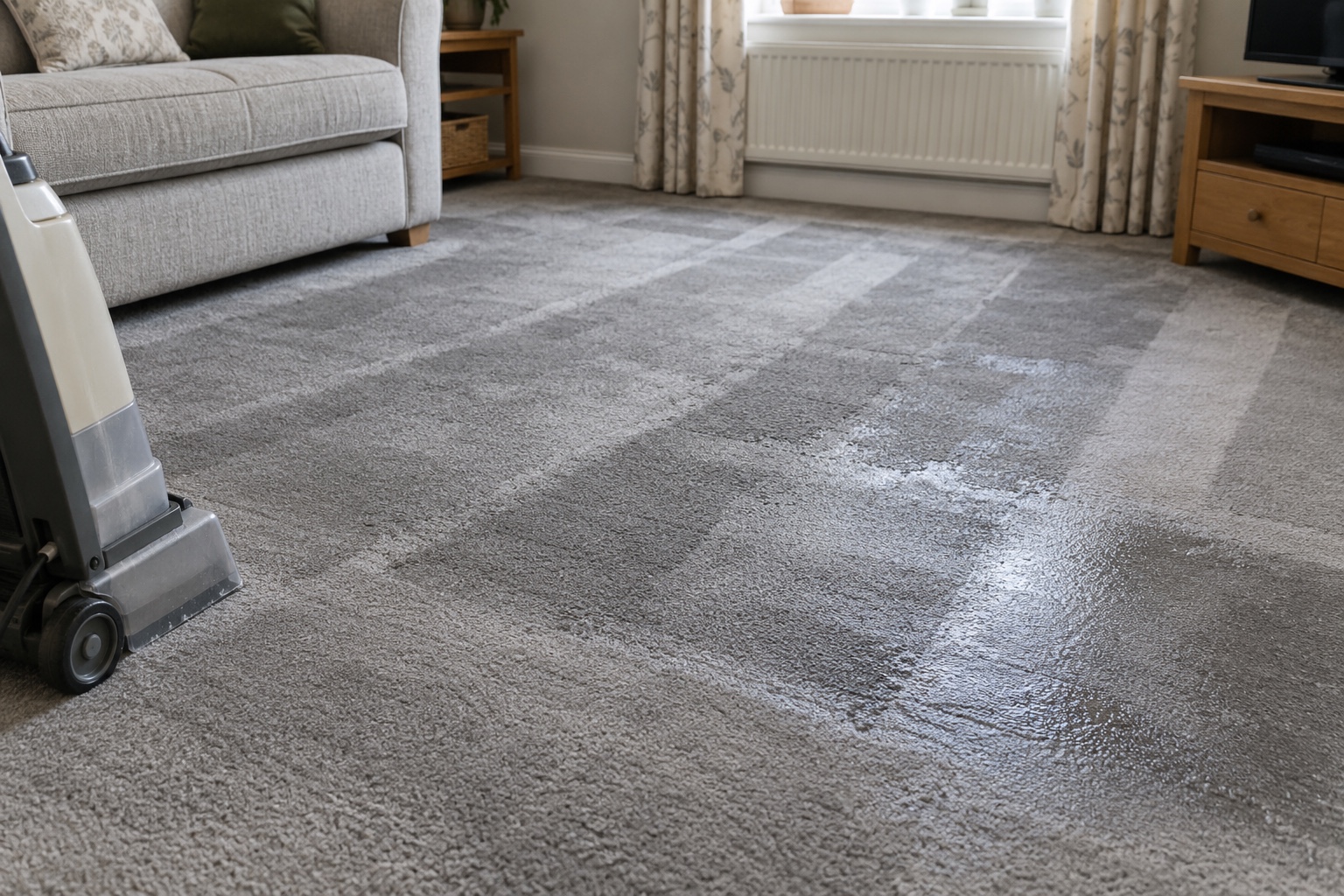
Because the suction is light, a hire machine leaves far more water in the carpet than a professional one. A carpet that stays wet for a day or two invites a musty smell, and as it slowly dries, the soil sitting at the base of the pile travels up the fibres to the surface.
That’s called wicking, and it’s why a hire-cleaned carpet so often looks worse a week later than it did before you started.
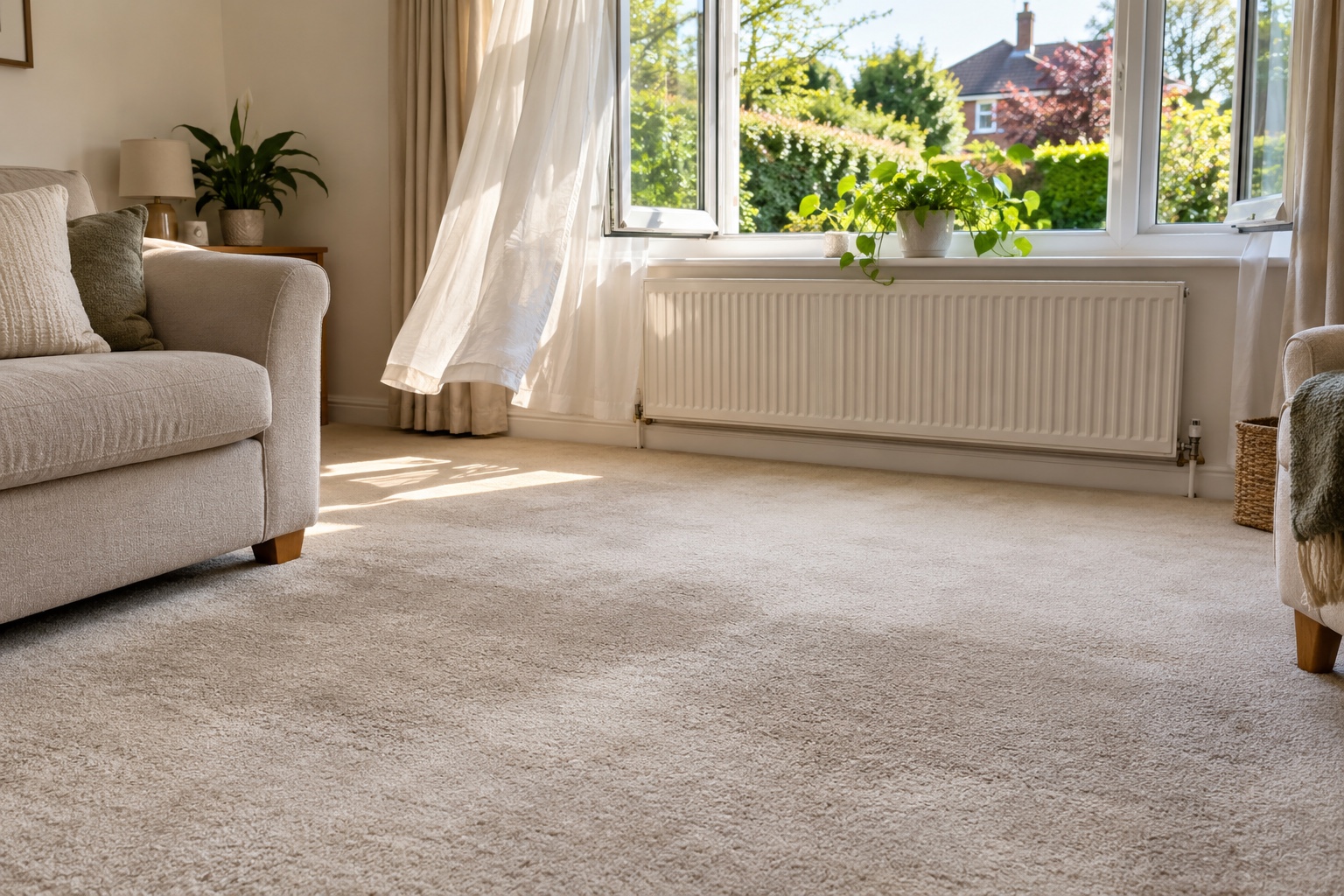
By contrast, a professional clean controls the moisture from the start: strong extraction takes most of the water out with the soil, and dry pods keep the air moving afterwards. Drying usually takes six to twelve hours, sooner with warmth and airflow and longer without, and same-day dry is available as a priority.
Opening the windows helps too, and not only for drying: Asthma and Lung UK advises keeping your home well-aired to lower humidity, which helps keep dust mites down.
Signs A Hire Clean Hasn’t Gone Deep
If you’ve already done the hire weekend and you’re seeing these, the machine isn’t to blame. It simply wasn’t built for the job.
- The carpet is still damp the next morning
- A musty smell that lingers for days
- The marks come back within a week or two
- The pile feels stiff or crunchy from leftover detergent
- Traffic lanes look flat and grey again almost straight away
- The room attracts dirt faster than it did before
Not Sure Which You Need?
Tell us the room, the age of the carpet, and what you’re dealing with, and we’ll tell you straight whether a hire machine will do the job or a professional clean is worth it. Take your time deciding.
When Hiring Genuinely Makes Sense
We’ll be straight with you, because the straight answer helps you more than a sales pitch. For a fresh spill blotted quickly, or a light freshen-up between proper cleans, a hire machine can do a reasonable job, and there’s no need to call anyone out.
We’re a DIY-positive company: the more you keep on top of your carpets between deep cleans, the better they’ll look for longer.
Fine For A Hire Machine
- A quick freshen-up between deep cleans
- A small, recent spill blotted early
- A low-traffic room you keep on top of
Better Left To A Pro
- A full deep clean after a year or more
- Heavy traffic lanes and ground-in soil
- Pet accidents, odours and set-in marks
The same applies across the home. Upholstery, rugs, mattresses, hard floors, and tiles and grout each need their own method and their own care, and a carpet hire machine simply isn’t built for them.
If a spill happens between cleans, the safest move is simple: blot it with a clean dry cloth and plain water, don’t soak it in a chemical remover, and give us a call if it won’t shift.
What A Professional Clean Involves
It isn’t one wet pass. It’s a sequence, and the order is what makes it work. Every stage exists to fix one of the three gaps a hire machine leaves: loosening the soil properly, lifting it out properly, and controlling the moisture afterwards.
Inspect & Spot TestWe check the fibre, test a hidden area, and agree exactly what we’re treating before anything goes down.
Dry Vacuum & PrepA Kirby dry vacuum lifts the loose grit that blunts every wet clean, then agitation and pre-spray loosen the soil.
Hot Water ExtractionThe Enforcer 400 flushes the loosened soil and most of the moisture straight back out of the pile.
Dry & FinishDry pods speed the drying, a Gold Musk deodorise finishes every clean, and the pile is groomed to stand up properly.
If the room takes a lot of traffic, Gold Guard protection can be added to the carpet at the end of the clean, which helps it resist spills and everyday soiling for months afterwards. It’s optional, and we’ll only suggest it where it genuinely earns its keep.
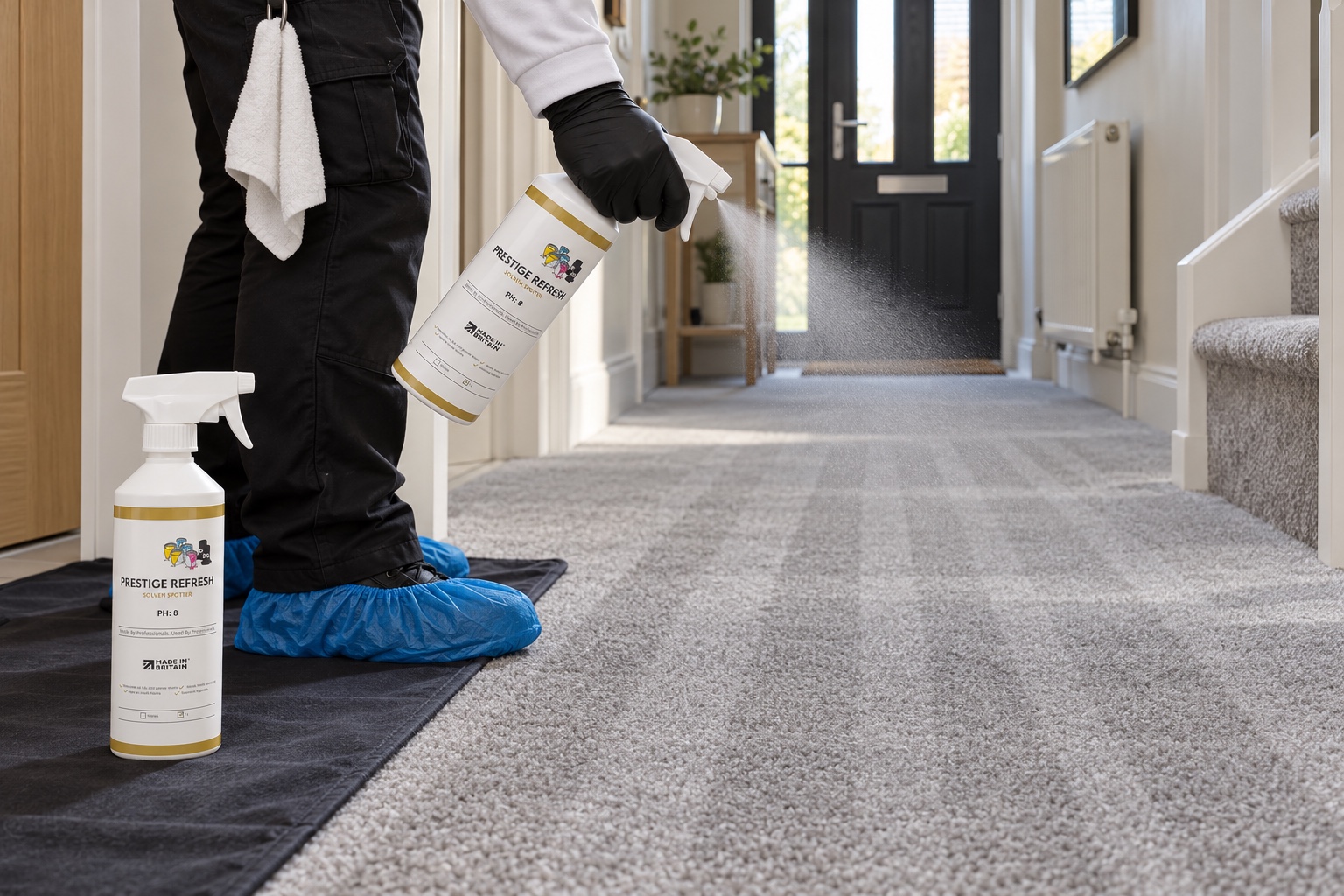
Hire a Rug Doctor for a quick freshen-up and you’ll get one. For a true deep clean, the heat, suction and agitation of a professional clean lift out far more soil, dry far faster, and last far longer. If you’re not sure which you need, ask us and we’ll tell you straight.
What Happens In The 48 Hours After A Rug Doctor
The machine goes back on Sunday. The carpet is still telling the story on Tuesday. Here is what is happening underneath.
Looks betterThe surface is wet and the pile is dark, so the lanes blend in. The solution has lifted loose soil from the top of the fibres and some of it has been drawn back out.
Water sits in the backingThe suction only reached the pile. The backing and underlay are holding most of what went in. In a cool room this is where a musty edge starts.
WickingAs the carpet dries from the top, moisture travels up the fibres and carries the soil that was pushed down with it. The lanes and the old marks reappear, sometimes darker than before.
Residue setsDetergent that was never rinsed out dries into the pile. It feels slightly stiff or tacky and it grabs dirt from every footstep, so the carpet greys again within weeks.
A professional clean breaks that chain at the first link. Strong extraction and dry passes take the water out of the backing, so there is nothing to wick. A proper rinse leaves no residue to grab the next lot of dirt. Air movers finish the job while we pack up.
Where A Rug Doctor Is A Risk, Not Just A Disappointment
On a tired polypropylene carpet, the worst outcome is a wasted weekend. On these, it can be worse.
Wool carpets and rugs
- Shelf solutions are often too alkaline for wool and can yellow it or move the dye
- Over-wetting makes wool brown at the edges and, rarely, shrink
- No colour-fastness test before the machine goes on
Pet urine patches
- Water from above dissolves the dried salts and spreads them into a wider ring
- The carpet then stays damp, which is exactly what the bacteria want
- The smell is often worse after the hire weekend than before it
Old marks that have wicked before
- There is a reservoir in the backing; more water without more extraction stirs it up
- Needs dwell time, flushing and extra dry passes, which the machine cannot give
- Heat from very hot tap water can set some marks for good
Delicate fibres and hand-knotted rugs
- Viscose, silk, jute and sisal can water-mark from the machine alone
- Hand-knotted rugs need testing, both sides vacuumed and drying flat
- Keep the hire machine off anything you would mind losing
Hire Or Book, By Situation
A straight steer for the three homes that ask us most.
Tenant moving out
- An over-wet, wicked carpet on inspection day reads worse than an uncleaned one
- A professional clean comes with a dated receipt for the deposit conversation
- Book for the day before check-out so it is dry and groomed
Family with pets and children
- Residue left by a hire clean is where the children crawl and the dog lies
- Pet patches need treating at the source, not wetting from above
- Dry in six to twelve hours, rather than two days with everyone kept off it
Light freshen-up, decent carpet
- A Rug Doctor is fine here and we would rather say so
- Vacuum thoroughly first, go easy on the solution, open the windows
- Call us when it is the lanes, the stairs or the sofa that need doing
What To Ask Us
- Honestly, is my carpet a hire-machine job or a proper clean?
- Is it wool, and should I keep the hire machine away from it?
- I have already hired one and it looks worse: can you put it right?
- What would you do differently on the pet patch?
Ask any of them by replying to the message that brought you here, or ring your local number. We answer plainly, and there is no pressure from us either way.
Why Prestige Refresh
When customers tell us why they chose us, the same four reasons come up. They’re the standard we hold every job to.
What Customers Say
We could tell you the difference is obvious. It means more coming from the people who tried the hire machine first. We’re rated 5.0 from 338 Google reviews, and these come straight from them, unedited.
Our Golden Guarantee
The Golden Guarantee
A hire machine comes with a till receipt. A professional clean should come with a promise, and ours is in writing.
Quick Answers
Is it cheaper to hire a Rug Doctor than book a professional clean?
On the day the hire fee looks smaller, but the full cost includes the cleaning solution sold alongside it, the deposit, collecting and returning the machine, and a full day of your own work.
Because a hire clean doesn’t go as deep, the result also fades sooner, so many people end up paying twice. Our professional cleans start from £125 for one or two areas, confirmed at the walk-through.
Why does the carpet look dirty again a few days after using a hire machine?
That’s called wicking. A hire machine’s suction isn’t strong enough to pull the loosened soil and water back out, so it sits at the base of the pile. As the carpet slowly dries, that soil travels up the fibres to the surface and the marks reappear, sometimes looking worse than before.
When does hiring a Rug Doctor make sense?
For a light freshen-up between proper deep cleans, a small recent spill you’ve blotted early, or a low-traffic room you keep on top of. For a carpet that hasn’t been deep cleaned in a year or more, heavy traffic lanes, pet accidents, or anything ground in, a hire machine is the wrong tool.
How is a professional clean different from a Rug Doctor?
The method and the machine. A professional clean starts with a dry vacuum, then agitation and pre-spray to loosen the soil before hot water extraction flushes it out, with far higher heat and far stronger vacuum than a domestic hire unit.
Moisture is controlled, so the carpet dries in hours rather than days, and there’s no residue left to pull the marks back up.
Why did my carpet look worse a few days after the Rug Doctor?
Wicking and residue. The machine put water in but could not pull it back out of the backing, so as the carpet dried the soil underneath travelled back up to the surface. Detergent that was never rinsed out then dried sticky and began attracting new dirt. Both are fixable with a proper extraction clean.
Is a Rug Doctor safe on a wool carpet?
We would keep it off wool. The solutions sold with hire machines are often too alkaline for wool, and the machine leaves it wet, which can yellow it, move the dye or brown the edges. Wool wants WoolSafe products, less water and fast drying.