

A good sofa carries the whole room, and it takes more daily wear than almost anything else in the house. Here is how a proper upholstery clean works, what it will and won’t lift, and how to look after the fabric in between.
Test the fabric first, lift the dirt out, keep the moisture low.
A proper sofa clean starts with a spot test on a hidden area, uses controlled hot water extraction to lift soil out of the fabric, and leaves the sofa dry in six to twelve hours.

Jump to a section
Why a sofa is not a carpet
The fabric test before any product
How we clean a sofa
What to expect from the results
How long does a sofa take to dry?
Looking after it between cleans
The Golden Guarantee
Why a Sofa Is Not a Carpet
Upholstery fabric is thinner, more delicate, and far easier to ruin than a carpet. Over-wet a sofa and you get watermarks, slow drying, and sometimes colour bleeding from the backing into the fabric.
Use the wrong product on leather and you strip the finish. That is why a cheap, rushed clean so often looks worse a week later, once the dirt that was pushed deeper has wicked back to the surface.
What builds up in a sofa is different too. Carpets take footfall; sofas take people. Skin contact leaves body oils on the arms and headrests, evenings leave food and drink marks on the seats, and pets leave hair and dander wherever they settle.
According to Allergy UK, house dust mite allergy is very common and is one of the main indoor triggers for asthma and allergy symptoms, and upholstery is one of the places they gather.
If you sit on it, it can be cleaned, as long as the method matches the material:
- Fabric sofas, from two-seaters to large corner sofas, cleaned with controlled hot water extraction
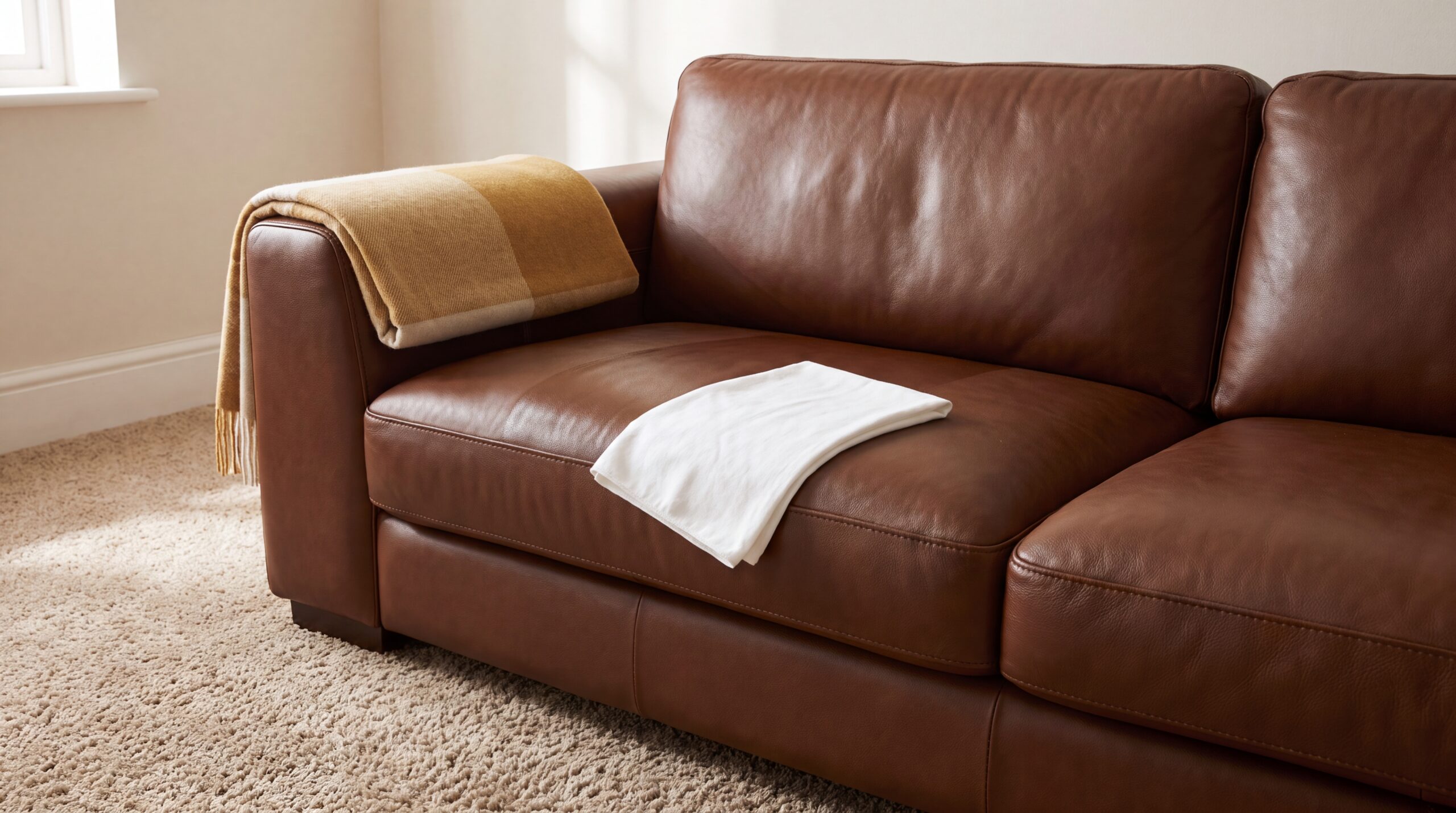
- Leather suites, cleaned gently then conditioned so the hide stays soft rather than drying out
- Armchairs and recliners, where the favourite chair takes the most wear on the arms and headrest
- Dining chairs, seat pads and backs cleaned as a set so the room looks pulled together again
Red Flags: When A Sofa Clean Will Go Wrong
If you hear or see any of these, it’s not the clean that’s the risk, it’s the operator. Worth a screenshot when you’re comparing quotes.
- One spray for every fabric, delicate or not
- No spot test before starting on the visible fabric
- Soaks the sofa and leaves it damp for days
- Promises every mark will vanish, sight unseen
- Extras added once the work has started
- No interest in what the fabric actually is
So how do you clean a sofa without damaging it? It starts before any product comes out of the van.
The Fabric Test Before Any Product
Every fabric behaves differently. The first job is finding out exactly what we are working with.
We start by identifying the fabric: what the fibre is, how it is woven, and how the dye is likely to behave. Then we spot test a hidden area, usually low on the back or under a cushion, before anything goes near the visible fabric.
The test tells us how the colour holds, how the fibre reacts to moisture, and which product and dilution the piece can safely take. Our products are WoolSafe approved, independently tested as safe for delicate fibres, and the spot test confirms the match on your actual sofa.
The test is also where straight dealing starts. If a mark looks permanent, or a fabric is too fragile to clean safely, we tell you at the walk-through rather than taking the job and hoping. In our experience most sofas clean up well, but you deserve the realistic picture before we start, not after.
How We Clean a Sofa
Once the fabric has passed the test, the clean itself is a controlled sequence. Nothing is soaked, nothing is left in the fabric, and the heavy lifting is done by hot water and powerful extraction rather than harsh chemistry.
Inspect & TestWe identify the fabric, spot test a hidden area, and point out anything that may not fully lift.
Vacuum & Pre-TreatA thorough dry vacuum lifts loose soil, then the arms, headrests and marks are pre-sprayed and worked by hand.
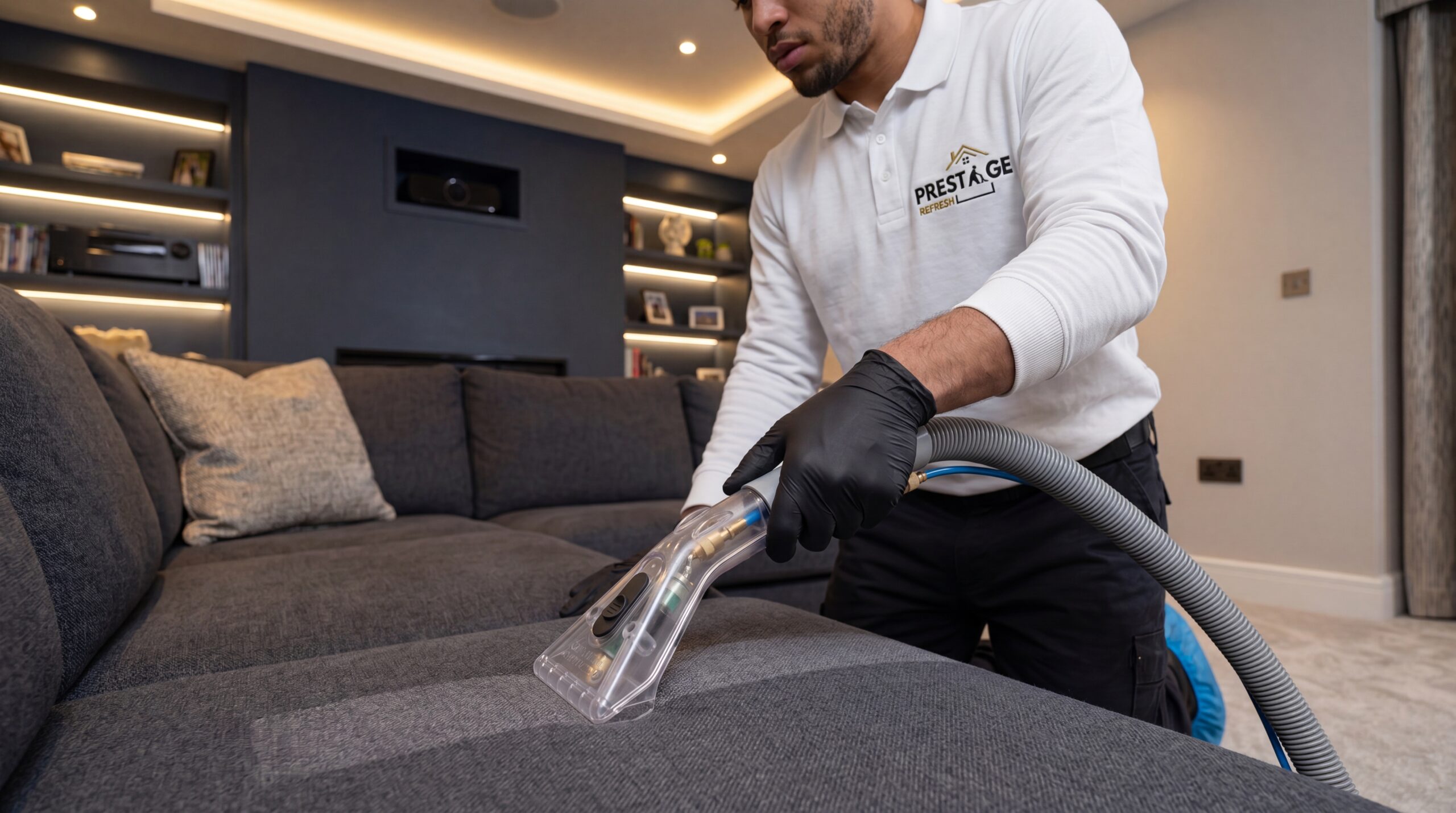
ExtractControlled hot water extraction with the Enforcer 400 lifts the soil out of the fabric, keeping the moisture low.
Finish FreshOur Gold Musk deodorising finish, drying kept moving, and a final groom so the fibre dries sitting right.
Leather is a different job altogether. It is not extracted like fabric; it is cleaned gently, then conditioned so the hide stays soft and supple rather than drying out or cracking. If you have a mixed room, a fabric sofa and a leather chair, each gets its own process on the same visit.
Not Sure What Your Sofa Needs?
Tell us the fabric and what’s on it, or send us a photo if that’s easier, and we’ll tell you straight what a clean will and won’t shift. Take your time deciding.
What to Expect From the Results
A straight guide to what lifts, what lightens, and what no cleaner can promise.
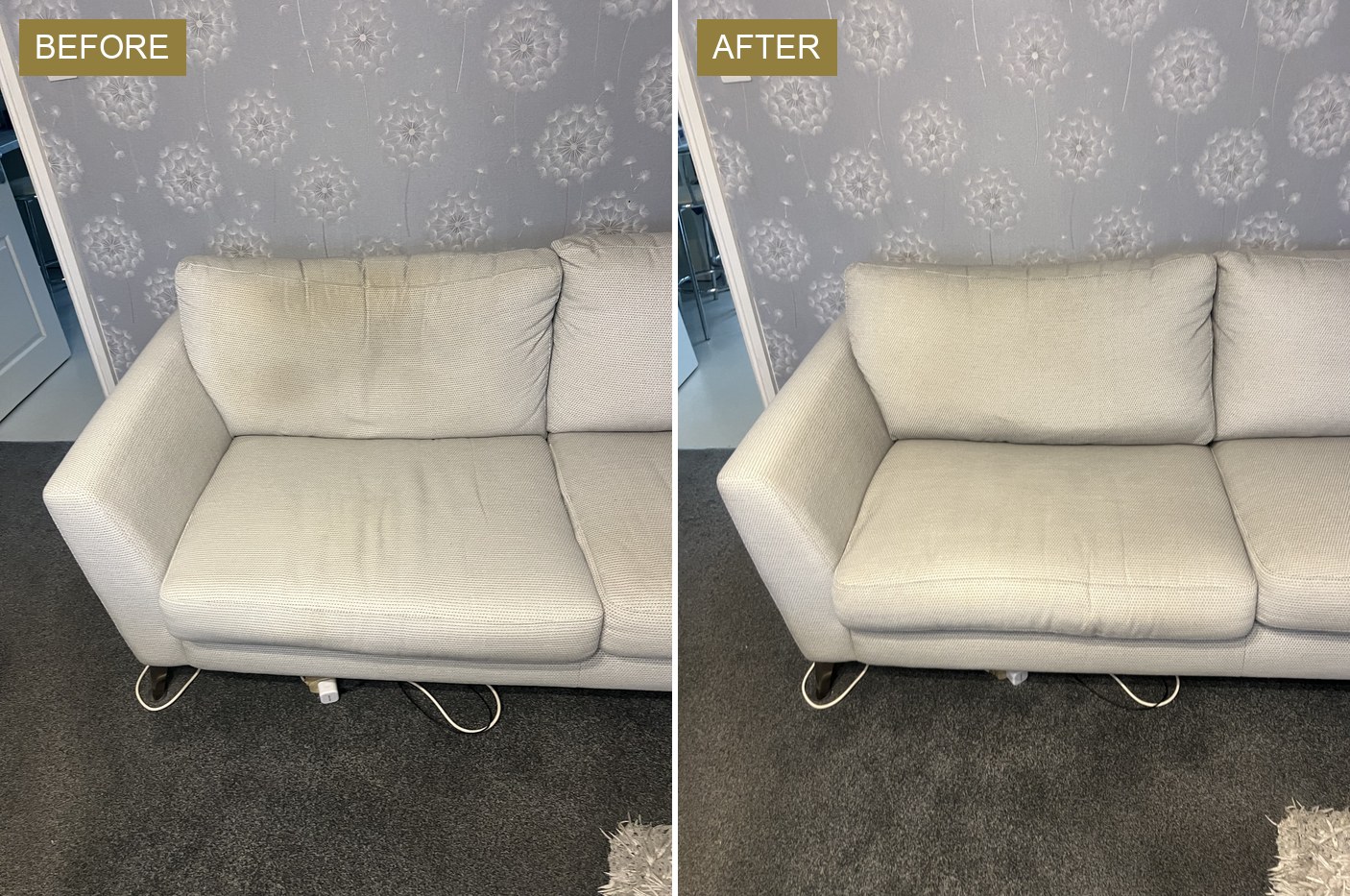
The most satisfying change is usually the arms and headrests. That darkened, slightly shiny look is built-up body oils rather than staining, and it responds well to being pre-treated by hand and extracted. Seats lift noticeably too: everyday grime dulls the colour gradually, so the fabric often looks a shade brighter once the soil is out.
Pet areas respond well in most cases. The spot where the dog always settles holds hair, dander and odour, and the combination of extraction and the deodorising included on every clean deals with most of it. Free deodorising and sanitisation on every clean, as standard, not as an extra.
What Usually Lifts Well
- Body oils on arms and headrests
- Everyday grime and dulling across the seats
- Most food and drink marks, fresher ones especially
- Pet hair, dander and everyday pet odour
Be Realistic About
- Sun fading and colour loss, that’s not dirt
- Old bleach marks or dye damage
- Fabric that has worn, flattened or pilled with use
What we will not do is promise a miracle on wear. Fading, dye damage and worn pile are changes to the fabric itself, not dirt sitting on it. Where we see them at the walk-through, we point them out before we start, so the price you agree is based on a straight picture of the outcome.
How Long Does a Sofa Take to Dry?
Fabric upholstery is usually dry to the touch in six to twelve hours, sooner with warmth and airflow and longer without, the filling and the airflow in the room. Thicker arms and seat cushions hold moisture longest, so a sofa can feel dry on the back while the cushions want another hour or two.
You can speed it up. Keep the room ventilated, leave the cushions standing as we have set them, and hold off on throws and blankets until everything is properly dry. If timing matters, say the sofa is needed for guests that evening, ask about same-day dry as a priority and we will plan the clean around it.
We control the moisture during extraction rather than trying to fix it afterwards, which is why most sofas are back in use the same day. Sit on it once it feels dry to the touch, and give loose cushions the extra hour if they still feel cool. Damp fabric feels cool before it feels wet.
Looking After the Fabric Between Cleans
A few small habits keep a sofa looking cleaned-for-longer, and none of them need special products.
- Vacuum the fabric weekly with the upholstery tool, arms and headrests especially
- Rotate and plump the cushions so wear spreads evenly instead of settling in one seat
- Blot spills straight away with a clean dry cloth, never rub, and skip shop-bought sprays on delicate fabric
- Keep the sofa out of strong direct sunlight where you can, because fading is permanent
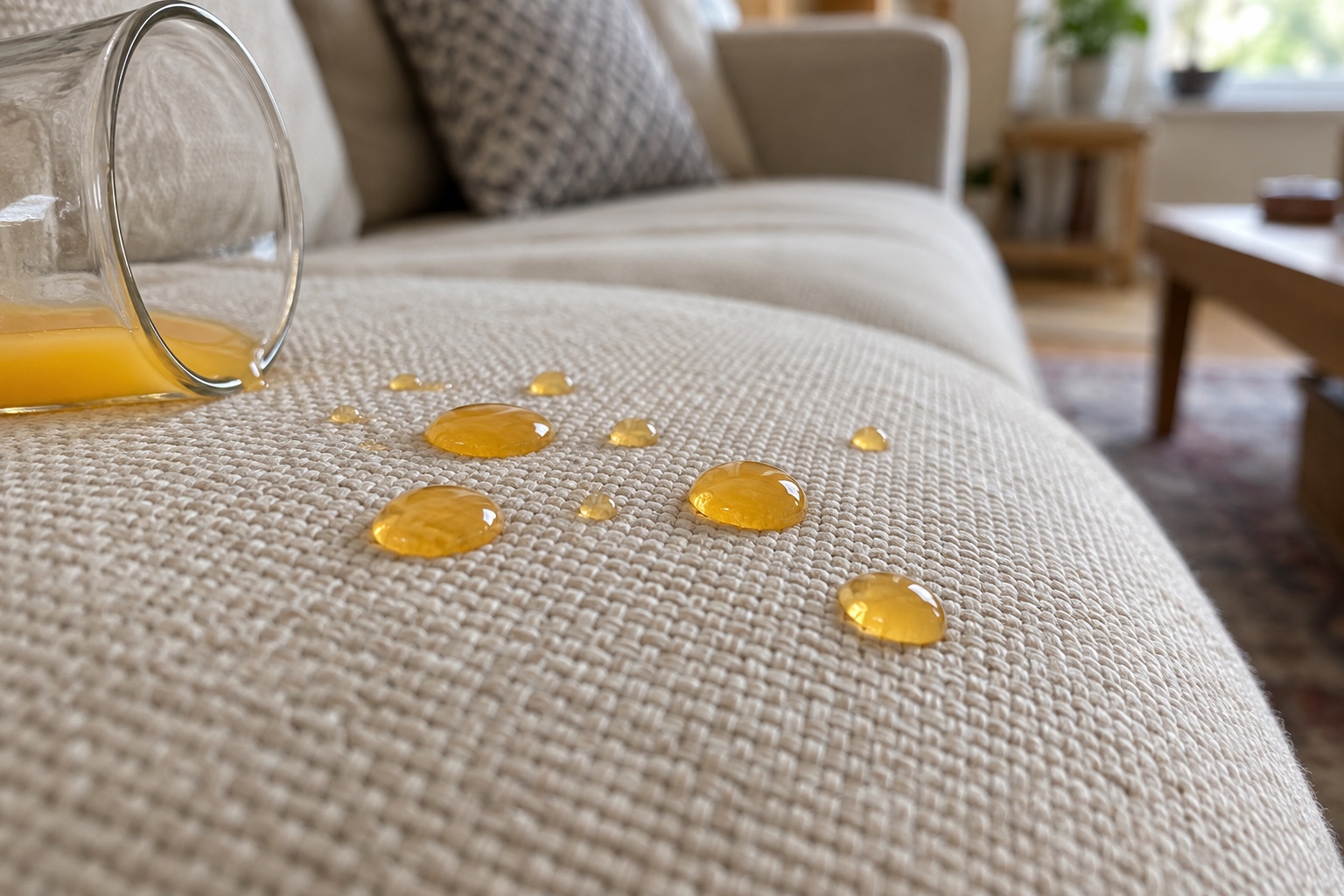
If the sofa is the hardest-working seat in the house, Gold Guard is worth a thought after a clean. It is an optional invisible barrier applied to the fabric we have just cleaned: spills bead on the surface instead of soaking in, which buys you time to blot them before they stain. Ask on the day whether it suits your fabric.
One more piece of straight advice: if you are already booking carpets, that is the easiest time to add the sofa. We are already set up in the room, the fabric test takes minutes, and the whole room finishes to one standard.
In our experience a freshly cleaned carpet has a way of showing up a tired sofa, so the two are worth doing together.
Our Approach: Tested, Controlled, Straight
Our whole method is built around respecting the fabric. We identify it, we spot test a hidden area before any product touches the visible surface, and we use WoolSafe-approved products at the right dilution, then extract them back out rather than leaving them in the fibre.
Upholstery is priced per piece, because a two-seater and a large corner sofa are different jobs, and the quote is agreed before we start. Nothing is added on the day, and if a piece will not clean up safely, we tell you rather than taking your money and hoping.
A proper sofa clean is tested first, lifted out rather than soaked in, and dry the same day. Body oils, everyday grime and pet odour respond well; fading and wear are the straight exceptions. Look after it in between, and add the sofa to a carpet visit when the room needs to match.
Why Prestige Refresh
When customers tell us why they chose us, the same four reasons come up. They’re the standard we hold every job to.
What Customers Say
We could tell you we’re careful with delicate fabric. It means more coming from the people we’ve actually cleaned for. We’re rated 5.0 from 338 Google reviews, and these come straight from them, unedited.
Our Golden Guarantee
The Golden Guarantee
We test first, control the moisture, and stay upfront about what will lift. The result is backed in writing.
Quick Answers
How much does sofa cleaning cost in Manchester?
Upholstery is priced per piece, because a two-seater, a large corner sofa, and a set of dining chairs are very different jobs. We give you a clear quote before we start, deodorising is included, and nothing is added on the day. The price quoted is the price paid.

Can you clean leather sofas as well as fabric?
Yes. Leather needs a different process to fabric. Leather is cleaned gently, then conditioned so the hide stays soft rather than drying out. Fabric upholstery is cleaned with hot water extraction that lifts the dirt out rather than pushing it in.
How long does a sofa take to dry?
Fabric upholstery is usually dry to the touch in six to twelve hours, sooner with warmth and airflow and longer without, the filling and the airflow. Thicker arms and seat cushions hold moisture longest. Same-day dry is available as a priority where timing matters.
Do you remove pet smells from upholstery?
In most cases, yes. The spot where a pet always settles holds hair, dander and odour, and the combination of extraction and the free deodorising and sanitisation included on every clean deals with most of it. Where a specialist treatment such as pet urine is needed, we tell you before we start, never after.
Should I have my sofa cleaned at the same time as my carpets?
It is the easiest time to do it. We are already set up in the room, the fabric test takes minutes, and the room finishes to one standard. In our experience a fresh carpet has a way of showing up a tired sofa, so the two are worth doing together.