The Stain Lightened But Did Not Vanish: What Now
Why some marks fade instead of vanishing, how we tell a stain from damage, and the honest options for what is left.
- Spot-tested and assessed before any work starts
- Straight answers on what lifts and what fades
- Backed by the Golden Guarantee on every clean

The clean is done, the room smells fresh, and the one mark you most wanted gone is still there. Lighter, but there. It is a disappointing thing to look at, and it is fair to want to know why.
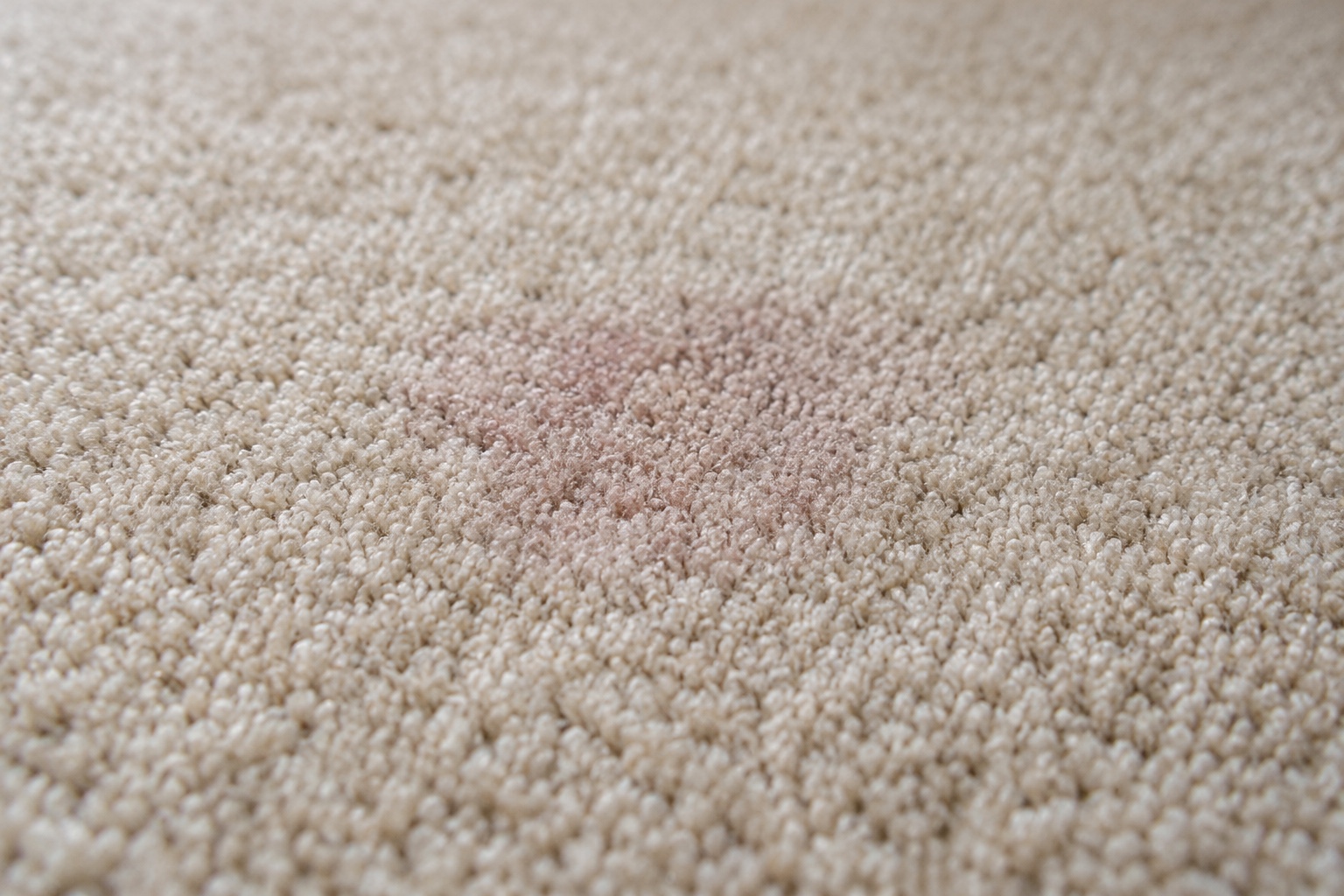
This guide explains what has happened in plain terms. Some marks lift, some fade, and some will not move at all, because the colour of the fibre itself has changed. Knowing which one you have tells you what can still be done, and what cannot.
If you are reading this in the week after we cleaned for you, nothing here is meant to close the conversation. If you are unhappy with any part of the clean, tell us. That is exactly what the Golden Guarantee is for.
The stain lightened but did not vanish. What now?
A faded mark usually means the staining material has come out but the fibre underneath has been marked, so cleaning alone cannot take it much further. Let it dry fully, look at it in daylight, then tell us: a second targeted treatment sometimes gets more, and if not, there are still honest options.
Every Mark Falls Into One Of Three Groups
Not every mark is the same thing, and the group it belongs to decides how far a clean can take it.
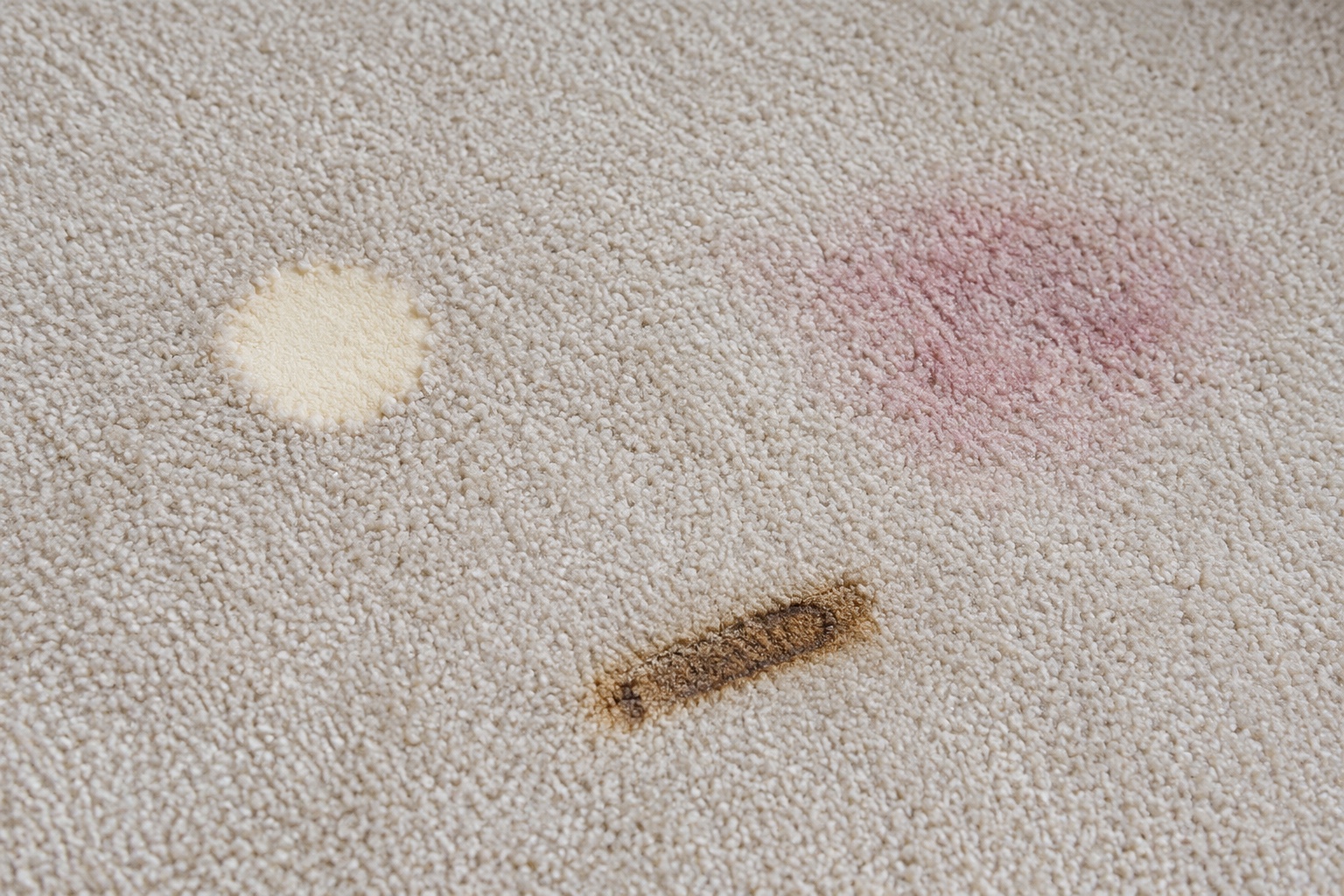
When people talk about a stain, they usually mean anything on the carpet that should not be there. To a technician, that covers three quite different things. Some marks are sitting on the fibre. Some have soaked in and bonded with it over time. And some are not really stains at all, because the colour of the fibre itself has changed.
Marks that lift
Fresh spills, everyday soil and most food come out completely with a proper clean. Tea, coffee, soft drinks, mud and the general grey of foot traffic are sitting in the pile rather than changing it. Hot water extraction loosens them and draws them back out, and they are gone. This is most of what we clean, on most jobs.
Marks that fade
Old tannin stains are the most common example. Tea, coffee and red wine that dried in months ago have had time to bond with the fibre. Some dyes behave the same way: hair dye, some inks, coloured drinks and food colouring. So does anything that has been heat-set. If a hire machine ran hot water over a mark, or someone dried a damp patch with a hairdryer, the heat can lock the stain into the fibre. These marks usually lighten a good deal, sometimes a lot, but they may not vanish.
Marks that will not move
The third group is damage rather than dirt. Bleach strips colour out of the fibre. Dye transfer puts new colour in, for example a wet red rug bleeding onto a cream carpet, or new jeans rubbing onto a pale sofa. An iron or a pair of hair straighteners can scorch or melt the fibre. Sun fades it slowly over years. In each case there is nothing left sitting on the fibre to clean away. The fibre is simply the colour it now is.
- Lifts: fresh spills, everyday soil, most food and drink
- Fades: old tannin, some dyes, anything heat-set
- Will not move: bleach, dye transfer, burns, sun fade
How We Tell Them Apart Before We Start
The time to find out which group a mark belongs to is before the machine goes on, not after.
On the day, we look at each mark you point out and ask two things: what it was, and roughly when it happened. A spill from last week and the same spill from two years ago are very different jobs. It also helps to know if anything has been tried on it already, such as a shop spray, a hire machine or a hairdryer, because each one changes how the mark behaves.
Then we spot test. Every clean starts with a test in a hidden area, behind a door or along the inside of a cupboard, so we know how the fibre and its dyes react before anything goes near the middle of the room. On a stubborn mark we often test the treatment on the edge of the mark itself and watch what happens. If colour starts to move onto the cloth, the stain is shifting. If nothing moves at all, that tells us something too.
Is this a stain or is this damage?
This is the question that matters most. A stain is something added to the fibre. Damage is a change to the fibre. A bleach spot often shows as a pale or orange patch with a sharp edge, with the colour missing right down to the base of the pile. Dye transfer tends to sit evenly through the fibre rather than on top of it. A burn feels hard or crusty where the fibre has melted. Sun fade is gradual and usually follows the line of the window.
Once we know which it is, we tell you before we start. If we think a mark should lift, we say so. If we think it may only fade, or will not move at all, we say that instead. It is not always the most welcome thing to hear at the door, but it is far better than finding out once we have packed up and gone.
Sometimes we cannot tell for certain until the clean is under way. A mark that looked like old coffee can turn out to have a bleach edge once the soil around it has gone. When that happens, we stop and tell you there and then, rather than leaving you to discover it after we have left.
What A Faded Mark Is Telling You
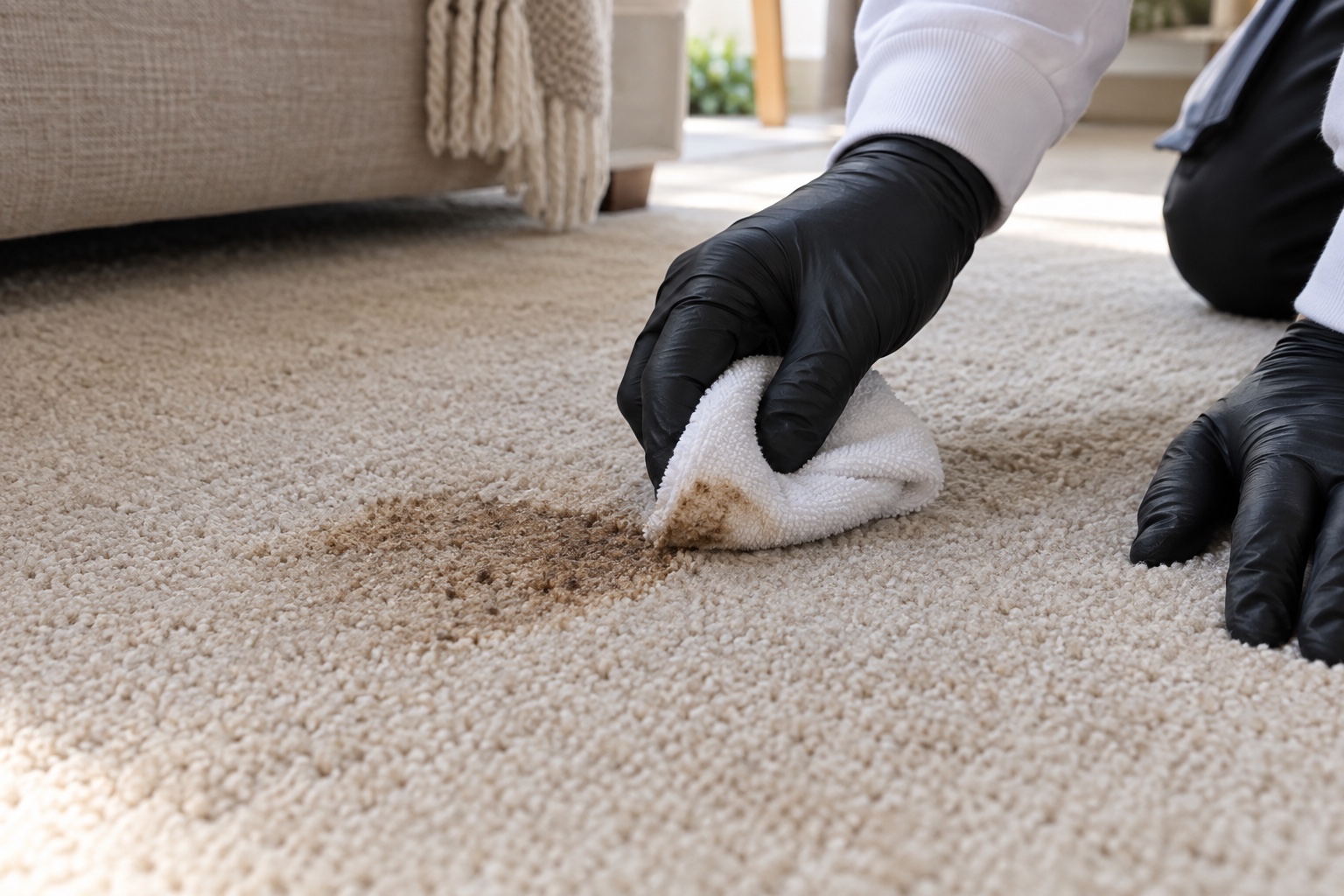
A mark that lightened and then stopped is usually telling you the stain is out and the fibre is marked.
When a stain fades a long way and then stops, it is rarely because the clean gave up early. More often, the material that made the stain has been removed, and what is left is the effect it had on the fibre while it sat there. Old tannin stains, for example, slowly tint the fibre itself over months. Take the tea away and the tint it left behind stays.
Heat-set marks work in a similar way. Heat causes some stains to bond with the fibre in a way that water and cleaning products cannot undo. That is why we always say to blot a fresh spill with cool water and a clean cloth, and never to dry it with a hairdryer or go over it with a hot hire machine. The heat feels as though it is helping, and it is often the step that makes the mark permanent.
A fade is not the same as a mark coming back
There is one thing worth separating out. If a mark looked gone when we left and then darkened again over the next day or two as the carpet dried, that is not a fade. That is wicking, where soil deep in the base of the carpet travels back up the fibres as they dry. It is fixable, and it is ours to fix. Tell us and we come back.
So before you decide what you are looking at, let the carpet dry fully. That is usually six to twelve hours, sooner with warmth and airflow and longer without, much like washing on a line. Then look at the mark in daylight, from standing height, the way you normally see the room. A damp pile looks darker and makes marks seem worse, and some look quite different once the pile has dried and settled.
- It lightened on the day and has stayed the same: a fade
- It looked gone, then came back as it dried: wicking, so tell us
- It barely changed at all: likely damage to the fibre
- Not sure which: send us a photo taken in daylight
Five Options For A Mark That Stayed
A faded mark is not the end of the road, and there are five honest options worth knowing about.
A second targeted treatment
Once the carpet is fully dry, a second go at the mark with a treatment matched to that particular stain sometimes gets more out. Some marks give up a little more after the fibre has dried and rested, and a fresh look in daylight often shows us what to try next. It will not turn damage into clean carpet, but on old tannin and some dye stains it can make a real difference.
Specialist dye correction
For small areas of bleach or sun damage, a colour specialist can sometimes put dye back into the fibre so it blends with the carpet around it. It is skilled work and it does not suit every carpet, but on a small, clearly defined spot it can work very well. We can talk you through whether yours is a good candidate and point you to someone who does it.
Placement
It sounds like the easy answer because it is. A rug, a chair or a side table placed over a mark that will not move is often the most practical choice, especially in a rented home or in a room you plan to recarpet in the next few years.
Patch replacement
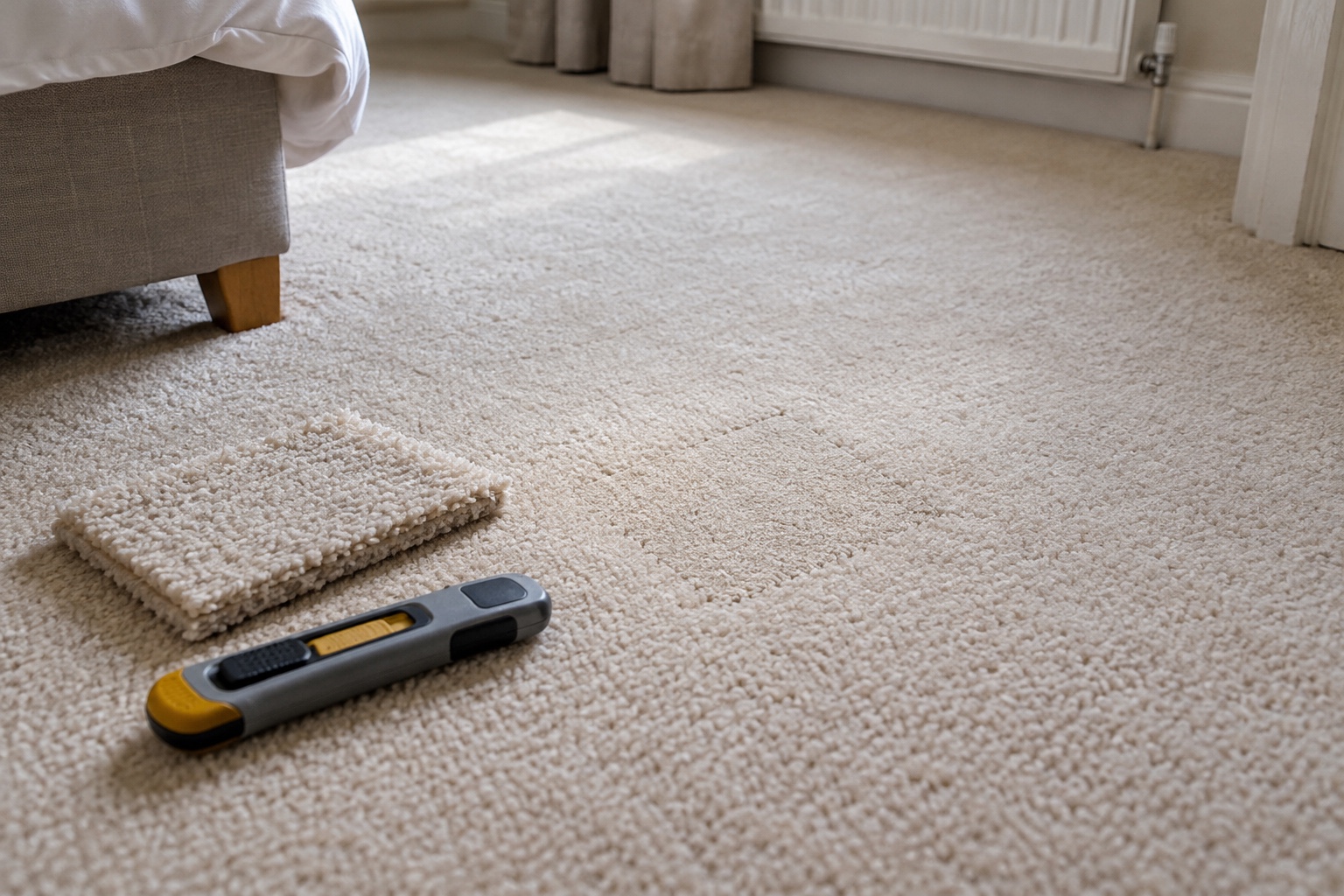
A carpet fitter can cut out the damaged section and set in a matching piece, often taken from an offcut or from a hidden spot such as the floor inside a wardrobe. Done well, it is hard to find. It works best on plain carpets and less well on patterned or sun-faded ones, where the new piece may not quite match.
Accepting it
Sometimes the honest answer is that the mark is now part of the carpet. A faded mark in a room that is otherwise clean and fresh is often far less noticeable than it feels in the first week, when you are looking straight at it. Give it a little time before you decide.
Where This Leaves The Golden Guarantee
The guarantee covers the clean, and being honest about a mark before we start is part of the same promise.
The Golden Guarantee is simple: if you’re not satisfied with the clean, we come back free of charge until you’re 100% satisfied. That covers the work we did. If an area we cleaned does not look right, or a mark we said should lift is still there, we come back and put it right.
In practice, that means you do not need to prove anything or catch it on the day. If you look at the room once it is dry and something is not right, one message is enough. We book you back in at a time that suits you and treat the area again.
What the guarantee cannot do is reverse damage. A bleach spot or a patch of dye transfer was there before we arrived, and no clean can put colour back into a fibre. That is why we look and spot test first, and why we tell you then if a mark may not fully lift.
If we said that to you, it was us being honest, not us finding a way out. We would rather tell you a mark might stay and be proved wrong in your favour than promise it would go and leave you disappointed. It is never meant as a loophole, and we will never use it as one.
If you cannot remember what we said about a particular mark, or you feel we called it wrong, tell us. If we got it wrong, we will say so plainly and come back. Either way, we would much rather hear about it than have you live with something you are not happy with.
- Covered: the quality of the clean, re-cleaned free until you’re satisfied
- Covered: a mark that looked gone and came back as it dried
- Beyond any clean: bleach, dye transfer, burns and sun fade
- Always worth asking: anything you are unsure about
What To Do This Week
A few simple steps now give you a clear answer and help stop the next mark setting in.
Start by letting the carpet dry fully, then look at the mark in daylight. If it still bothers you, take two photos, one from standing height and one close up, and send them to us with a line about what the mark was and when it happened. We will tell you straight whether a second treatment is worth trying, or whether one of the other options makes more sense.
It also helps to tell us what you would be happy with. For some people, a mark that is now faint is fine and they simply wanted to know why it stayed. For others, it sits in the middle of the lounge and needs a proper answer. Either is reasonable, and knowing which helps us suggest the right next step rather than the most expensive one.
In the meantime, please do not reach for a shop-bought spray. Many are strong, and on wool or other natural fibres they can bleach the colour or leave a residue that makes the patch look worse than before. If one has already been used, that is fine. Just tell us, because it changes how we treat the area.
For the future, the first few minutes after a spill decide most of what happens next. Blot, do not rub. Use cool water, never hot. Leave the hairdryer in the drawer. And call us early, while the mark is still fresh. If a room is prone to spills, Gold Guard protection helps future marks sit on the surface for long enough to blot them away before they set.
- Let it dry fully, then check it in daylight
- Send us a photo and tell us what it was
- Leave shop-bought sprays and hairdryers alone
- Blot fresh spills with cool water, never rub
- Call early while a new spill is still fresh
Why Prestige Refresh
When customers tell us why they chose us, the same four reasons come up. Each one is a promise we can keep on every visit.
What Customers Say
We could tell you the guarantee is real. It means more coming from the people we’ve actually cleaned for. We’re rated 5.0 from 338 Google reviews, and these come straight from them, unedited.
Our Golden Guarantee
The Golden Guarantee
We work openly and stand behind our work. Straight before we start, and back to put it right if a covered area isn’t right, all backed in writing.
Quick Answers
Why did the stain fade but not disappear?
Usually because the staining material has come out but the fibre underneath has been marked by it. Old tea, coffee and wine stains, some dyes, and marks that have been set by heat often behave this way. The clean has removed what it can; what is left is a change to the fibre itself.
Can you come back and try again?
Yes. Once the carpet is fully dry, a second targeted treatment sometimes gets more out, especially on old tannin and some dye stains. Send us a photo in daylight and we will tell you honestly whether it is worth doing. If you are not satisfied with the clean, the Golden Guarantee covers it.
What is the difference between a stain and damage?
A stain is something added to the fibre, and it can often be lifted out. Damage is a change to the fibre itself, such as bleach stripping the colour, dye transferring in, a burn, or sun fade. Cleaning removes what is on the fibre but cannot put back colour that has gone.
The mark looked gone, then came back as the carpet dried. Is that a fade?
No. That is usually wicking, where soil deep in the carpet rises back up the fibres as they dry. It is fixable and it is ours to fix, so tell us and we will come back. A fade, by contrast, is visible on the day and stays the same afterwards.
Let us know how we can help you today.